

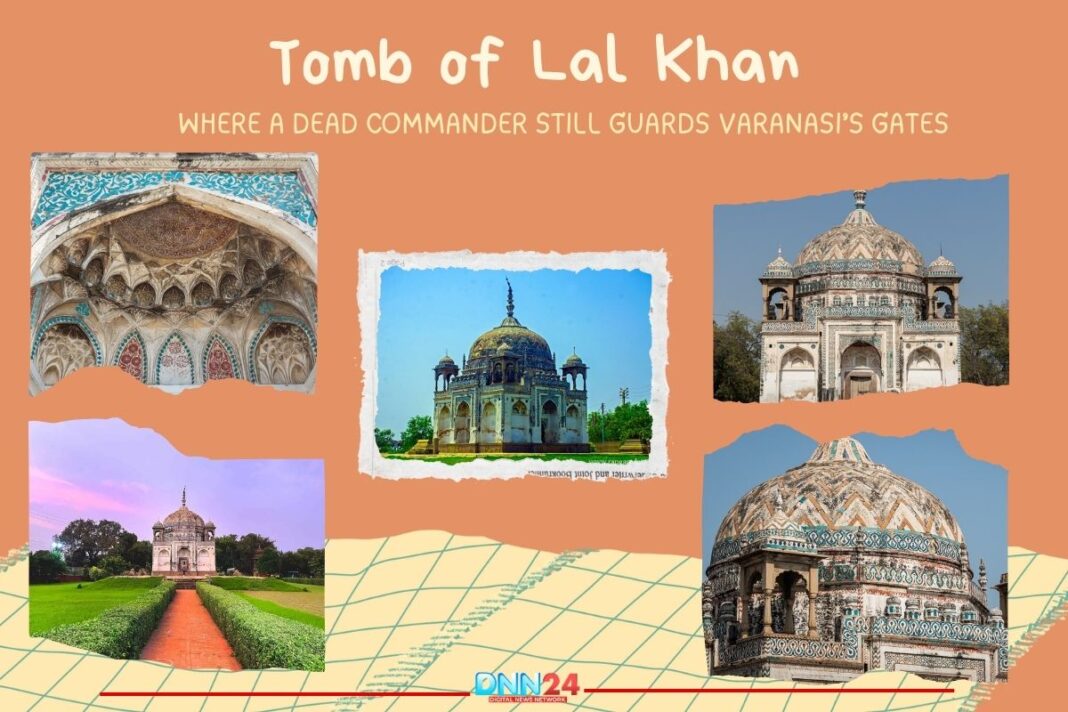

On the northern edge of Varanasi, where the Malviya Bridge spans the Ganga, and most tourists never wander, stands a monument that holds a secret about power, friendship, and promises that outlasted death. The Tomb of Lal Khan waits there, not demanding attention like the grand temples or crowded ghats, but offering something rarer: a glimpse into the moment when Varanasi stopped being just a holy city and became a kingdom writing its own rules. Most people rushing past on the bridge have no idea that below them rests a military commander who once swore to protect this city even after his last breath, or that the garden surrounding his grave was built by a king who refused to forget.
Lal Khan: The Man Behind Tomb of Lal Khan
Lal Khan was not born into legend. He walked the same narrow lanes of 18th-century Kashi that still twist through the old city today, but he walked them with purpose and authority that made people step aside. After Emperor Aurangzeb died in 1707, the mighty Mughal Empire began crumbling like old plaster, and cities across North India suddenly found themselves free to choose their own path. Varanasi fell into the hands of local rulers, men like Mir Rustam Ali and Masa Ram, and eventually Balwant Singh, who needed more than prayers and tradition to hold power in those dangerous years.
He required soldiers, administrators and people he could trust when enemies gathered at the gates. Lal Khan became one of those essential men, serving as minister and military commander in Balwant Singh’s court, the kind of officer who could enforce the law without mercy when needed but also understood the delicate balance among the communities living along the river. In that unstable time, when old empires were dying and new states were being born, Lal Khan helped keep Varanasi standing.
When Varanasi Became A Kingdom
The mid-1700s turned Varanasi into something it had never quite been before. Yes, the city had always drawn pilgrims and scholars, sadhus and merchants, but now it also attracted political ambition. Balwant Singh, ruling from around the 1740s onward, transformed the Banaras from a loosely controlled territory into something approaching a proper kingdom, complete with courts, taxes, armies and the endless complications of governing people who did not always want to be governed.
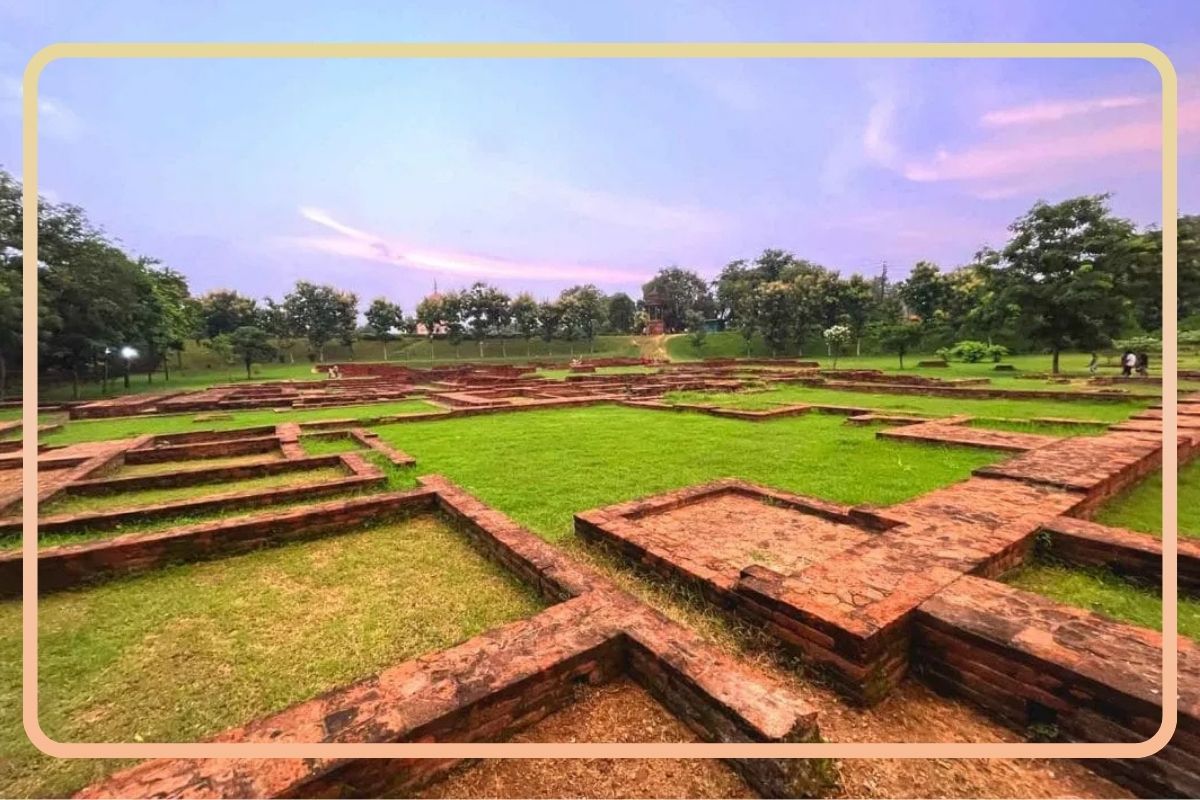
The Mughal system still existed in name, but its grip had weakened to the point where local rulers could make their own decisions and fight their own battles. Lal Khan worked at the centre of this transformation, managing security and administration while larger forces shifted around them. The area where his tomb now stands, Rajghat, was already ancient by then. Archaeological teams digging nearby later found evidence of settlement going back thousands of years, including pottery and walls from centuries before Christ, proving that this spot had witnessed empires rise and fall long before the Mughals arrived.
Tomb of Lal Khan: A Promise Carved In Stone
When Lal Khan died in 1773, Balwant Singh did not simply arrange a funeral and move on. The king built a tomb, a proper mausoleum with gardens and decorative tiles, the kind of monument usually reserved for royalty or saints. Stories passed down through generations say that Lal Khan made one final request before he died: he wanted to be buried where he could still watch the approach to the royal palace, where his eyes could guard against invaders even when his sword arm had gone cold.
Balwant Singh granted that wish, choosing a site near the river with a view toward the city gates, turning his commander’s grave into a permanent watchpost. The original palace gateway has vanished now, swallowed by time and urban growth, and the Malviya Bridge cuts across part of the old sightline. However, the tomb still occupies that strategic position at the northern entrance to Varanasi. Stand on its raised platform, and you can almost feel what Lal Khan must have felt during his life, that sense of responsibility for everything happening beyond the horizon, that weight of knowing the city depended on your vigilance.
Where Beauty Meets Geometry
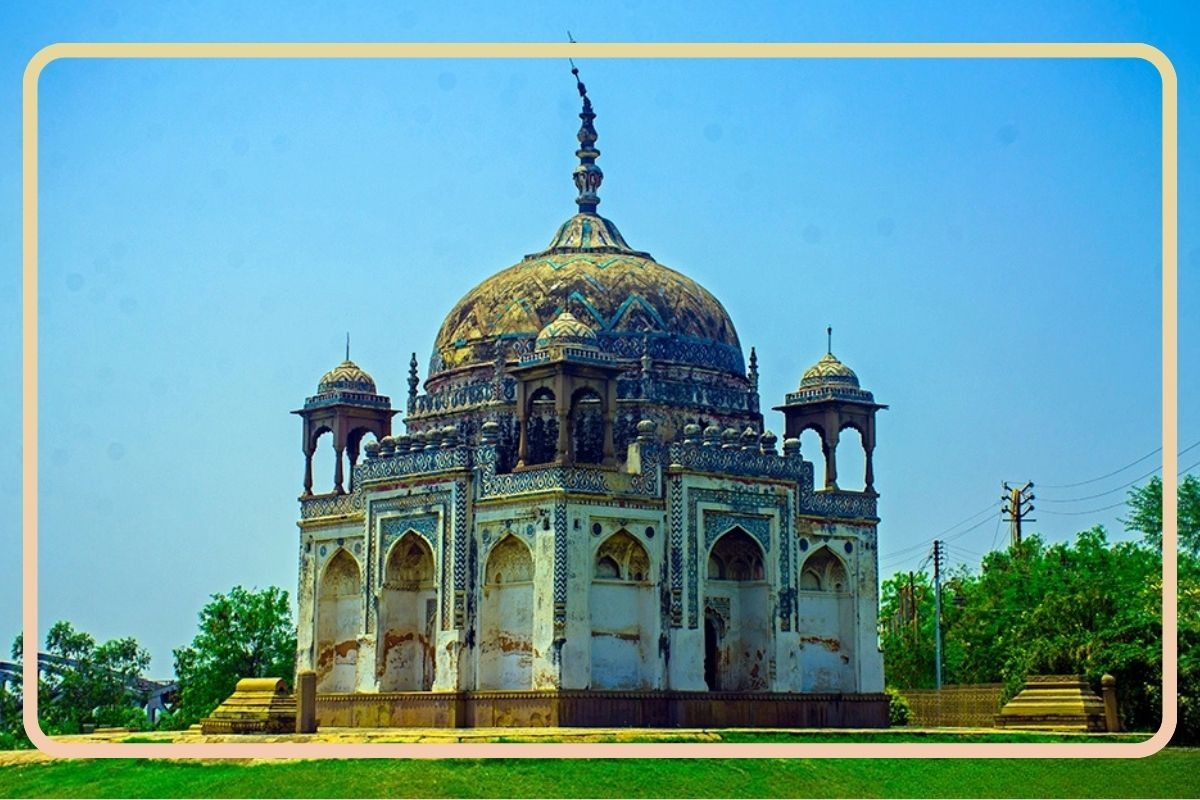
The tomb itself speaks a language that mixes Islamic tradition with Indian sensibility, creating something that belongs to neither culture in its entirety and to both in equal measure. Built in the Indo-Islamic style that flourished under late Mughal influence, the main structure rises from a square platform, supporting a single dome flanked by four small chhatris at the corners, each like a miniature pavilion reaching toward the sky. Every side of the building shows three arched openings, with the central arch rising slightly higher than its neighbours.
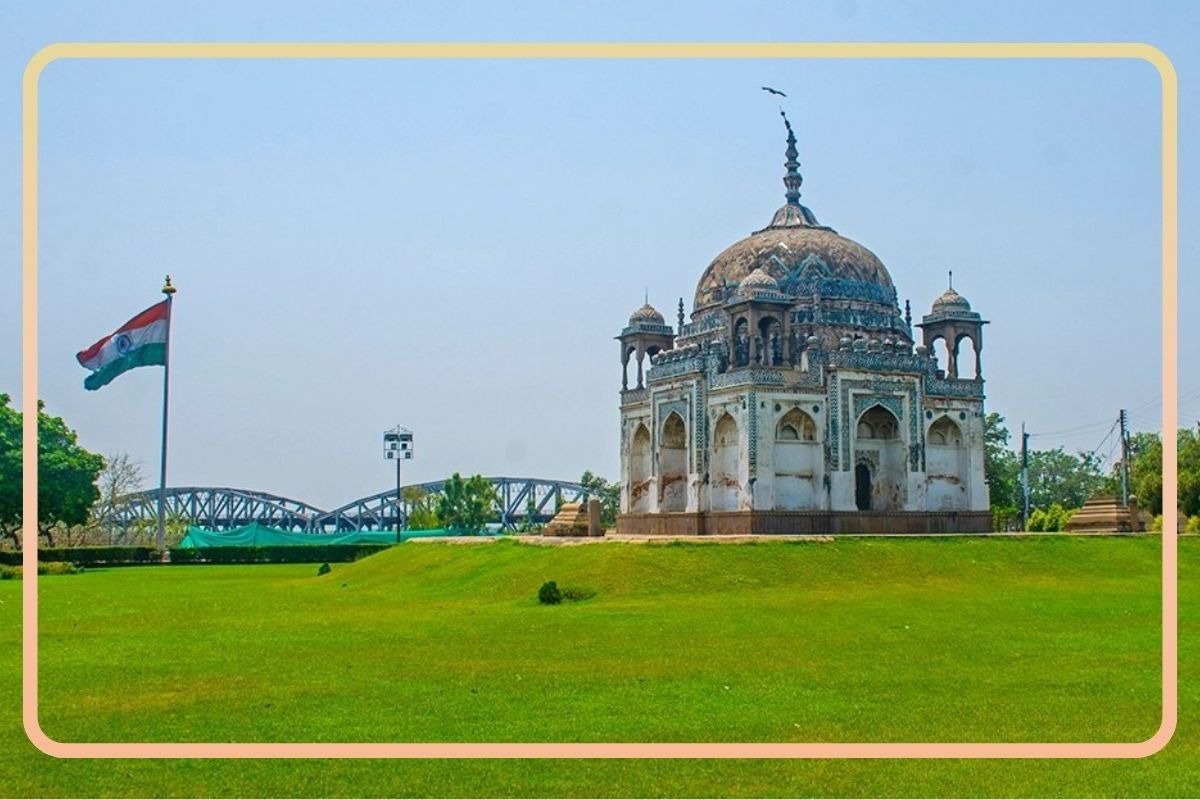
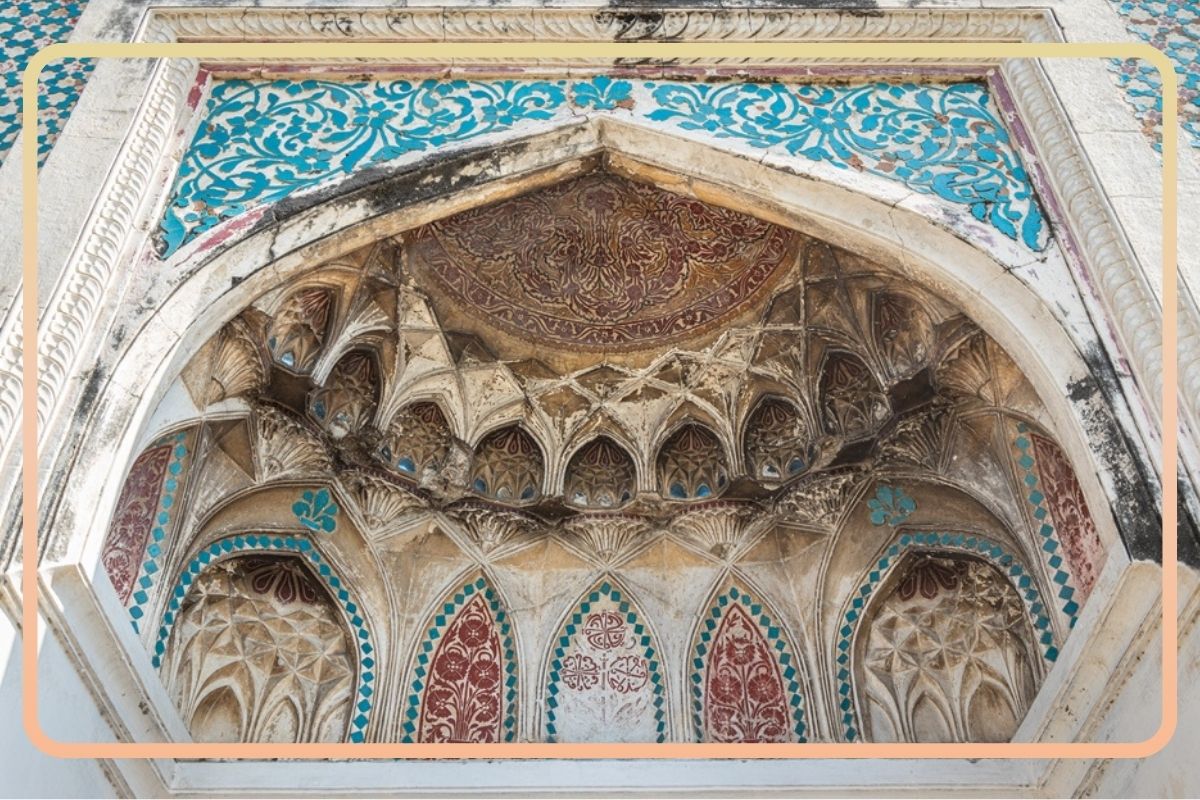
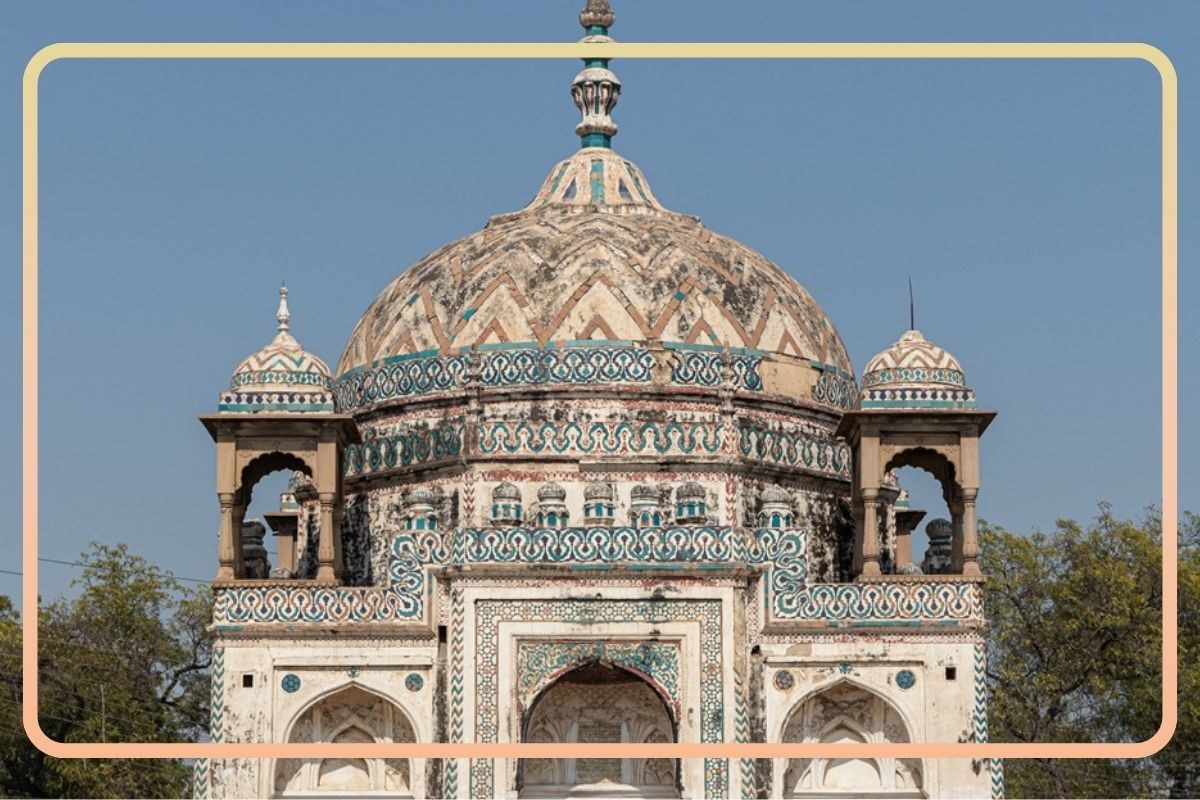
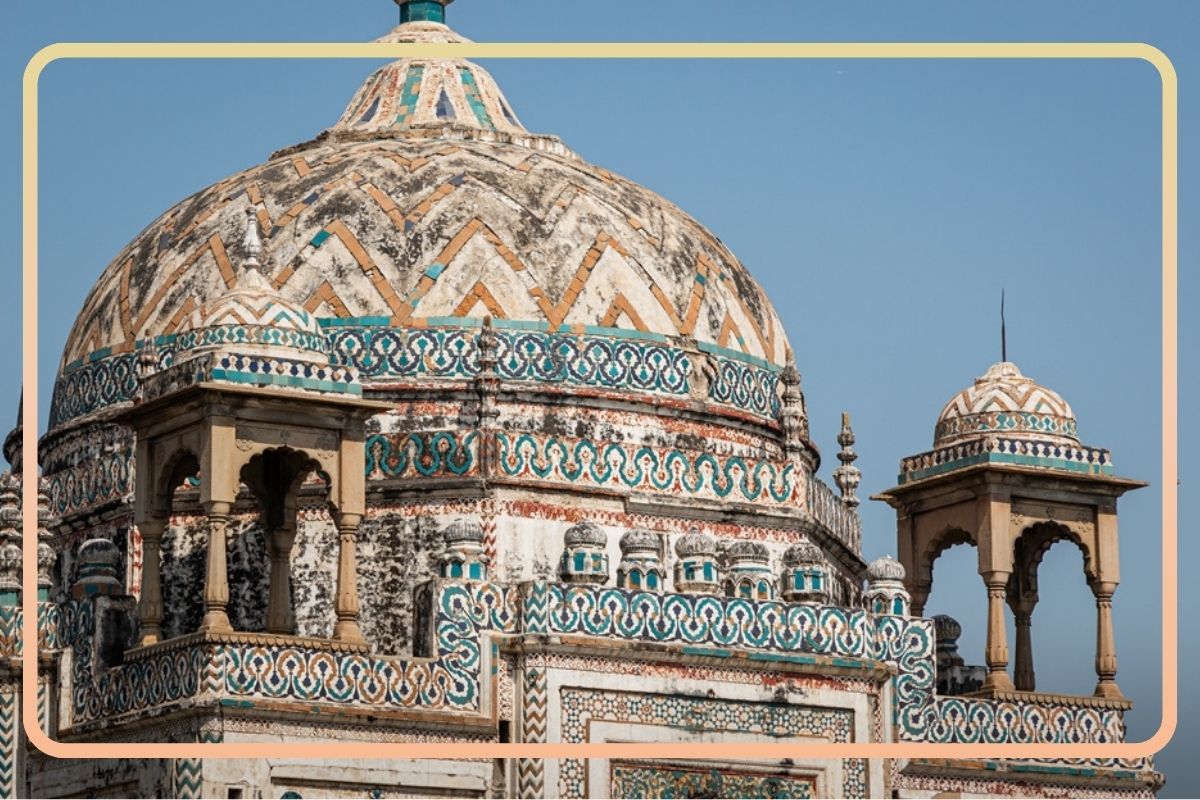
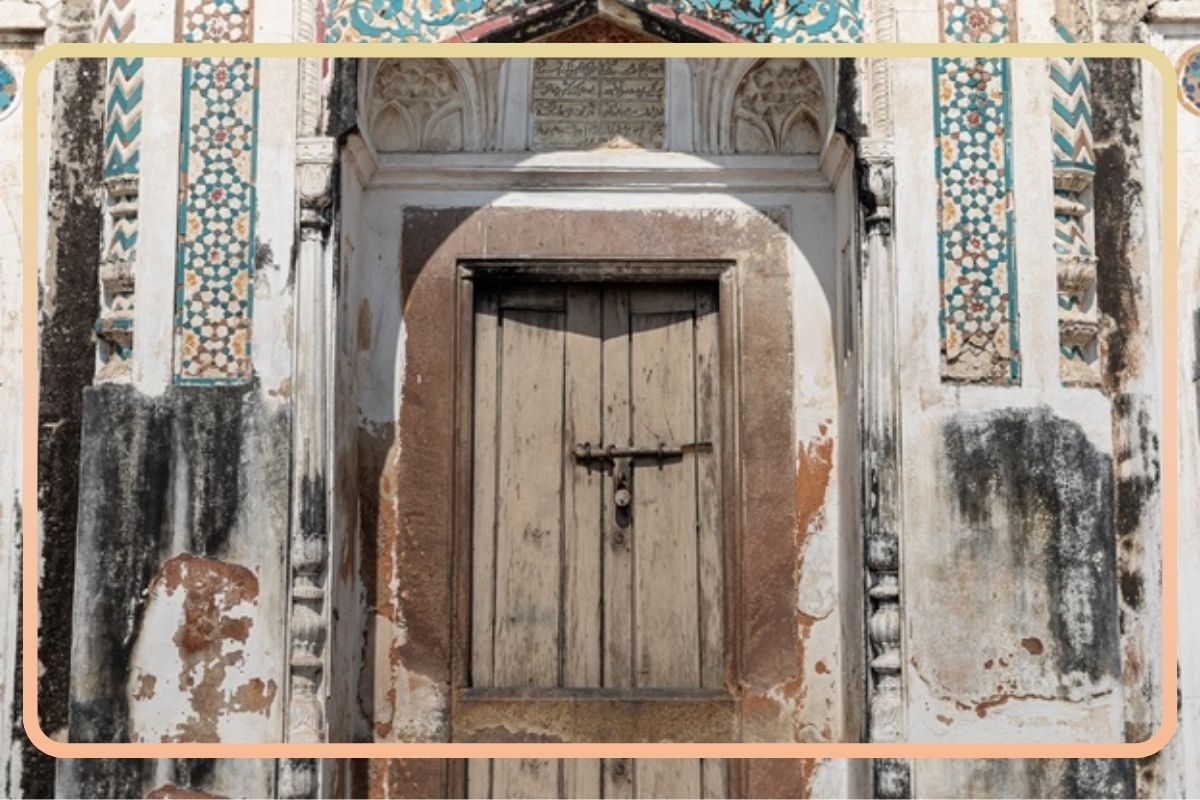
If you look closely at the areas around the dome, you can still see fragments of tilework in blue and turquoise, colours that once blazed against the sandstone but have faded under decades of sun and rain. The tomb sits inside a walled garden designed in the traditional charbagh pattern, that perfect Mughal arrangement where pathways divide the space into four equal sections, representing the four rivers of paradise described in Islamic texts. Corner chhatris once marked the garden walls, though most have deteriorated. Near the main grave on the platform lie several smaller graves, probably family members who wanted to rest close to Lal Khan, creating a small community of the dead within the larger garden of memory.
Hidden In Plain Sight
Finding the Tomb of Lal Khan requires either local knowledge or stubborn curiosity, because Varanasi does not advertise it, preferring to promote Dashashwamedh Ghat or Kashi Vishwanath Temple. The monument sits near Rajghat, tucked behind Khirkiya Ghat on the left bank of the Ganga, inside what remains of the old Raj Ghat fort, a location that most tourists never reach because the famous southern ghats pull all the attention. The Archaeological Survey of India has placed it on the list of centrally protected monuments of national importance, which sounds impressive until you visit on an average afternoon and find yourself completely alone except for a guard and some sparrows.
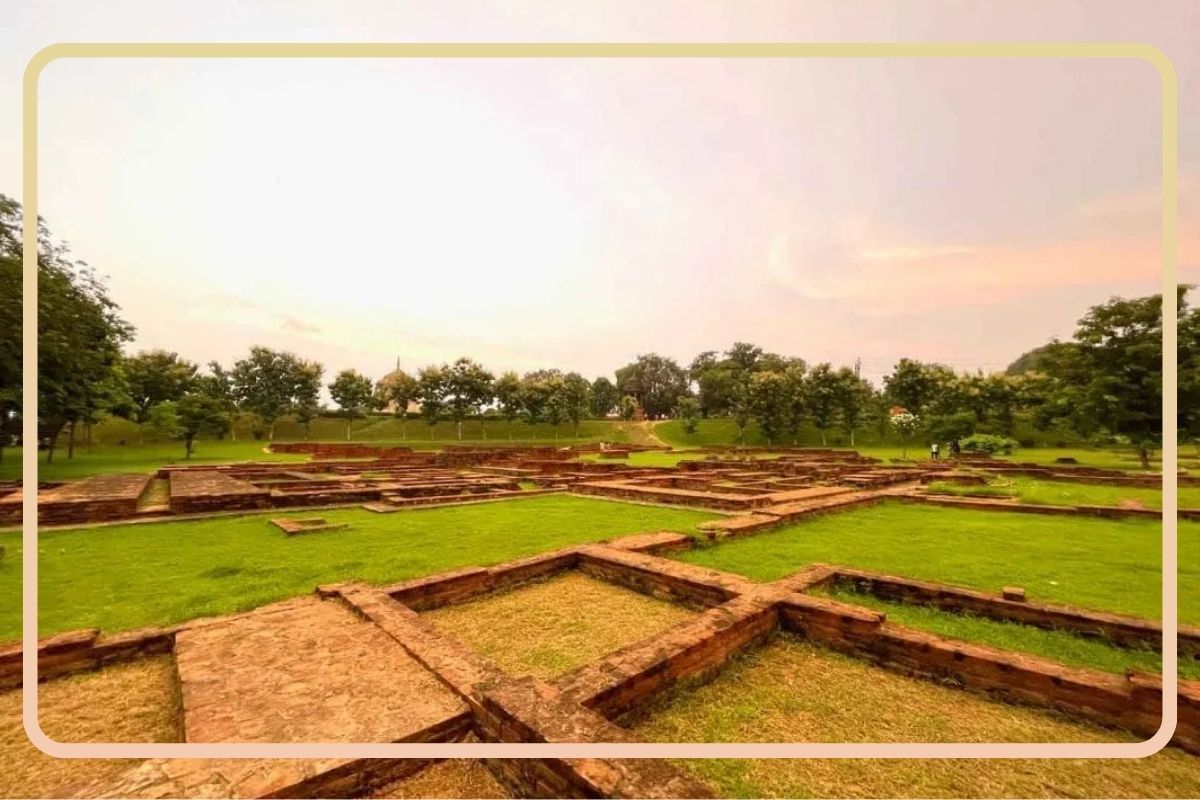
Next to the tomb lies an ASI excavation site where archaeologists uncovered layers of ancient Kashi, pottery shards, and building foundations from the first millennium BCE, creating an odd juxtaposition in which a monument from 1773 shares ground with artefacts from 2500 years earlier. Both speak to human ambition and the determination to leave something permanent behind. Still, the older ruins draw more scholarly interest, while Lal Khan’s tomb sits quietly, waiting for visitors who rarely come.
Stepping Through Time
Walking into the tomb complex feels like passing through a membrane between two versions of Varanasi, the loud modern city and something older that still breathes beneath the noise. The traffic sounds from Malviya Bridge fade as you step through the entrance gate, replaced by the rustle of leaves in the garden and the distant clang of temple bells floating across the water. People who visit describe an unexpected peace, the kind that settles over abandoned places built with care and not yet entirely forgotten. The grass grows neat and green, someone still maintains the pathways, and the tomb itself, despite the faded tiles and weathered stone, holds its dignity like an old soldier who refuses to slouch even when no one is watching.
Standing on the raised platform next to the grave, with the bridge’s modern concrete on one side and the eternal curve of the Ganga on the other, visitors often report feeling caught between eras, aware of both the monument’s beauty and the sadness of its obscurity. The craftsmanship visible in the arches and remaining tilework reminds you that skilled hands built this. These people understood proportion and decoration, yet almost nobody remembers their names or bothers to ask why they worked so hard on this particular tomb.
What The Tomb Teaches Today
In an age when religion and community identity generate more heat than light, when people argue endlessly about who belongs and who built what, the Tomb of Lal Khan offers evidence of a different relationship between faiths. Here was a Muslim military commander serving a Hindu king with enough loyalty that the king built him a grand tomb on the banks of the sacred Ganga, one of Hinduism’s holiest rivers. Neither man apparently saw any contradiction in this arrangement, no crisis of identity or betrayal of principles, just two people working together to protect something larger than themselves.
The monument reminds modern Varanasi that the city’s history includes not just temples and pilgrimage but also forts, political intrigue, military command and architectural styles borrowed from multiple traditions. For students, photographers and anyone interested in how the past actually worked rather than how we imagine it worked, Lal Khan’s rauza becomes a classroom without walls, demonstrating that power, friendship, loyalty and artistic beauty can exist together inside one quiet structure that most guidebooks ignore. The tomb proves that heritage is complicated, layered and often more interesting than the simplified stories we tell ourselves.
Why You Should Go
Most travellers to Varanasi follow the same route, checking off the famous ghats and temples before moving on to the next city, satisfied that they have seen what matters. But visiting the Tomb of Lal Khan is like discovering a footnote that proves more interesting than the main text. This slight detour expands your understanding of what this ancient city actually contains. Getting there is straightforward enough: either by road to Rajghat near the bridge, or by boat to Khirkiya Ghat.
Still, the real journey happens inside your head when you realise that Varanasi is not just one thing, not just a spiritual center or a tourist destination, but a complicated accumulation of different peoples, different powers and different dreams layered on top of each other across centuries. When you eventually leave the garden and return to the crowded streets, something of Lal Khan’s story stays with you, not necessarily the dates or architectural terms, but the understanding that loyalty sometimes outlasts the kingdoms it served, that friendship can cross the boundaries we think are permanent, and that even a forgotten tomb still performs its duty, still guards something valuable in the soul of a city that has learned to ignore it.
Also Read: Tomb of Sher Shah Suri: An Emperor’s Dream Palace Floating On Water
You can connect with DNN24 on Facebook, Twitter, and Instagram and subscribe to our YouTube channel.