
India’s first tribal games are making history, and the story begins in a state most sports fans rarely think about. Chhattisgarh, a region better known for its forests than its stadiums, became the unlikely stage for something India had never attempted before. Nearly 3,800 athletes arrived from 30 states and Union Territories, not for a routine tournament but for a competition built entirely around them. These were young men and women whose sporting education came from village grounds, forest clearings and family courtyards rather than academies. For once, their background was not a disadvantage, it was the entire point.
A Historic First: The Inaugural Khelo India Tribal Games
Between 25 March and 3 April 2026, Raipur, Jagdalpur and Surguja hosted the Khelo India Tribal Games, the country’s first national multi-sport event created exclusively for tribal athletes. The Ministry of Youth Affairs and Sports organised it alongside the Sports Authority of India, the Indian Olympic Association, several national sports federations and the Chhattisgarh government. Their shared aim was straightforward. Find tribal talent, nurture it properly and give it a permanent place inside the wider Khelo India framework rather than treating it as a one-time exercise.
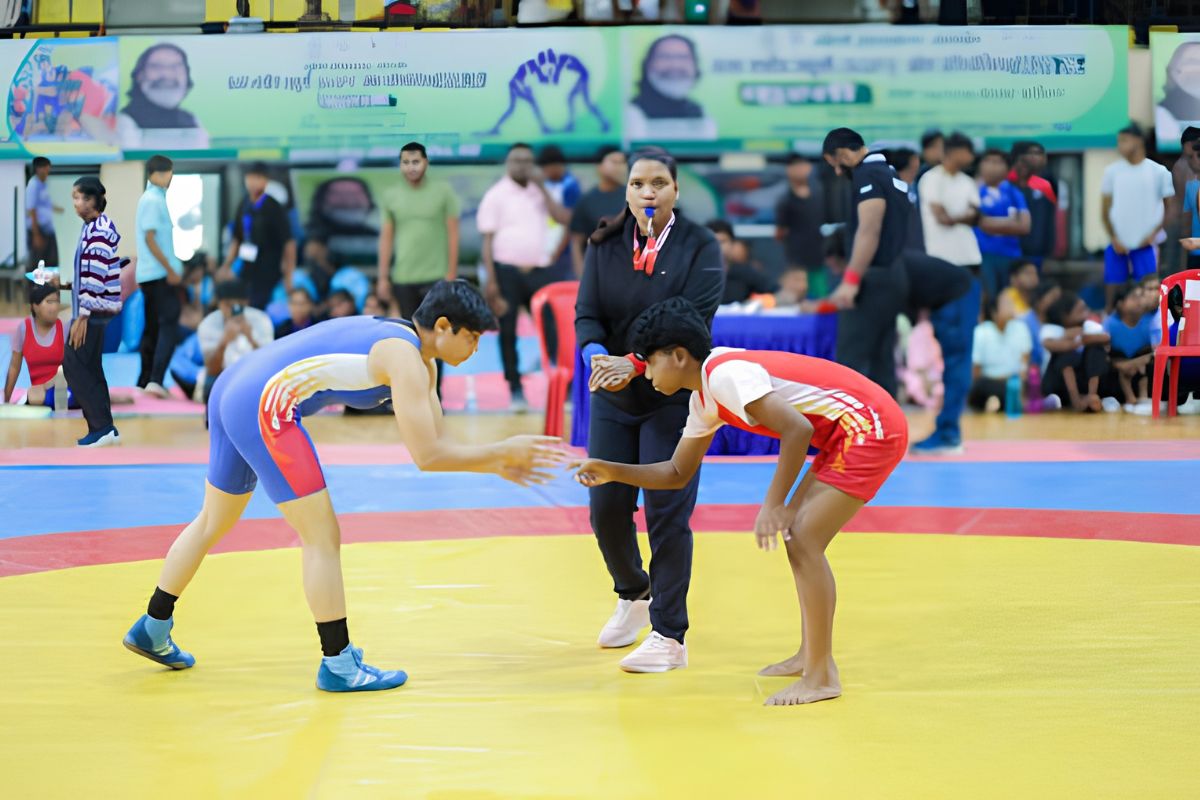
Seven medal sports carried the competitive weight of the games, including archery, athletics, football, hockey, swimming, weightlifting and wrestling. Alongside them sat two demonstration sports, Mallakhamb and Kabaddi, chosen deliberately to put indigenous tradition on equal footing with modern athletics. The mascot, Morveer, summed up the spirit rather neatly. Mor means our own, and Veer means courage. Together they described exactly what organisers hoped the games would represent.
The Spotlight on Indigenous Sports
Mallakhamb drew particular attention. The sport demands competitors to perform gymnastic and near acrobatic feats while gripping a fixed pole or a hanging rope, often holding poses that look closer to aerial yoga than conventional wrestling. Its roots run deep. Pottery from Chandraketugarh, dated between the second century BCE and the first century CE, already shows figures in poses recognisable as Mallakhamb today. That is not a young sport borrowing prestige from an old name. It is an old sport finally receiving overdue recognition.
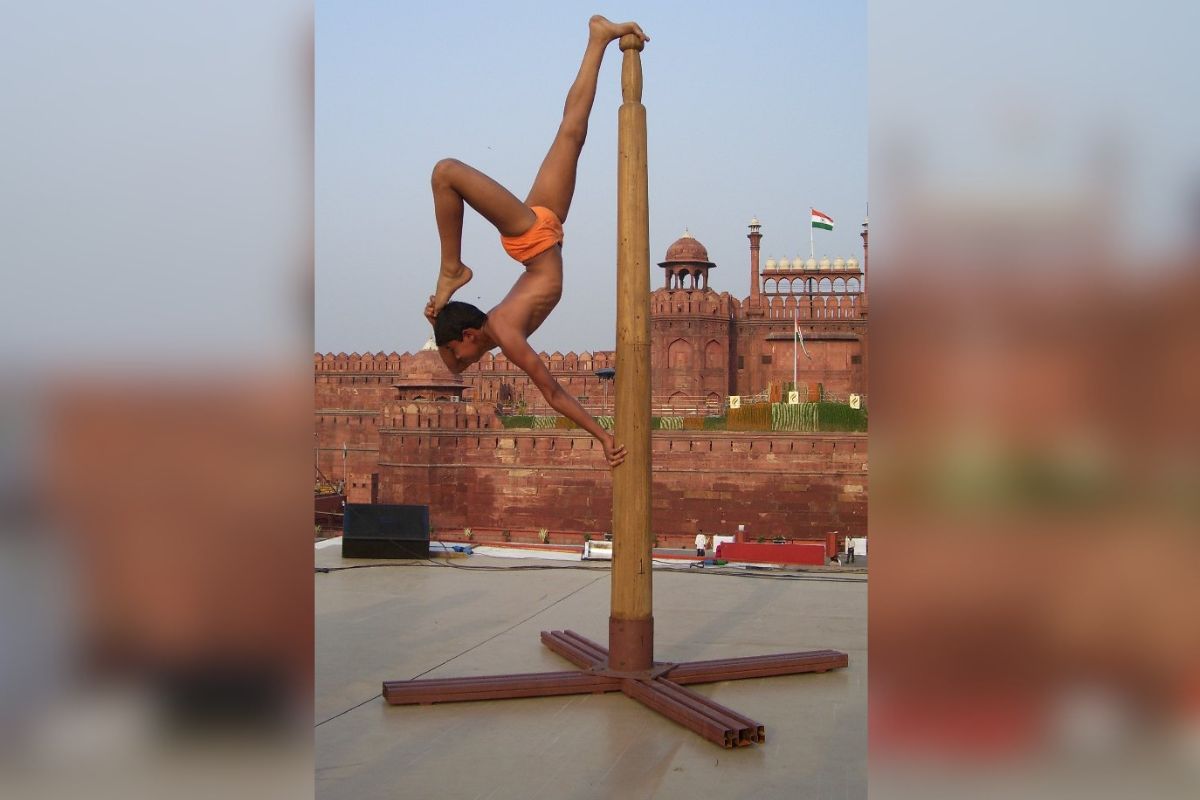
For generations, Mallakhamb survived quietly inside village akharas across Maharashtra, Karnataka and neighbouring states, taught by local instructors who rarely expected national attention. Placing it beside Kabaddi at the tribal games, another sport with strong rural and tribal roots, sent a clear signal. Athletic excellence in India was never confined to Olympic disciplines. It simply lacked a stage large enough to prove it.
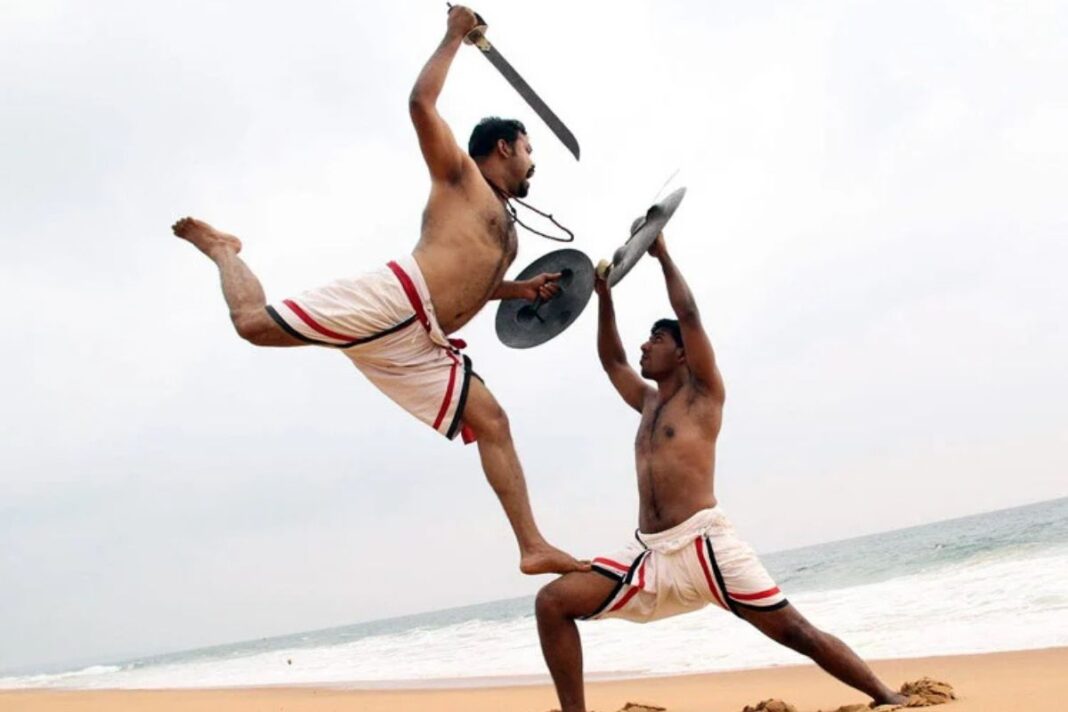
Kalaripayattu, the martial art of Kerala, did not appear on the 2026 programme, yet its history runs a similar course. Scholars trace its origin to the Sangam period, roughly 600 BCE to 300 CE, with the discipline formally codified between the 11th and 12th centuries CE. It once trained warriors for regional defence, fell into decline under colonial restrictions, and returned to prominence through 20th-century revival efforts. The parallel with Mallakhamb is difficult to miss. Both grew from community teaching long before formal sporting bodies existed to certify them.
Champions from the Margins
When the closing ceremony reached Raipur’s Deendayal Upadhyay auditorium, Karnataka stood at the top of the table with 23 gold, 8 silver and 7 bronze medals. Swimmers Manikanta L and Dhoneesh N did much of the heavy lifting, winning eight and five golds respectively, proof that tribal athletes can dominate structured competitive formats just as comfortably as traditional ones.
Odisha finished second, and its total of 57 medals, comprising 21 gold, 15 silver, and 21 bronze, was the only tally to cross 50. Given the state’s long-standing archery culture, that result surprised almost no one who follows grassroots sport closely. Jharkhand claimed third place with 16 golds, built largely on strength in athletics, wrestling and archery. Host state Chhattisgarh finished ninth overall, yet its real contribution lay outside the medal count, in the stadiums, training camps and public attention it helped create.
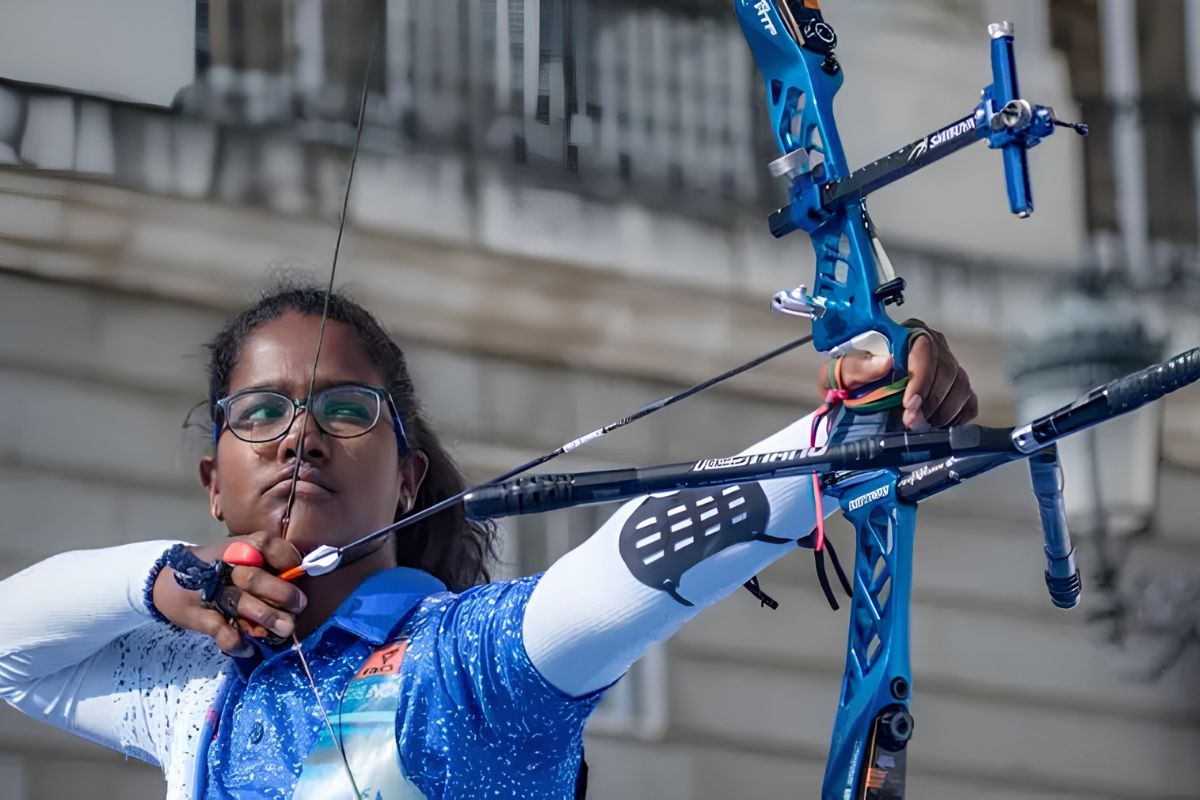
Individual performances added colour to the numbers. Jharkhand’s Komalika Bari won gold in the women’s recurve individual archery event, while Nagaland’s team took gold in the recurve team category. Arunachal Pradesh’s Nedi Ngi claimed the women’s 5,000 metre title, and Maharashtra’s Govind Padekar won the men’s equivalent. Wrestling and weightlifting golds spread across Jharkhand, Himachal Pradesh, Mizoram and Karnataka, a spread that says something important about how widely tribal sporting talent is distributed across the country.
From Village Grounds to National Platforms
Archery, wrestling and indigenous gymnastics spent decades developing, away from stadium lighting and television cameras. The 2026 games sought to close that gap by adopting technical standards comparable to international competition while preserving the cultural character of each discipline. More than 3,800 athletes, coaches and support staff took part, and together they formed the first real national structure built specifically around tribal sport.
Chhattisgarh’s chief minister announced cash awards to match the achievement, offering 2 lakh rupees to individual gold medallists, 1.5 lakh to silver medallists and 1 lakh to bronze medallists, with team medallists also compensated. Money alone does not build a sporting culture, but it does tell athletes their effort has institutional weight behind it.
Sport as Identity and Continuity
The Khelo India Tribal Games were not only about podium finishes. For tribal communities, sports like archery and wrestling sit close to ritual, festival and daily routine. Featuring Mallakhamb as a demonstration event acknowledged something many outside these communities overlook: that athletic tradition belongs alongside language, music and craft as a marker of cultural identity.
That idea fits comfortably within the broader Khelo India mission, which has always aimed at building a sporting culture that feels inclusive and rooted rather than imported wholesale from elsewhere. The government underlined the seriousness of that intent back in 2020, declaring such events of national importance under the Sports Broadcasting Signals Act.
The Road Ahead
The success of the first edition raises an obvious question. How do indigenous sports move from demonstration status to permanent competitive disciplines? Infrastructure matters, coaching matters, and community ownership matters most of all. States like Odisha and Jharkhand offer a workable model for folding traditional sports into school curricula and district-level competition.
Mallakhamb already has a competitive framework through the School Games Federation of India, so its next step involves wider inclusion in national championships and multi-sport events. Kalaripayattu faces a different challenge. Having gained international recognition as a wellness and performance practice, it now needs to balance that global appeal against genuine preservation of its original martial purpose.
A National Stage for Tribal Excellence
The Khelo India Tribal Games 2026 achieved more than showcasing talent for a fortnight. It confirmed that tribal communities are shaping India’s sporting future rather than simply appearing in its footnotes. From the akharas of Chhattisgarh to the swimming pools of Raipur, from Odisha’s archery ranges to Jharkhand’s wrestling mats, nearly 3,800 athletes carried forward traditions that have outlasted centuries of change.
Indigenous sports proved they are not relics waiting to be preserved in a museum. They are living traditions capable of inspiring an entire nation. By giving them a genuine national platform, India took a real step toward a sporting future where village grounds and stadium lights can finally share the same stage.
Also Read: How Homemaker Turned Sarpanch Lata Devi Helped Reduce Drug Abuse Across Five Himachal Villages
You can connect with DNN24 on Facebook, Twitter, and Instagram and subscribe to our YouTube channel.