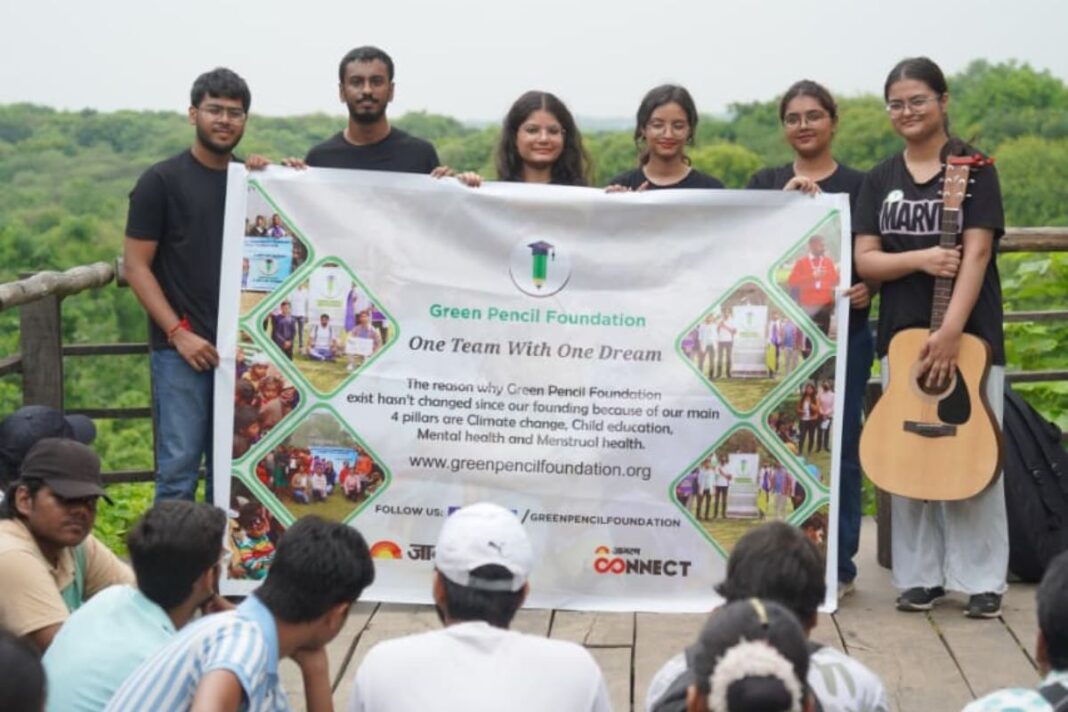

Green Pencil Foundation did not start with a grand plan or government funding. It started with a single belief, and today that belief has quietly touched 10,000 lives across seven states.
Sandy Khanda did not grow up reading about poverty in textbooks. She lived it. Raised in a lower-income farming family in rural Haryana, Sandy saw, with her own eyes, what happens when children have no school worth attending, when girls manage their periods in silence and shame, and when no one in the village knows that the air they breathe is slowly making them unwell. These were not distant problems. They were her neighbours. They were her family.
In 2014, Sandy moved to Delhi for higher studies. The city gave her education, but it also gave her a new set of problems to think about. Choked air, mountains of unmanaged waste, shrinking parks, and a widening gap between those who knew about climate change and those who were already suffering from it without knowing its name.
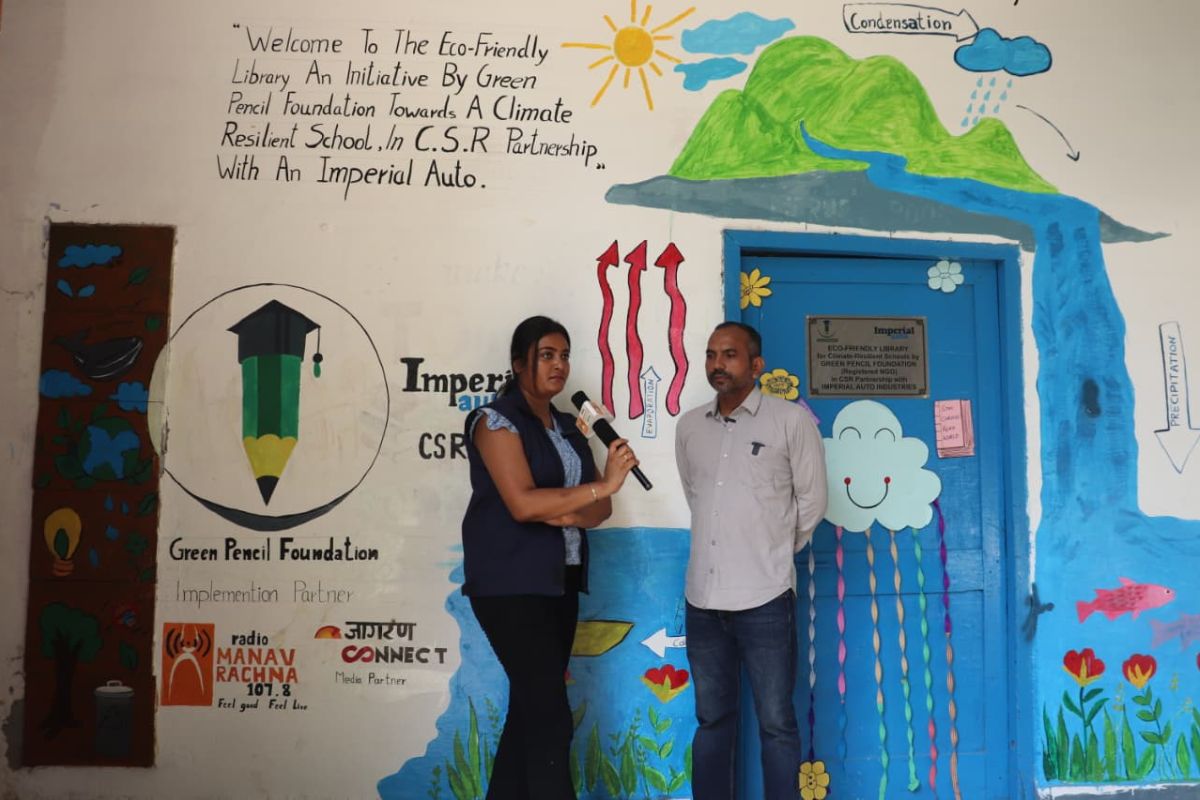
That gap became her life’s work. In 2019, Sandy Khanda founded the Green Pencil Foundation on one clear understanding: that environmental problems and social problems are not separate categories. They grow from the same root, and they must be addressed together.
The Mission in Plain Words
The Foundation’s guiding phrase is “Empowering Minds, Sustaining Earth,” and it means exactly what it says. Green Pencil Foundation works at the meeting point of education, environmental awareness, menstrual hygiene, and mental health. The organisation believes that a girl who understands her own body is better placed to fight for clean air. A child who learns to read is more likely to question the open burning of waste in their neighbourhood. An informed community is a more resilient one. Programs are not designed as one-time events. They are built to shift habits, open conversations, and leave behind something permanent.
Slum to School: Getting Children Off the Streets and Into Classrooms
One of the Foundation’s oldest programs works with children from slum communities who have either dropped out of School or never enrolled in the first place.
Slum to School does not simply hand out books and walk away. The program provides learning materials, runs informal education sessions, and works with parents to explain why consistent schooling matters. It also covers child rights, hygiene, and basic environmental responsibility, preparing children not just for a classroom but for life. Hundreds of children have moved from these sessions into the formal school system. For many families, this was the first time a child in the household attended School regularly.
Periods of Pride: Breaking a Silence That Cost Girls Years of Their Lives
No program better defines Green Pencil Foundation’s character than Periods of Pride. Period poverty in India is not merely about the cost of sanitary products. It is about the silence surrounding menstruation, the myths passed from mother to daughter, the school absences that add up to months of missed education, and the quiet shame that girls carry without anyone telling them there is nothing to be ashamed of.
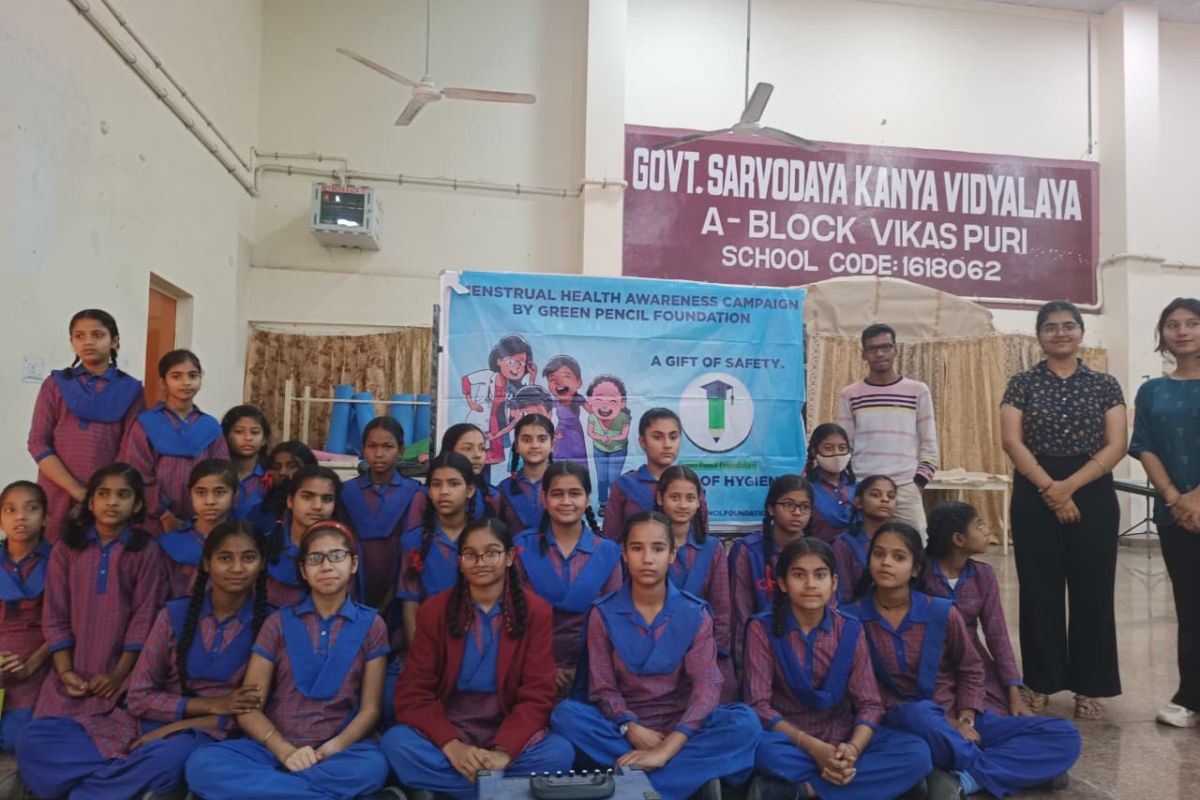
Periods of Pride addresses all of this together. More than 2,500 reusable menstrual hygiene kits have been distributed across schools, colleges, slum communities, and rural areas. Awareness sessions are conducted not only for girls but also for boys, teachers, and community elders. The decision to include boys and men in these conversations was deliberate. Stigma does not exist in isolation. It lives in households and classrooms and must be confronted there.
The reusable cloth pads distributed under the initiative are both affordable and environmentally responsible. They reduce waste from single-use products while being accessible to families who cannot afford monthly purchases. This program received the Best MHM Practices Award at the 4th Menstrual Hygiene Management Summit, recognised specifically for its integrated approach and for bringing men and boys into a conversation that had long excluded them.
Environmental Work That Reaches the Community
Green Pencil Foundation runs several environmental programs that go well beyond planting trees for photographs. Climate Chaupal is a community dialogue platform where people gather to discuss air pollution, biodiversity loss, water scarcity, and local environmental challenges. It is modelled on the familiar Indian tradition of the chaupal, the open gathering place, and it brings climate conversations into spaces where people already feel comfortable speaking freely.
Freedom From Pollution, also known as Pollution Se Azaadi, works with students and communities on air quality, waste management, and sustainable daily choices. The name is pointed and intentional. Independence from Pollution is framed as a right, not a preference.
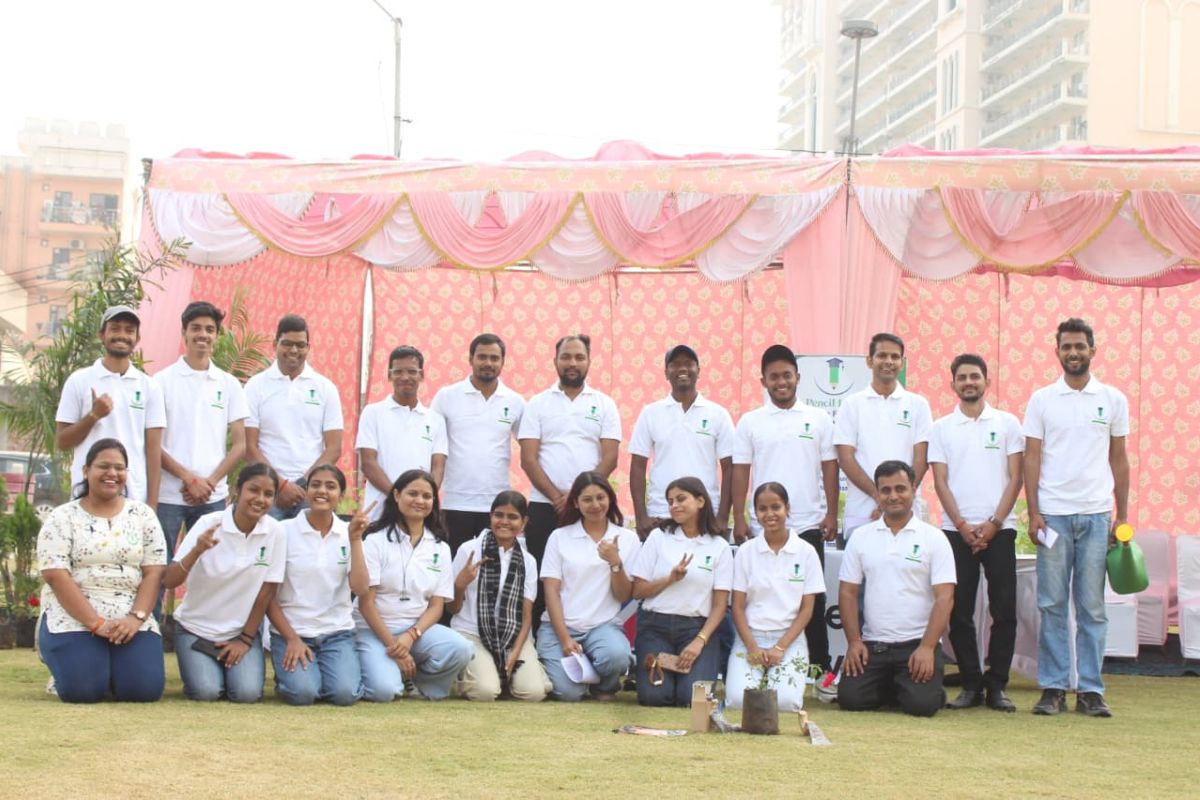
At Cochin University of Science and Technology in Kerala, the Foundation conducted a Sustainable Practices Workshop that reached over 250 students, covering plastic Pollution, water contamination, and practical ways to reduce carbon footprints in everyday life.
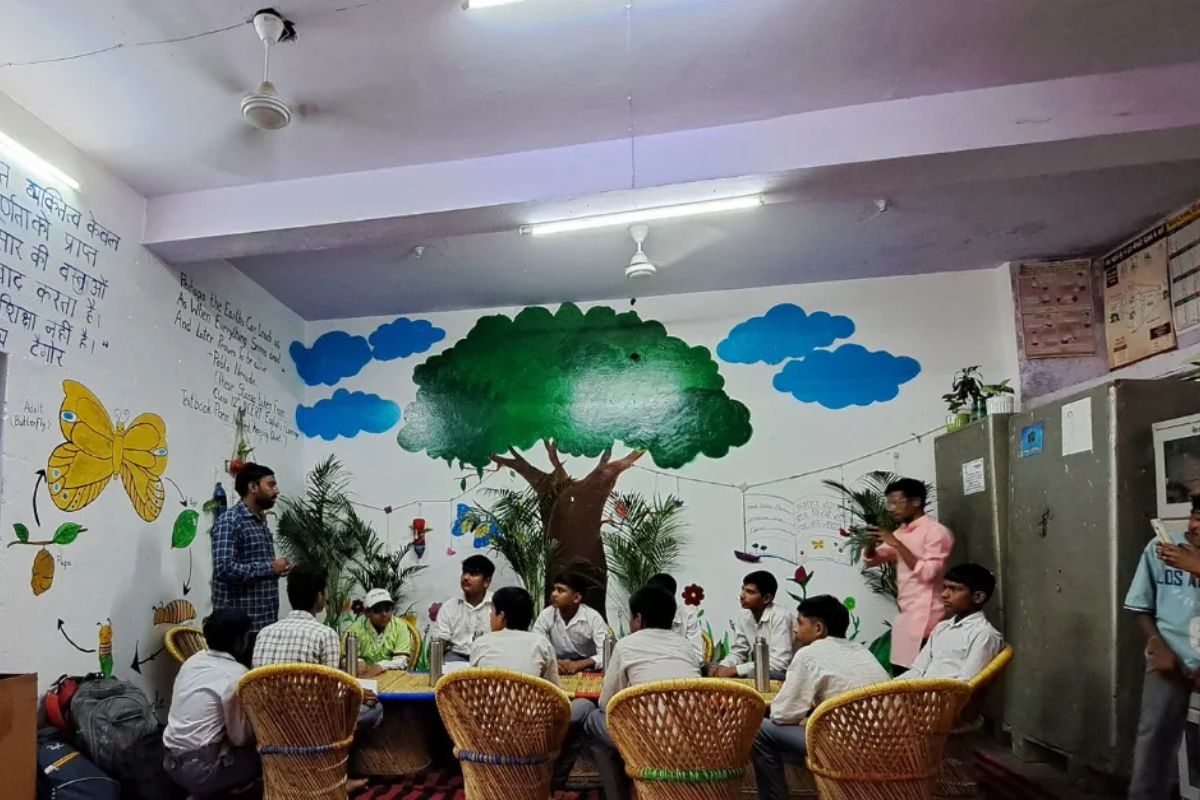
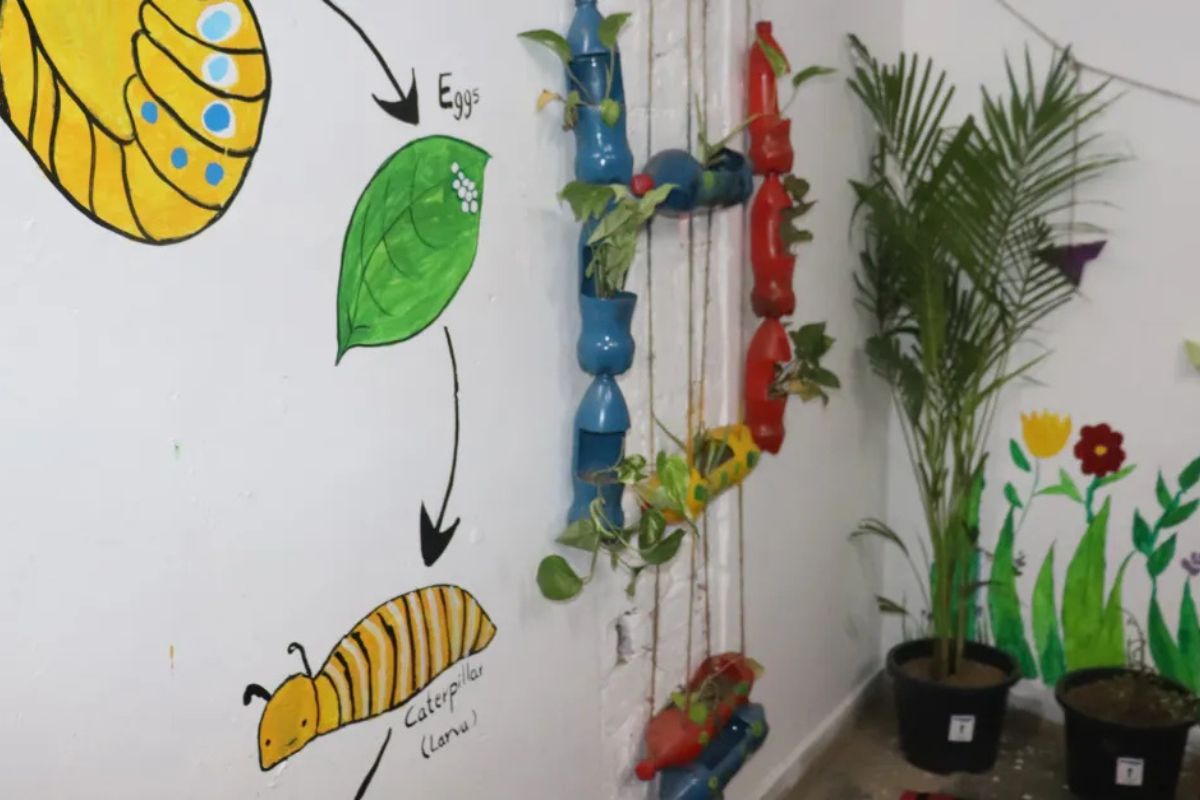
In Faridabad, the Foundation set up Eco-Friendly Libraries in government schools. These are not ordinary reading rooms. They feature bamboo furniture, vertical gardens, indoor plants, and sustainability-focused learning materials. Children do not just read about environmental responsibility here. They sit inside it.
The Numbers Behind the Work
Green Pencil Foundation has directly impacted over 10,000 individuals across Haryana, Delhi, Punjab, Himachal Pradesh, Jharkhand, Jammu and Kashmir, and Kerala.
More than 4,000 students have been reached under the Clean and Green Faridabad Mission. Over two lakh girls have been supported through menstrual hygiene initiatives. More than 10,000 university students across India have participated in sustainability workshops. The Foundation has distributed cloth bags, steel bottles, reusable pads, and stationery kits as part of its broader effort to make sustainable living accessible at the ground level.
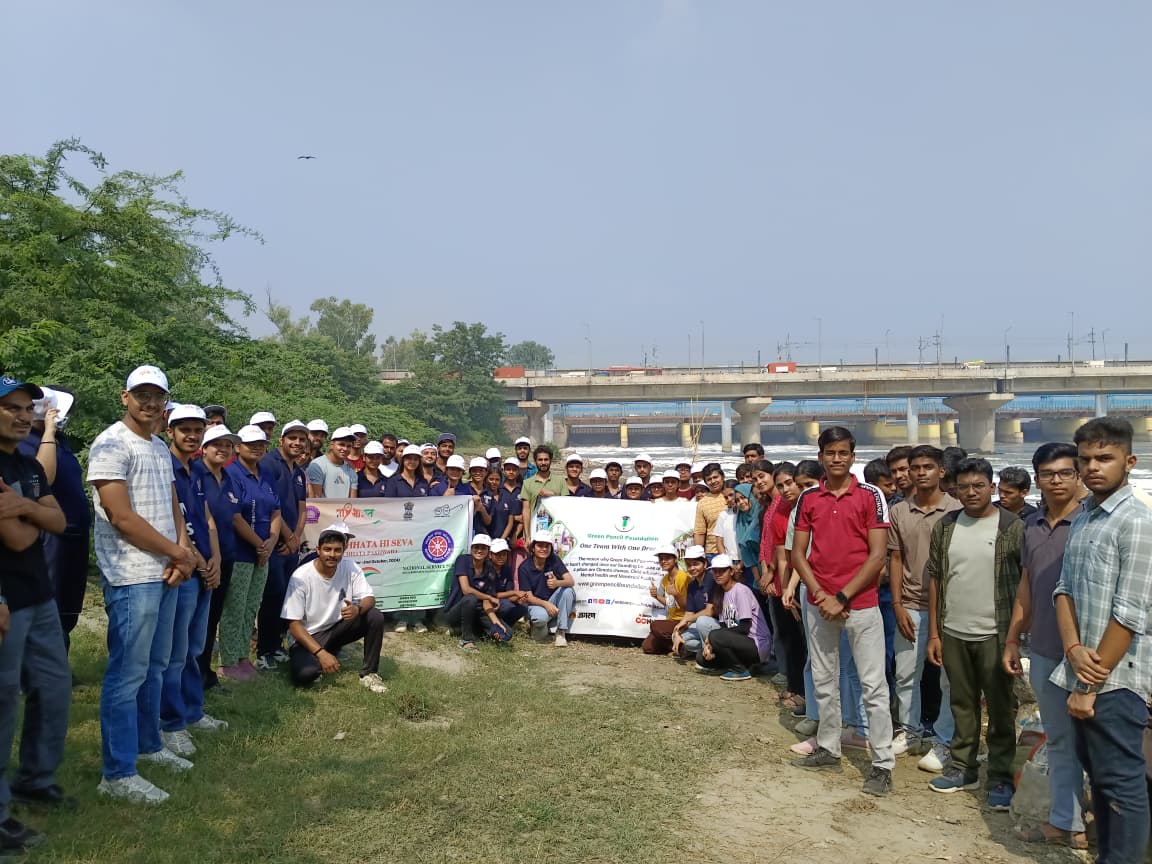
Impact is measured not only through attendance registers, but also through follow-up engagement and observed behavioural changes in communities over time.
Partners Who Make It Possible
None of this happens through goodwill alone. Volunteers across states bring local knowledge and ground-level commitment to every program. CSR partners, including Imperial Auto Industries and collaborators such as Jagran Connect, provide funding, logistical support, and expanded outreach. These partnerships allow the Foundation to take what begins as a pilot and grow it into something that reaches thousands.
What Comes Next
Green Pencil Foundation intends to expand across more states, strengthen sustainability infrastructure in schools, and scale both its mental health and menstrual hygiene work.
Every program aligns with the United Nations Sustainable Development Goals, particularly SDG 3 (Good Health), SDG 4 (Quality Education), SDG 5 (Gender Equality), SDG 11 (Sustainable Cities), and SDG 13 (Climate Action). The Foundation also supports India’s Net Zero vision by building communities that understand the connection between daily choices and long-term planetary health.
From a farming village in Haryana to seven states and counting, Green Pencil Foundation continues to prove that the most durable social change does not arrive through large budgets or loud campaigns. It arrives through consistent, honest, and deeply human work, one child, one girl, one community at a time.
Also Read:Project Ecosanitation Transforms Menstrual Health Across India
You can connect with DNN24 on Facebook, Twitter, and Instagram and subscribe to our YouTube channel.