

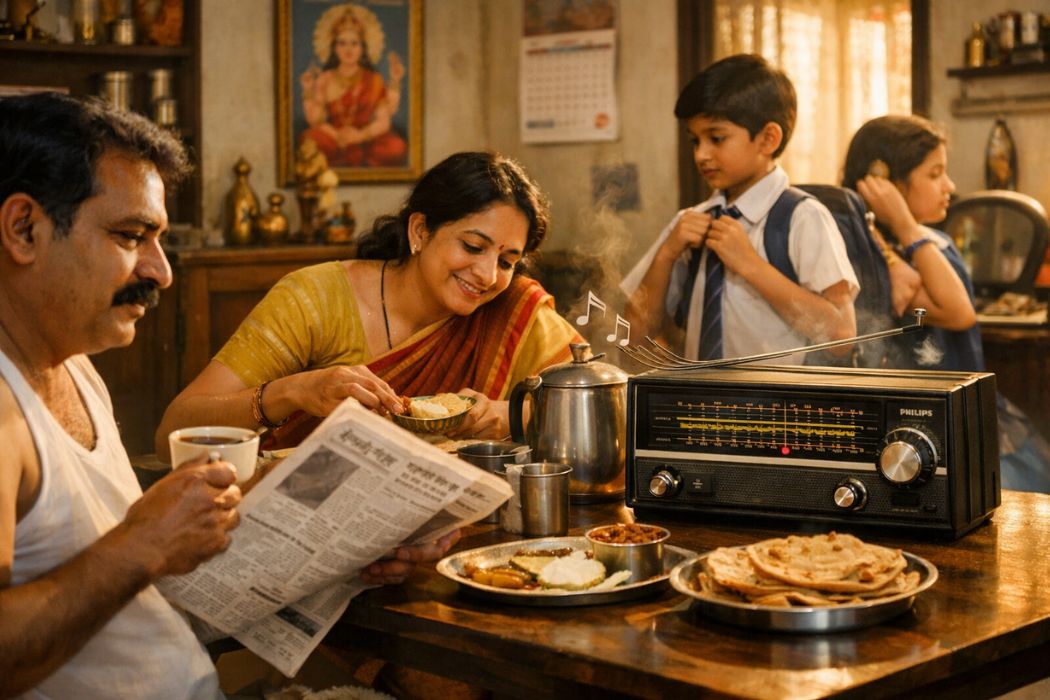

The transistor crackled to life at dawn, and millions of Indians began their day with the same tune. Before playlists and podcasts, before television reshaped living rooms, radio waves carried the nation’s morning rituals. All India Radio held this sacred slot for decades, particularly through its commercial wing Vividh Bharati, which turned breakfast routines into shared national experiences.
The Foundations of Indian Broadcasting
Radio arrived in India during the 1920s through experimental transmissions in Bombay and Calcutta under British colonial administration. The Indian Broadcasting Company established low-power stations in 1927, reaching fewer than 1,000 listeners with rudimentary equipment and limited range. Financial difficulties forced the enterprise into government hands within three years.
The Indian State Broadcasting Service took over in 1930 and operated as a government monopoly. The number of listeners grew gradually, reaching just over 16,000 by 1934. High costs and limited geographic coverage kept radios a luxury item, confined mostly to urban centres and wealthy households.
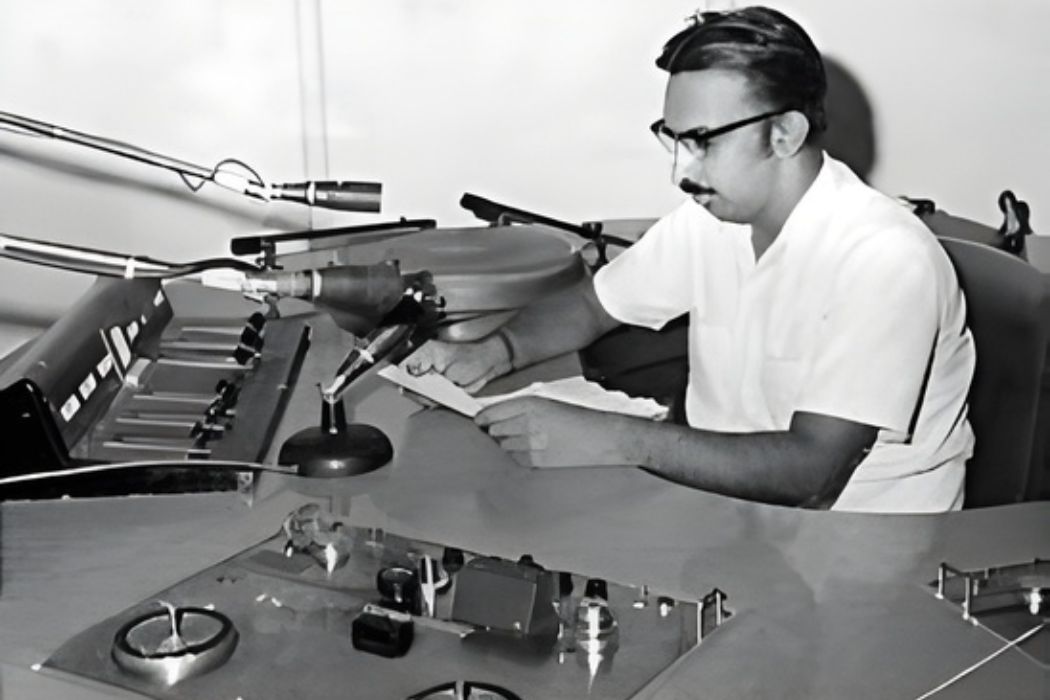
The service underwent its most significant transformation in 1936 when it became All India Radio, operating from Delhi as the official voice of British India. This restructuring established organised national broadcasting for the first time. After independence in 1947, AIR expanded aggressively, adding transmitters across newly formed states and introducing programming in regional languages to serve India’s linguistic diversity. The network reached areas television would not touch for another three decades.
Vividh Bharati Changes Everything
Radio Ceylon’s Hindi film music broadcasts had captured Indian audiences by the mid-1950s, threatening AIR’s monopoly. The government launched Vividh Bharati in 1957 as a commercial entertainment channel designed specifically to win back listeners. The service offered light music, film songs, and theatrical plays that contrasted sharply with AIR’s formal, news-heavy programming.
Between the 1960s and 1980s, Vividh Bharati owned Indian mornings. Broadcasts began at 6:30 AM with devotional hymns and classical compositions, followed by news bulletins that informed the nation before work began. The signature jingle announcing “Akashvani” became perhaps the most recognised tune in the country, marking the beginning of another day for tens of millions of listeners.
AIR maintained complete monopoly until the 1990s. The first private FM auctions occurred during Phase I in 2001, and until then, there was no competition. Vividh Bharati reigned without challenge, shaping how Indians consumed information and entertainment.
The Morning Lineup
Devotional music opened the day, setting a spiritual tone that matched traditional household routines. “Sangeet Sarita” aired at 7:30 AM, mixing popular film songs with folk melodies from different regions. Families prepared tea and breakfast while radios buzzed in kitchens across cities, towns, and villages.
Radio Ceylon’s “Binaca Geetmala,” hosted by Ameen Sayani from 1952, technically aired in the evenings, indirectly influenced morning listening habits. Indians recorded these countdown shows of top Hindi songs on cassettes and played them at dawn. Despite AIR’s attempts to suppress this practice, Sayani’s broadcasts drew massive audiences who found ways around official restrictions.
Agricultural programs followed the morning music blocks, delivering weather forecasts and farming advice in regional dialects. Hindi news bulletins aired at 8:45 AM with distinctive time signal pips. Cricket commentaries extended listening well into the afternoons during match seasons, keeping transistors running for hours.
Radio as Daily Companion
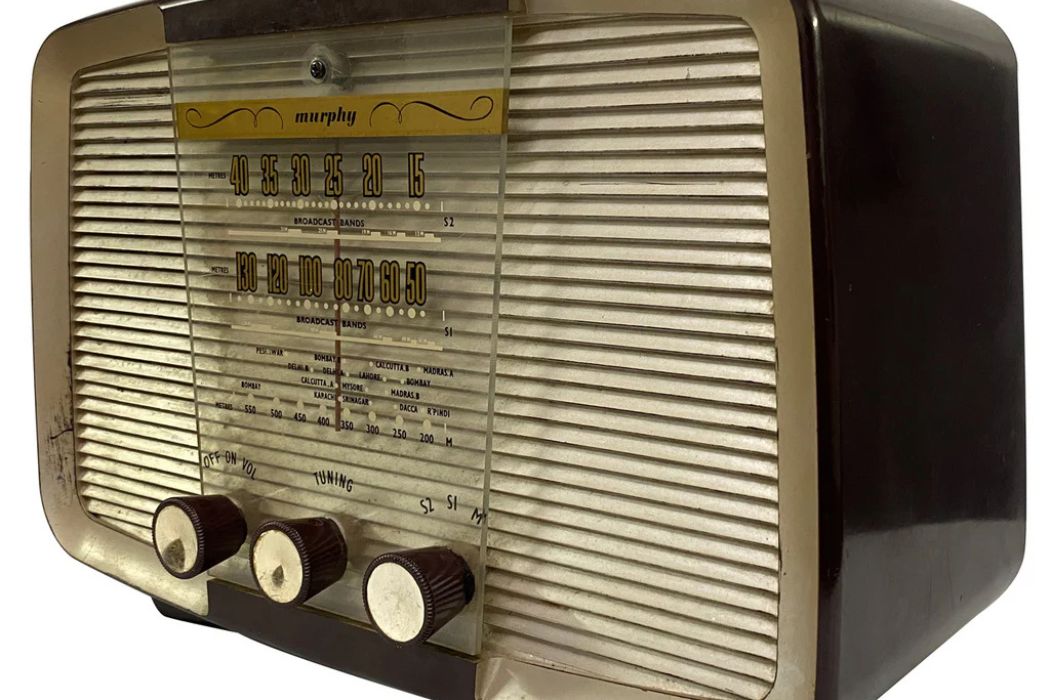
Transistor radios occupied central positions in homes during the pre-television era. Models from Philips, Murphy, and later National became household fixtures. Mornings started with family members adjusting tuning knobs to clear static and lock onto frequencies, a ritual as routine as boiling water for tea.
Women in kitchens across India, like Chennai homemaker Bhavani Krishnamurthy, relied on morning devotional slots and astrology segments while preparing meals. Men checked weather reports and farm news before heading to fields or offices. The radio provided both information and companionship during solitary tasks.
Transistor technology made broadcasts portable in ways valve radios never could. Rickshaw pullers carried small sets, shopkeepers kept them at counters, and villagers gathered around single receivers in communal listening sessions. Battery operation meant monsoon rains and power cuts could not interrupt the connection.
Cultural Glue in a Fragmented Nation
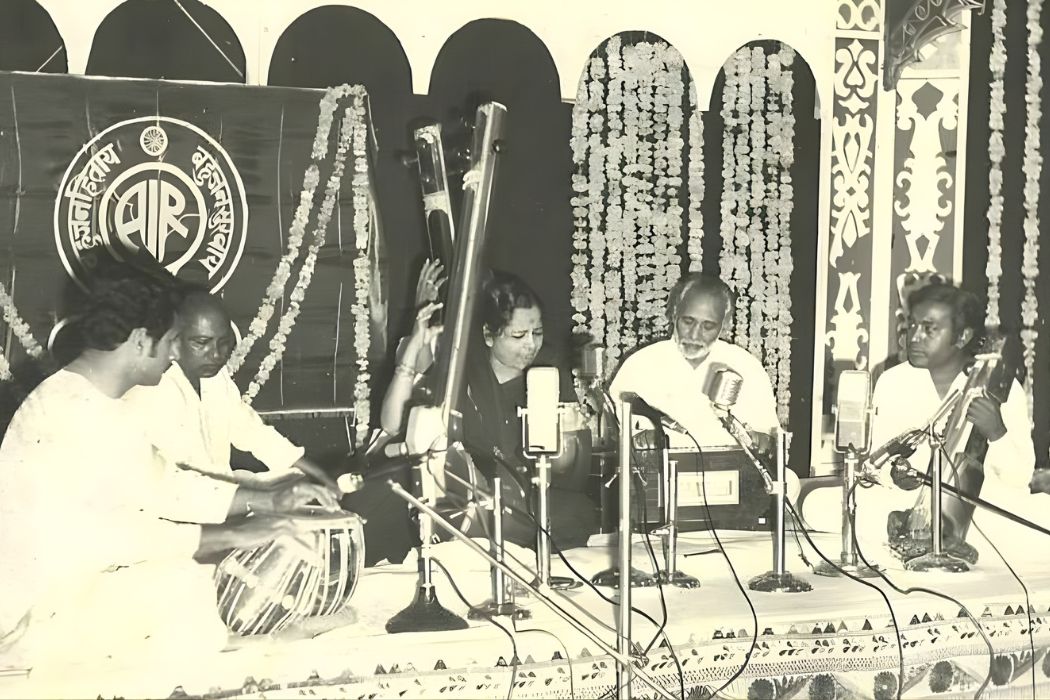
Radio preserved regional languages and folk traditions that might otherwise have faded. Programs featuring classical music forms like khayal in Ahir Bhairav raga connected urban listeners to cultural heritage. The broadcasts maintained continuity with traditions even as modernisation accelerated.
In a pre-Internet era when television was scarce until the 1980s, radio democratised access to entertainment and information. Ninety per cent of India’s population lived in rural areas, most without electricity or roads. Radio waves reached these populations when nothing else could.
Patriotic songs closed daily broadcasts, including standards such as “Saare Jahan Se Achha,” which reinforced national identity. Women gained unprecedented public presence through sponsored programs funded by Tata, Lever Brothers, and other major brands. Commercial jingles like “Wah Taj!” for tea became embedded in popular culture.
Voices That Defined an Era
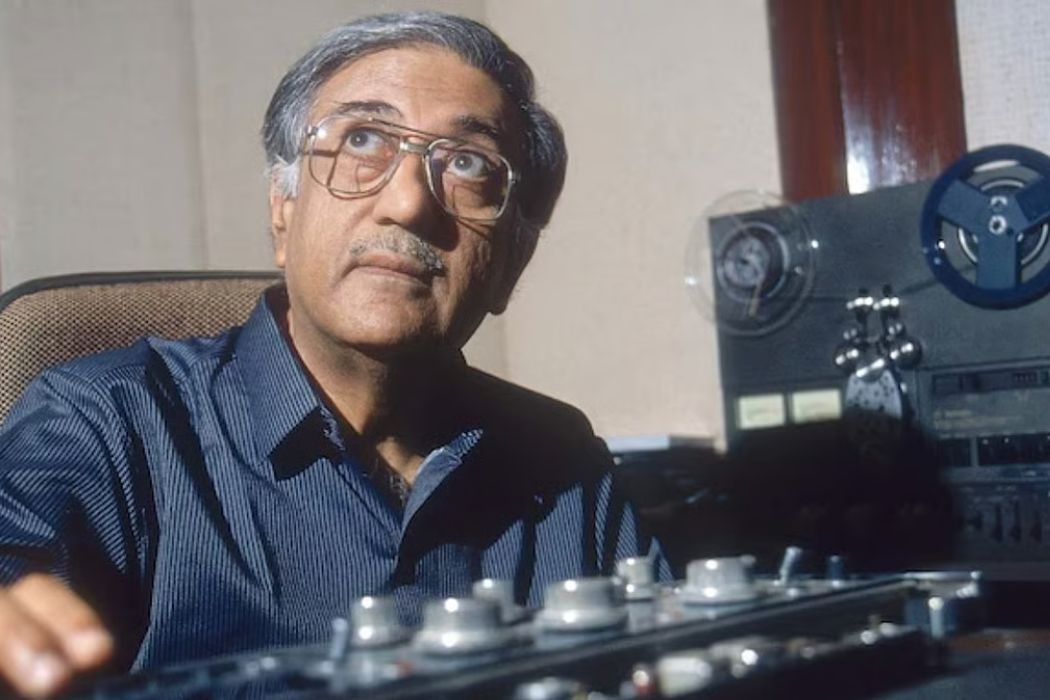
Ameen Sayani’s opening greeting, “Namaskar, main hoon Ameen Sayani,” became legendary despite his Ceylon base keeping him outside AIR’s official roster. His warm, conversational delivery established the template for personal connection without visual contact. AIR announcers like Chidanand Nagarkar hosted classical music sessions with scholarly precision. These voices carried authority and familiarity simultaneously, building relationships with listeners over years of consistent presence.
Post-1990s radio jockeys such as Malishka on Red FM’s “Morning Number 1” inherited this tradition, but the earlier generation defined the medium’s intimacy. Spontaneous humour and live advertisement readings blended seamlessly into daily routines, creating emotional bonds modern streaming services struggle to replicate.
The Monopoly’s Peak and Fall
No private broadcasters operated in India until 1993. AIR’s monopoly peaked between the 1970s and 1990s with over 200 stations nationwide. Vividh Bharati competed directly with Radio Ceylon by expanding film music programming, which increased both listenership and license fee revenues.
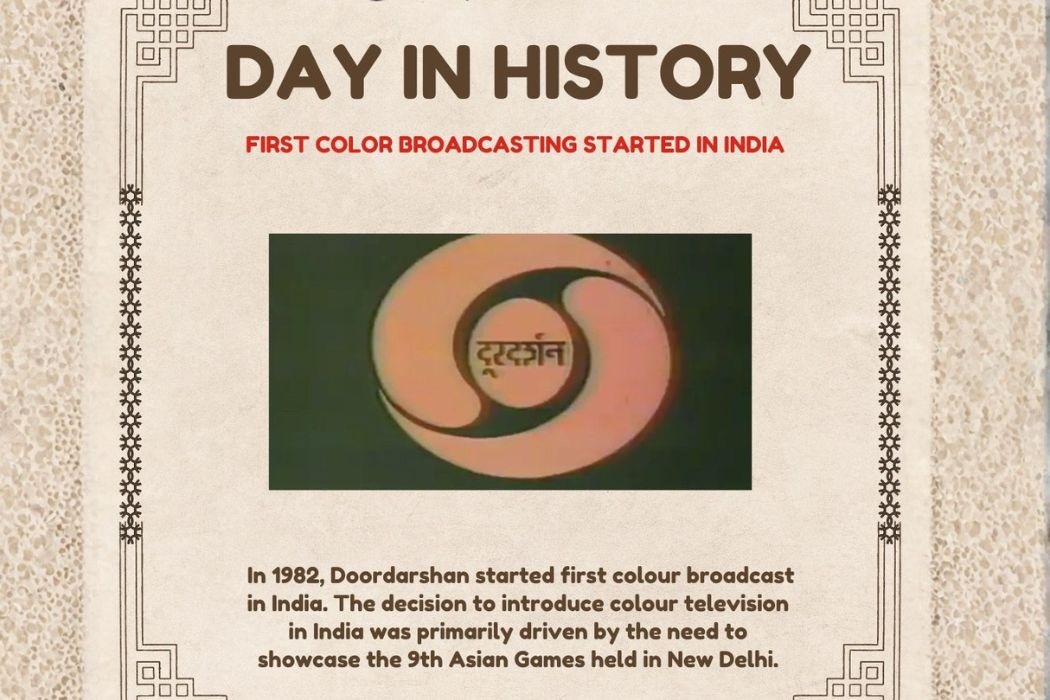
Television arrived via Doordarshan in 1976, gaining momentum after colour broadcasts began for the 1982 Asian Games in Delhi. This new medium eroded radio’s evening audience, but mornings remained radio territory. Commuters and homemakers continued their established routines.
Internet streaming emerged in the 2010s. Spotify, Gaana, and podcast platforms offered on-demand content that fundamentally changed consumption patterns. Listeners no longer had to wait for scheduled programs or accept the broadcaster’s choices. FM Phase I in 2001 introduced Radio Mirchi and Radio City, fragmenting audiences for the first time. Nostalgia persists for radio’s communal nature and unpredictability, qualities that algorithm-driven playlists cannot capture.
Private FM Arrives
Radio City Bangalore launched on July 3, 2001, as India’s first private FM station. The Phase I privatisation began with government auctions between 1999 and 2001, covering 40 cities. Music Broadcast Private Limited, now part of the Aditya Birla group, operated Radio City with 24-hour programming and hosts like Vera and Rohit Barker.
Radio Mirchi, from the Times Group, began broadcasting in Indore on October 4, 2001, before expanding to Delhi and Mumbai. By 2005, only 21 Phase I stations remained operational from the original auctions. High license fees reaching 15% of revenues bankrupted many operators, forcing license surrenders.
Red FM entered later in 2002 through the Sun Group, establishing a presence in Mumbai and other metros. Only 25% of auctioned licenses became functional stations, prompting regulatory reforms toward revenue-sharing models. Content restrictions initially barred news broadcasts, limiting private stations to music and entertainment formats. This constraint shaped the youth-oriented, music-heavy programming that defined early private FM.
The New Radio Landscape
Private FM ended AIR’s control, introducing youth-focused programming, contests, and extensive local language content. National listenership grew from 90 million during AIR dominance to over 150 million by the mid-2000s. Radio City and Mirchi popularised the radio jockey format and hit-driven song selection, creating celebrity personalities around voices. This revitalisation occurred even as television continued to gain ground.
FM stations targeted urban youth with Bollywood remixes and talk shows that contrasted sharply with AIR’s formal style. Local programming, like Bangalore traffic updates, embeds stations into daily commutes and routines. Advertising revenue shifted toward FM, capturing 5-10% of the media market by 2010. Phase II in 2006 with 97 stations and Phase III in 2015 with 135 stations expanded the reach considerably.
Radio City now operates nationwide, setting standards for youth branding and entertainment that subsequent stations followed. Digital streaming has challenged FM radio, yet 400 million Indians still listen to it regularly. The medium persists, though mornings no longer belong exclusively to it. The crackle and shared experience remain in memory, markers of an era when tuning in meant joining the nation.
Also Read:Monpa Women Revive Ancient Himalayan Cuisine Traditions
You can connect with DNN24 on Facebook, Twitter, and Instagram and subscribe to our YouTube channel.