

A Mughal-era tradition rooted in a mother’s prayer survives empires, bans, and the passage of two centuries.
A City That Holds Its History Close
There is a particular quality to the old quarters of Delhi. The lanes of Mehrauli carry within them the scent of something older than most nations. Each October, that scent sharpens into something unmistakable: the smell of fresh flowers, woven into garlands, draped over fans, carried in procession toward a dargah and a temple that have stood side by side for longer than anyone can clearly recall.
This is Phool Walon Ki Sair, the Festival of the Flower Sellers. It began in 1812 and has continued, with one notable interruption, ever since. It is not a religious festival in the conventional sense. It belongs equally to a Sufi shrine and a Hindu temple. And it started not with a king’s decree, but with a mother’s desperate prayer.
The Story Behind the Petition
The Mughal emperor Akbar Shah II ruled Delhi in the early nineteenth century under conditions that left little room for genuine authority. The British East India Company had reduced the court to a largely ceremonial body. Still, the emperor hoped to name his younger son, Mirza Jehangir, as his successor. The Company’s representative, Archibald Seton, had other plans. He preferred Mirza Abu Zafar, the elder prince, and made this preference known with administrative firmness.
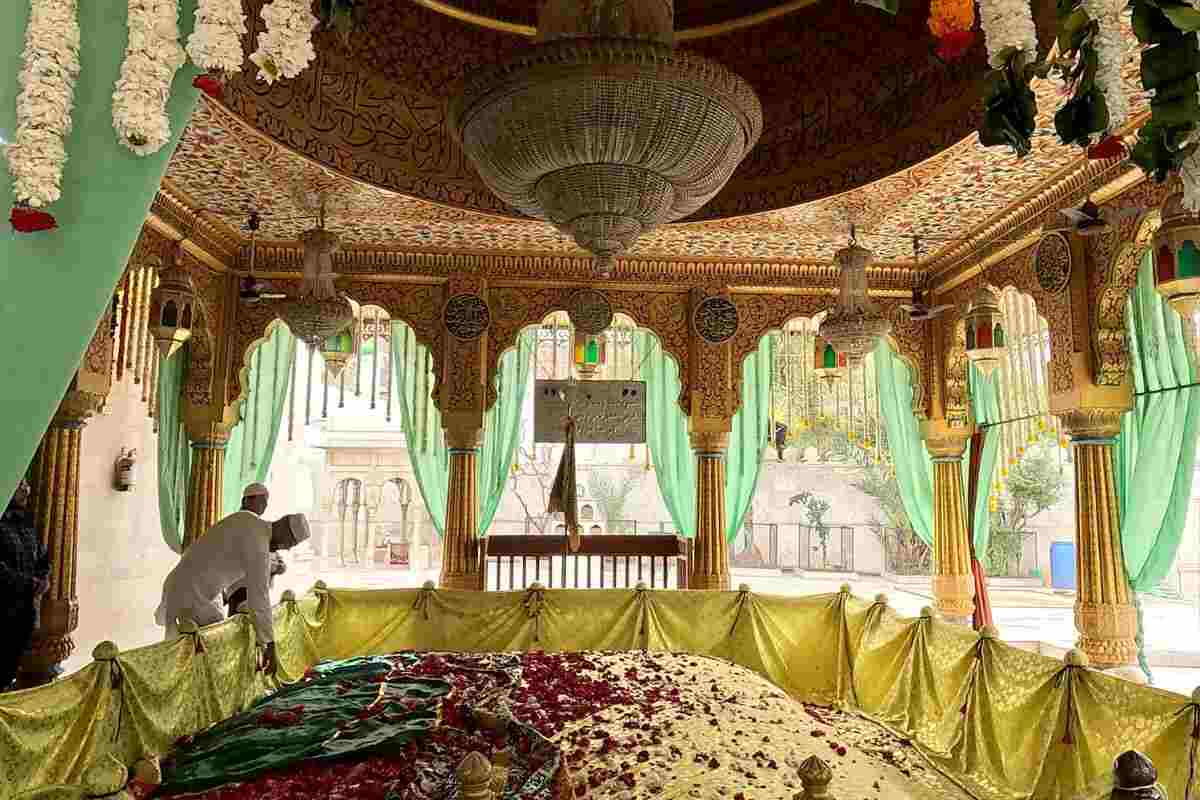
One day, in a fit of temper, Mirza Jehangir fired a shot at a British officer. The bullet missed. The British arrested the prince and confined him to the fort at Allahabad. Despair settled over the imperial household. The prince’s mother, Begum Zeenat Mahal, was consumed with grief and helplessness. Someone told her about the shrine of Hazrat Qutbuddin Bakhtiyar Kaki in Mehrauli, where prayers were said to be answered. She visited and prayed at the shrine. She made a vow: if her son were returned to her, she would offer a floral sheet at the dargah and a ceremonial fan at the nearby Yogmaya Temple. The prince was eventually released and Begum Zeenat Mahal kept her word.
The First Procession
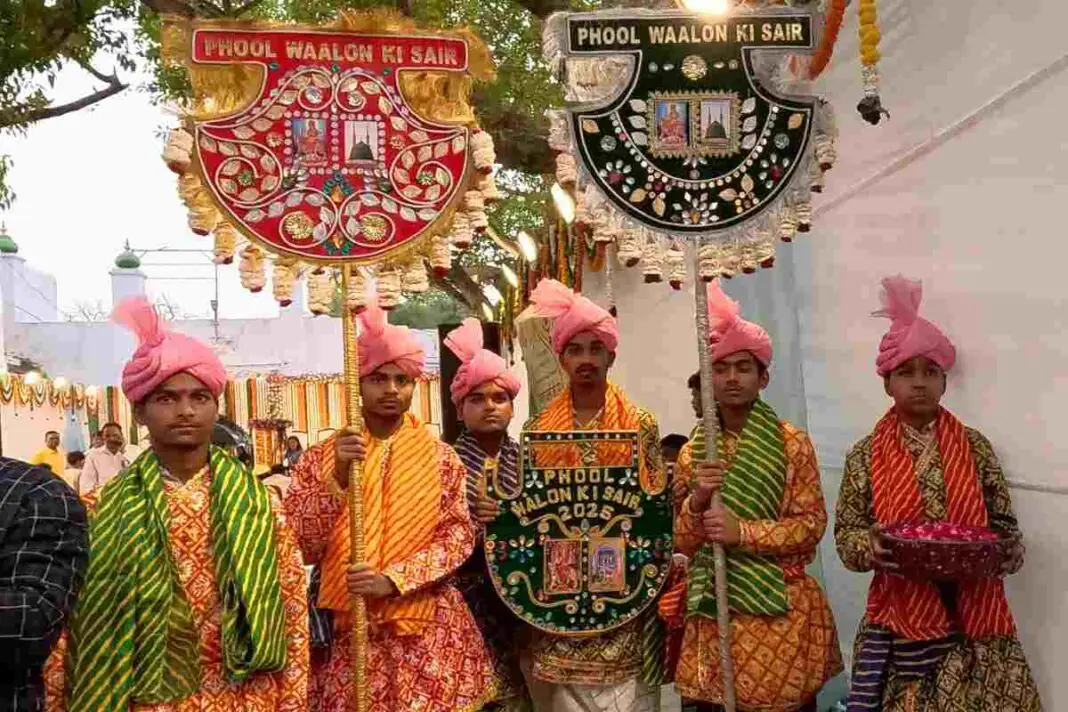
The procession that followed was remarkable even by Mughal standards of pageantry. Elephants and horses moved through Delhi’s streets. Courtiers and commoners walked together. And at the centre of it all were the flower sellers, the gulfarosh, carrying their handmade offerings: fans woven with blooms and sheets layered with petals.
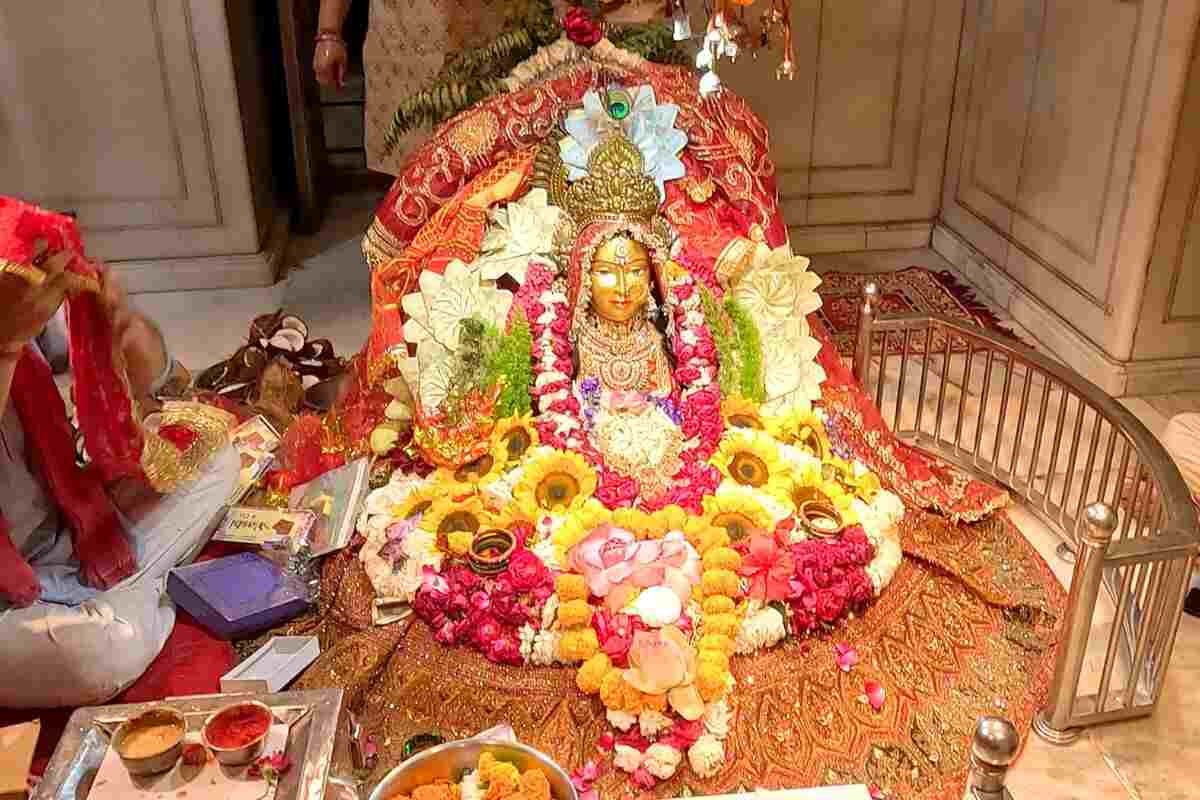
The route ended at Mehrauli, where offerings were made at both the Sufi shrine and the Hindu temple. The two gestures, one for each faith, were not symbolism. They were simply the terms of the vow. A Muslim queen’s prayer had been answered, she believed, through the grace of a Sufi saint. She honoured that grace at the dargah. She also honoured the temple next door.
This is the tradition that came to be called Phool Walon Ki Sair, the procession of the flower sellers. It became an annual event, growing in scale with each passing year, drawing traders, artists, musicians, and ordinary Delhiites who wanted to be part of something beautiful.
The British Interruption
After 1857, the British administration looked at anything that gathered large crowds of Hindus and Muslims together with suspicion. The policy was divide and rule, and Phool Walon Ki Sair was an obvious obstacle to that policy. The festival was suppressed. The processions stopped. For several decades, the tradition existed only in the memories of older residents and in occasional references in Urdu literature. It might have stayed buried there.
The Revival
In 1961, a man named Yogeshwar Dayal approached Prime Minister Jawaharlal Nehru with a proposal. The festival should be revived, he argued, not simply as a piece of cultural heritage, but as a living demonstration that the communities of Delhi had not abandoned the tradition of shared celebration. Nehru agreed. Government support was secured. The Anjuman Sair-e-Gulfaroshan, a trust specifically formed to oversee the event, took responsibility for its organisation.
Yogeshwar Dayal’s daughter, Usha, was married and living in Jalandhar when the revival happened in 1961. She returned to Delhi in 1973 and reconnected with the festival that had shaped her childhood. In the years that followed, the preparations for Phool Walon Ki Sair became a kind of seasonal rhythm in her household. Rehearsals, cooking, visitors, the constant work of getting things ready. She wrote and produced a theatrical piece called Mannat, a word meaning a prayer or vow, which was staged at the historic Jahaz Mahal in Mehrauli. It was received warmly. Before her father died in 2006, he asked her to promise to keep the festival going. She gave her word. She has kept it since.
A Week of Shared Ceremony
Vinod Vats, Vice President of the Anjuman Sair-e-Gulfaroshan, describes how the festival has grown over the decades. In its earliest form, the procession was a single day event. It expanded to three days: one at the dargah, one at the Yogmaya Temple, and one at Jahaz Mahal for a larger cultural programme. Today, Phool Walon Ki Sair runs for a full week.
Since 1961, the festival has drawn participants from states across India, each delegation arriving with its own handcrafted fans. The President of India traditionally sends two specially made fans, one for the dargah and one for the temple, a gesture that has been maintained regardless of who occupies Rashtrapati Bhavan.
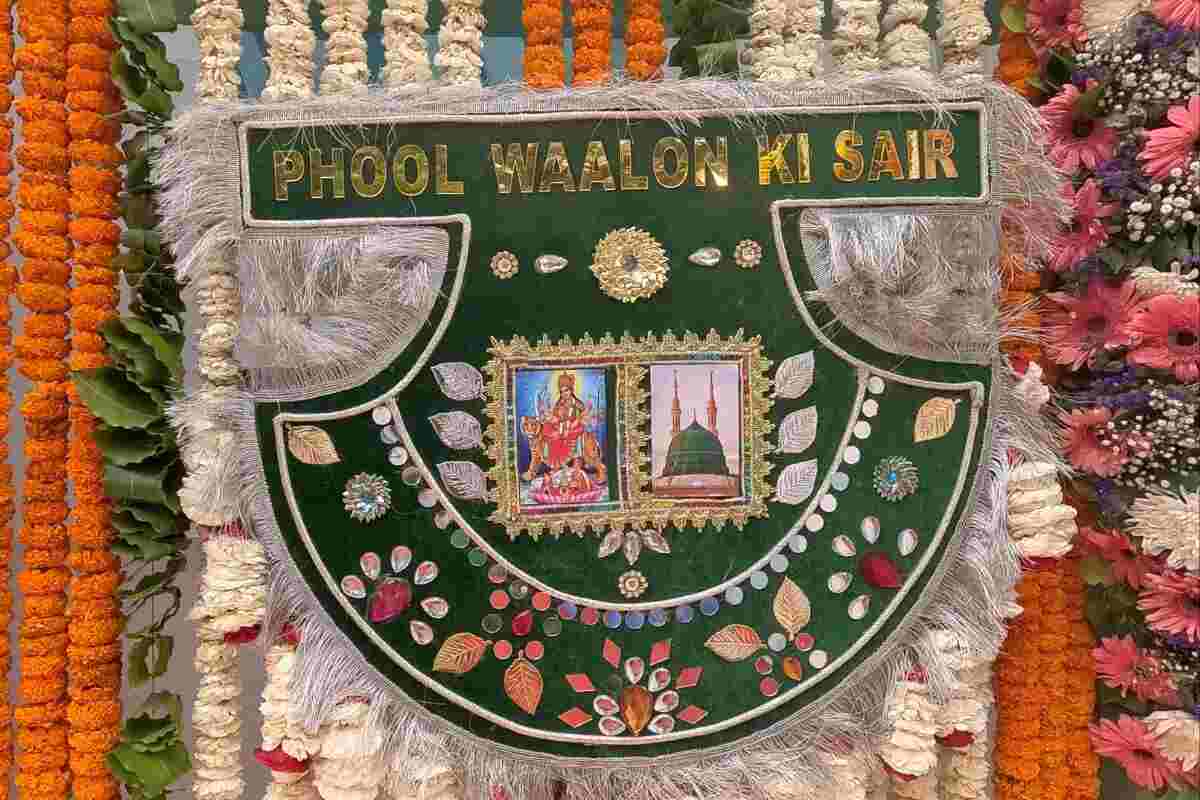
The week begins with a drawing competition for schoolchildren from the surrounding area. Winners receive prizes. Dignitaries arrive in due course: the Lieutenant Governor, the Chief Minister, and senior officials. The opening ceremonies are formal; the street atmosphere is not. People, of all ages, come from all backgrounds, and most of them come to see the procession itself, when the gulfarosh walk through Mehrauli carrying their fans and garlands, and the smell of marigolds and roses is thick in the air.
The Actual Festival
Phool Walon Ki Sair is sometimes described as a symbol of communal harmony, and while that is accurate, the phrasing makes it sound like a lesson rather than a living practice. It is more honest to say that the festival works because no one involved treats it symbolically. The dargah receives its offering. The temple receives its fan. The flower sellers make their garlands and fans with care. The procession moves through streets that have seen everything from Mughal decline to British occupation to the turbulence of Partition and beyond.
The tradition has survived it all. Not because any institution protected it, but because enough people, year after year, decided it was worth honouring. When the procession passes through Mehrauli each year, carrying flowers toward a dargah and a temple that share the same courtyard, it is not making a religious or political statement. It is simply keeping a promise. One that a grieving mother first made, more than two hundred years ago, when she had no power left except the act of prayer.
Also Read:Hyderabad’s Paigah Tombs: Hidden Architectural Treasure
You can connect with DNN24 on Facebook, Twitter, and Instagram and subscribe to our YouTube channel.