

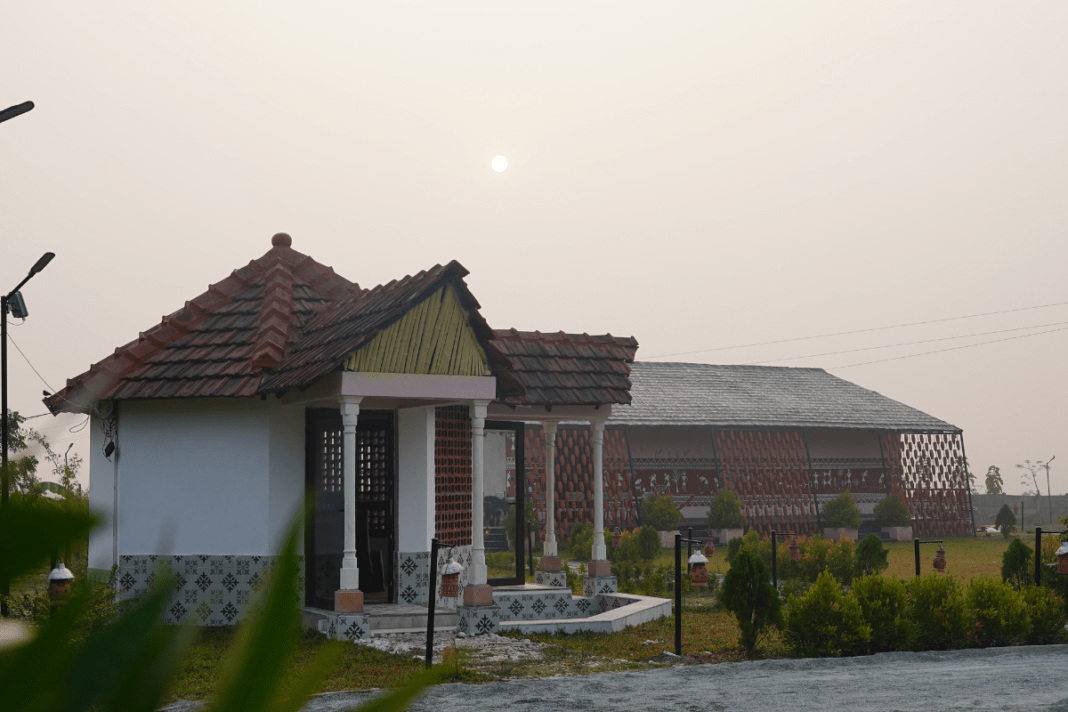

The man who planted millions of trees across India has now built something harder to quantify: a place that quietly forces visitors to rethink what comfort truly costs.
Nestled in Shankarda village, around 35 kilometres from Jamshedpur in Jharkhand, Mud and Meadows is not a conventional resort. Built using mud, lime, stone, and timber by local tribal artisans, the farmstay stores more than 50 lakh litres of rainwater annually and shelters over 200 species of trees on a single campus.
The project is the brainchild of Dr. Bikrant Tiwary, an environmentalist whose work has stretched from drought-hit districts in Rajasthan to forest corridors in Northeast India over the last two decades. He insists he did not create a luxury retreat. Instead, he describes Mud and Meadows as a living demonstration of what sustainable restoration can still look like in modern India.
From Corporate Life to Community Conservation
Before plunging into environmental work, Tiwary spent years in the corporate sector. Leaving that world behind, he says, was less an emotional leap and more a practical conclusion. India’s forests were shrinking, groundwater levels were collapsing, and traditional ecological knowledge held by tribal communities was steadily disappearing from public discourse.
Over the years, Tiwary has led afforestation drives across 23 Indian states, planting millions of trees. In Jharkhand alone, over 45 lakh saplings have reportedly been planted through initiatives associated with his work. Much of this effort has focused on degraded land, eroded riverbeds, and tribal villages where planting a tree carries ecological as well as cultural meaning.

For Tiwary, a tree is not merely vegetation. It functions simultaneously as shade, a water recharge mechanism, a source of food, and often a symbol of community identity.
Mud and Meadows emerged naturally from that philosophy. The idea was simple: if degraded land could be restored thoughtfully enough to become liveable, productive, and beautiful, it could also become a model others might replicate.
Storing the Rain Where It Falls
The first thing many visitors notice at Mud and Meadows is the absence of borewell pumps.
The entire campus is designed around an old principle once common across India – store rainwater exactly where it falls. Roof slopes, pathways, courtyards, and open surfaces are carefully graded to direct monsoon runoff into recharge pits, storage tanks, ponds, and underground catchment systems.
Together, these structures capture and store over 50 lakh litres of rainwater every year.
The harvested water supports irrigation, household needs, and groundwater recharge. Excess water flows into swales and shallow ponds that nourish surrounding vegetation and attract birds throughout the year.
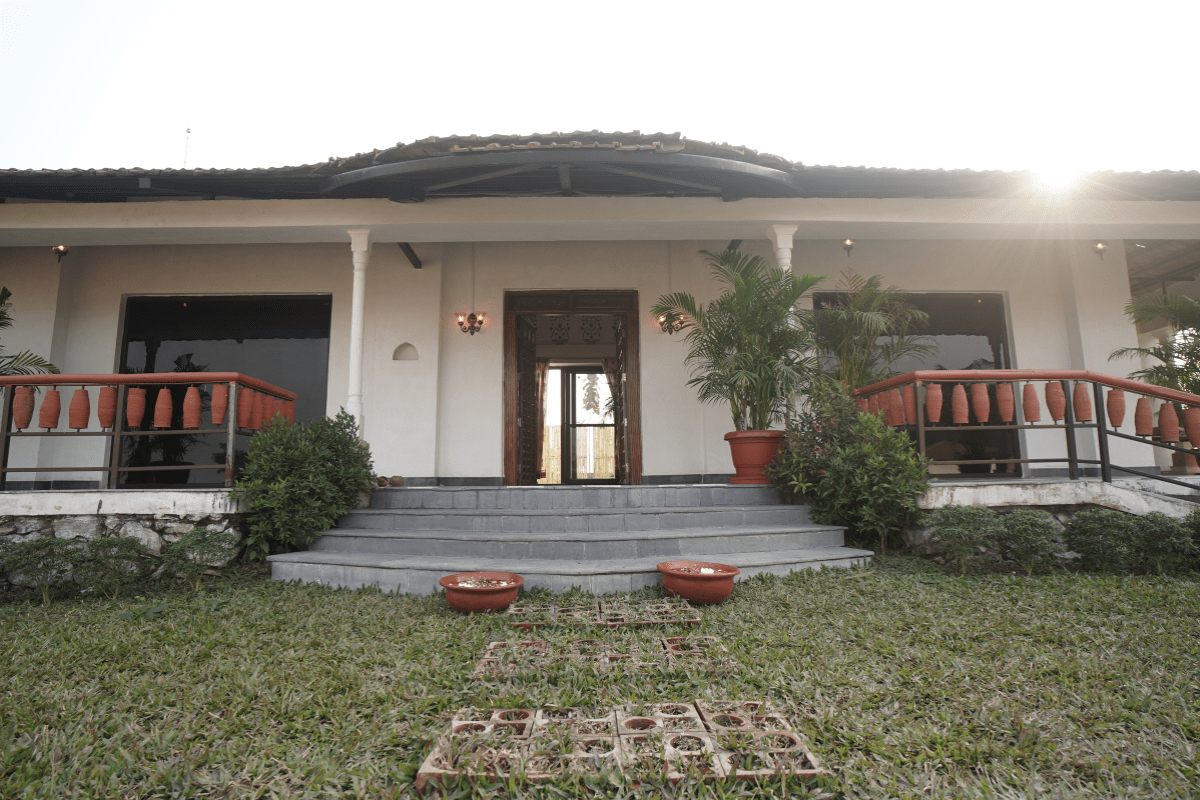
Tiwary often reminds visitors that the technologies behind this system are not modern inventions. Most existed in India long before dependence on deep borewells became widespread. “We did not lose the knowledge,” he says. “We simply stopped valuing it.”
A Forest Built Without Clearing One
The campus today supports more than 200 species of trees, including Sindoor, Rudraksha, neem, kadamb, jackfruit, mango, and multiple varieties of bamboo. Importantly, the land was developed without clearing existing trees.
Rather than functioning as a landscaped garden, the site behaves more like a working forest ecosystem. The trees provide food, biomass, shade, and habitat for birds and pollinators while significantly lowering temperatures across the campus during peak summer.
Many species planted here hold cultural and agricultural significance within the indigenous knowledge systems of Jharkhand’s Santal and other tribal communities.
Students, farmers, and researchers regularly visit the site to study agroforestry and polyculture practices – methods that combine food crops, trees, and biodiversity to improve soil health while reducing dependence on expensive external inputs.

For Tiwary, recognising indigenous knowledge begins with restoring value to the ecological practices tribal communities have sustained for generations.
Walls Made From the Earth Beneath Them
Nearly 95 per cent of the structures at Mud and Meadows have been built without cement.
Instead, the buildings rely on mud, lime, stone, and timber – materials long used in traditional Indian architecture, from village homes to centuries-old forts that continue to stand without industrial binding agents.
Construction was led by local Santal and Kumar artisans whose understanding of soil behaviour, wall composition, and seasonal durability comes from lived practice rather than formal engineering schools.
“They were not brought in for aesthetics,” Tiwary explains. “They were the builders.”
The structures are naturally thermally stable. Thick earthen walls absorb heat slowly during the day and release it gradually at night, keeping interiors cooler in summer and warmer in winter. Most villas operate comfortably without air conditioning.
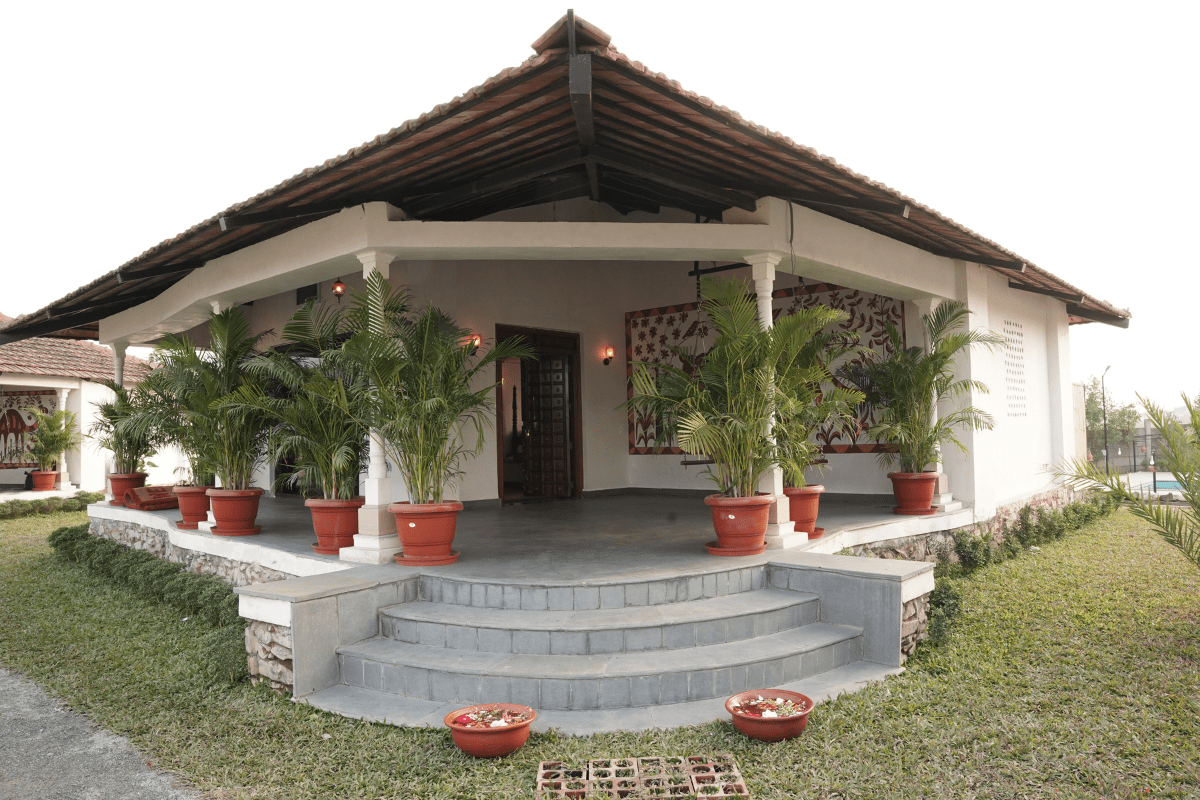
The project also challenges a deeply embedded social perception: that mud architecture represents poverty or backwardness.
Mud and Meadows argues the opposite. A well-designed earthen structure can be durable, climate-responsive, low-carbon, and economically practical. In many ways, the project suggests that modern concrete dependency may itself be the less sustainable choice.
Tourism as Ecological Education
The property includes six villas, a bamboo meditation pavilion, an organic kitchen, a craft gallery, and a rain-fed water deck surrounded by dense greenery.
Notably absent are the features typical of luxury resorts: paved lawns, large parking zones, or chemically-treated swimming pools.
Visitors are encouraged to participate in composting, seed sowing, nursery work, and water system maintenance. These are not staged “eco-tourism activities” but part of the site’s daily functioning.
The idea, Tiwary says, is not to entertain guests with sustainability, but to familiarise them with practices they can realistically adopt in their own homes or communities.
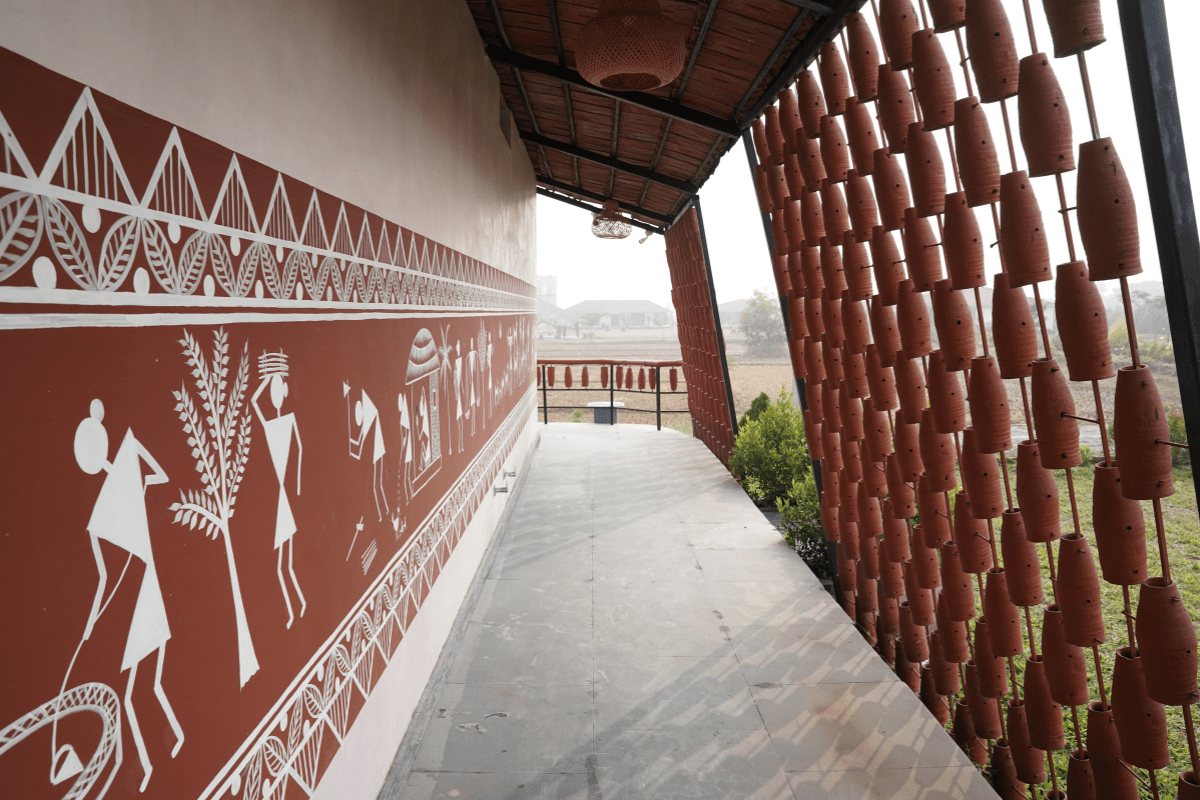
The farmstay also creates employment for tribal youth from nearby villages as nursery workers, guides, artisans, and craft curators.
In addition, Mud and Meadows hosts residential learning programmes known as Udhyam Yatras, where participants spend several days studying permaculture, water management, zero-waste systems, and sustainable living within a functioning ecosystem rather than a classroom.
Redefining Progress
India continues to lose groundwater at alarming rates, while forest degradation in tribal regions remains an ongoing concern. Against that backdrop, a farmstay that stores millions of litres of rainwater, protects biodiversity, and supports indigenous building traditions is more than an isolated experiment.
It is a working model.
Mud and Meadows alone will not solve India’s environmental crisis. But its significance lies elsewhere: it demonstrates that many of the solutions already exist within local knowledge systems that are too often ignored in mainstream policy conversations.
The project ultimately asks a difficult question – not whether sustainable living is possible, but why modern development has made it seem exceptional.
Also Read:Badi Aayi Patrakar: The story of the Women behind Khabar Lahariya
You can connect with DNN24 on Facebook, Twitter, and Instagram and subscribe to our YouTube channel.