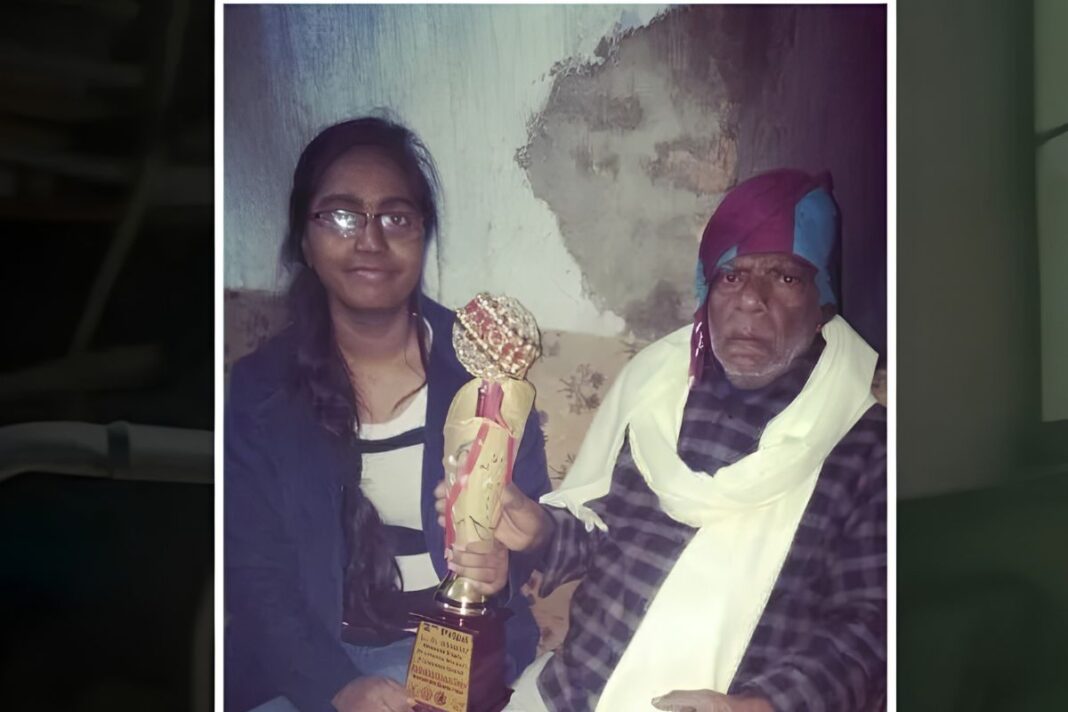

Necessity is the mother of invention, they say. And when that combines with love, it creates something beautiful. Inspired by the love for her grandfather, 12-year-old Shalini Kumari from Patna created something no pharmacy shelf carried and no rehabilitation clinic offered: a walker that could be used safely on a staircase.
The story begins simply enough. Her grandfather had sustained a serious injury. A standard walker, the sort issued routinely to older people and people with disabilities, served him well on flat ground. On the stairs, it failed him entirely. The fixed height of its legs made each step an ordeal. Shalini watched this daily and, rather than accepting it as an inconvenience of old age, began to see it as a problem with a solution.
She had no workshop, no laboratory, and no formal training in mechanical design. What she had was a clear picture of the problem, a willingness to put her ideas on paper, and the determination to see them through.
Simple Reasoning, Practical Result
The walker Shalini conceived is known formally as a modified walker with adjustable legs. Its defining feature is a hydraulic mechanism mounted on the frame’s front legs. By operating a lever, the user can raise or lower the front legs independently of the rear ones. A locking mechanism holds the adjustment in place once set, preventing any unintended shift during use. Clutch-style grips give the user firm control throughout.
The mechanism is straightforward. While climbing stairs, the front legs can be raised to match the height of the next step. While descending, they can be lowered accordingly. At no point does the user need to lift or tilt the entire frame, which is precisely the risk that makes ordinary walkers unsuitable for staircase use.
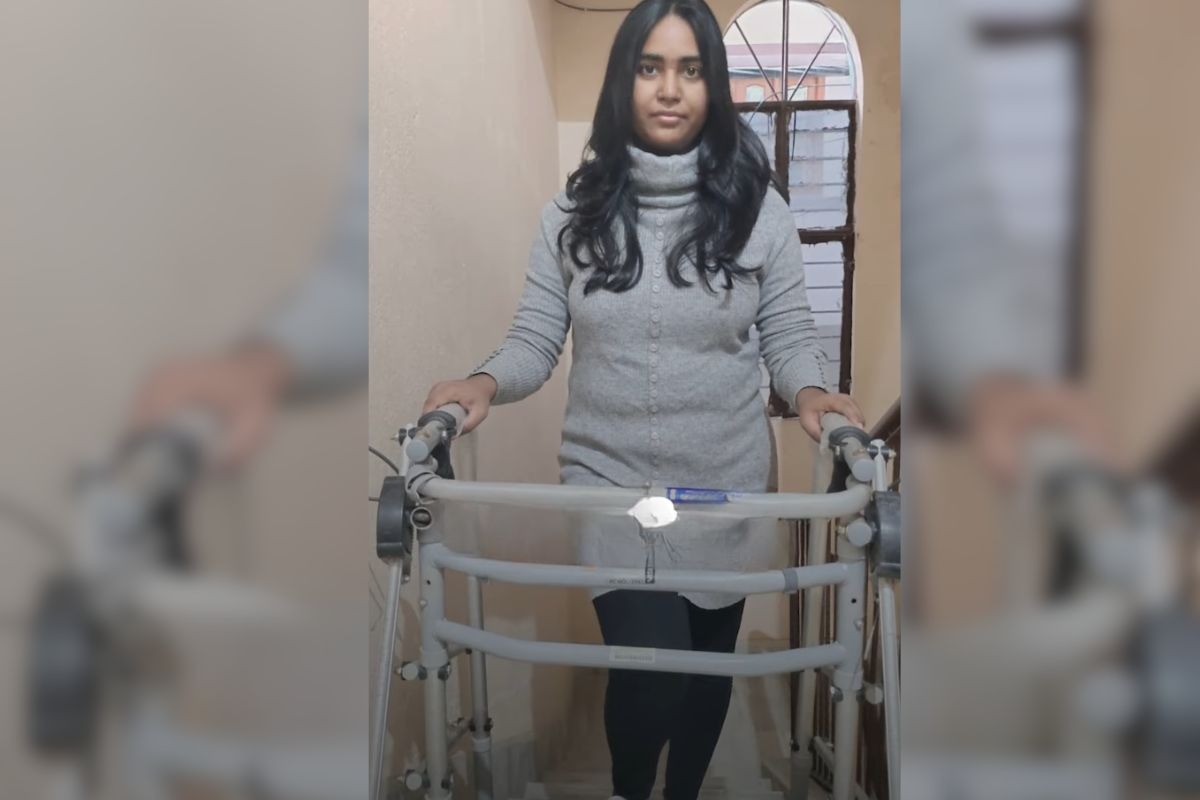
Shalini sketched the initial concept herself. The mechanical complexity of turning that sketch into a working prototype was beyond what she could manage alone, which is where the National Innovation Foundation stepped in.
From Sketch to Product
The National Innovation Foundation, or NIF, operates as an autonomous body under India’s Department of Science and Technology. Its purpose is to identify and support grassroots innovation, particularly among students and rural inventors who lack the institutional backing that urban researchers take for granted.
NIF accepted Shalini’s design and assigned its technical team to the project. Over several iterations, they moved the concept from a paper drawing through multiple prototypes to a refined working model. The process involved materials testing, structural evaluation, and repeated adjustments to the locking and adjustment mechanisms. The resulting product was far more polished than anything a 12-year-old working in isolation could have produced. Still, the central idea of the adjustable front legs operated by a lever and locked in place, remained Shalini’s own.
The NIF’s IGNITE programme, which is specifically designed for innovators under the age of seventeen, was the formal entry point for Shalini’s design. IGNITE invites children to submit practical solutions to everyday problems, evaluates those submissions based on originality and utility, and supports the most promising ones with both technical development and public recognition.
A President and a Prize
In 2011, Shalini’s walker was selected by IGNITE and brought to national attention. She received formal recognition from the late Dr. A.P.J. Abdul Kalam, then President of India. The design was presented at Rashtrapati Bhavan and was also acknowledged by the Ministry of Women and Child Development.
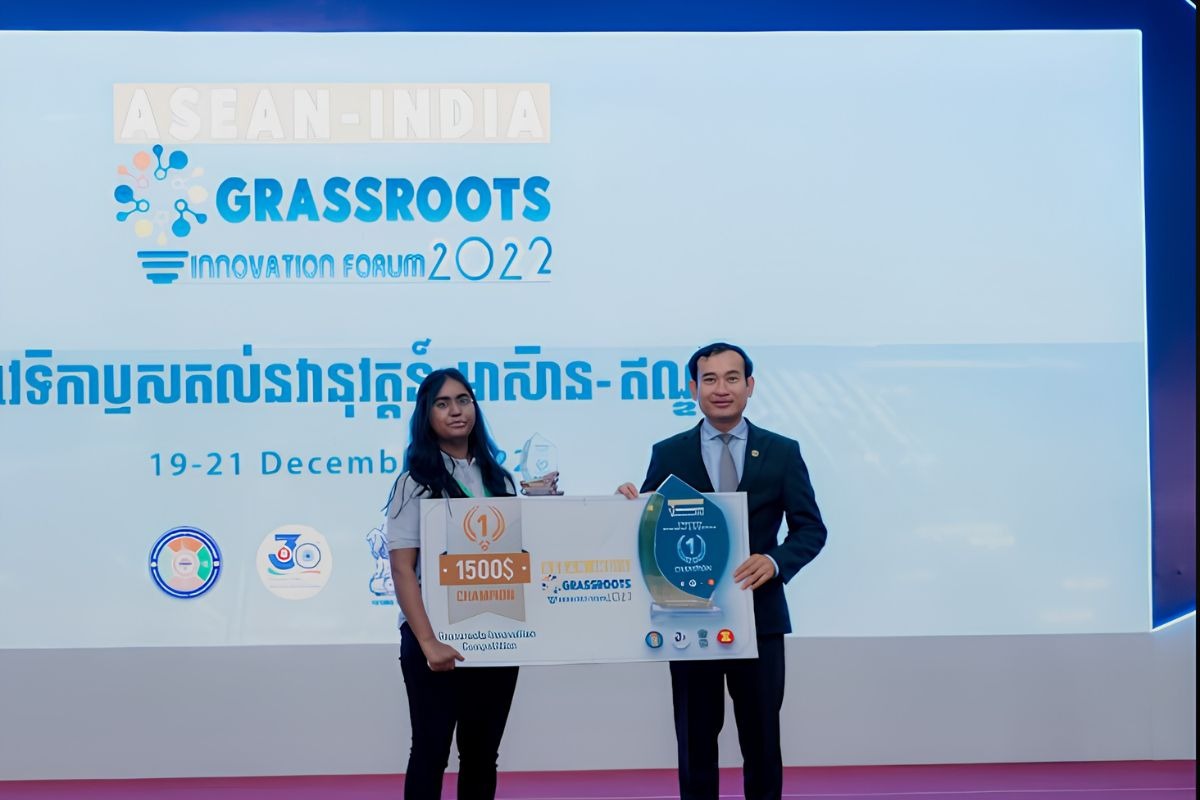
For a child from Patna with no academic connections to science institutions, this was an extraordinary sequence of events. The recognition did not stop there. In 2022, more than a decade after the original invention, Shalini’s walker competed at the third ASEAN-India Grassroots Innovation Forum, held in Cambodia. She won the first prize, which carried an award of 1,500 US dollars. The win placed her, and by extension, the NIF’s work with student inventors, on an international platform.
The long gap between the initial national recognition and the international award is interesting in itself. The walker had not faded into obscurity after 2011. It had continued to be developed, refined, and eventually brought to market.
From Prototype to Product
Vishwako Healthcare Private Limited, a health equipment company, began commercial production of the modified walker. The product is now available for purchase online in India. That step, from a student’s hand-drawn concept to a manufactured item with a retail listing, is not common. Many innovations recognised by bodies like NIF remain at the prototype stage. Shalini’s walker completed the full circle.
The outcome is that elderly and disabled individuals across India can now purchase a walker designed specifically for use on stairs. For a country with a growing elderly population and habitats that often include multi-storeyed homes without lifts, the need for such a product is genuine and substantial.
The Impact in Practical Terms
Arthritis, post-surgical recovery, and mobility impairments caused by age or injury restrict independence, a restriction that compounds over time. A person who cannot safely use a staircase is effectively confined to whichever floor they are on or dependent on a companion for movement. That loss of independence carries a psychological weight as well as physical inconvenience.
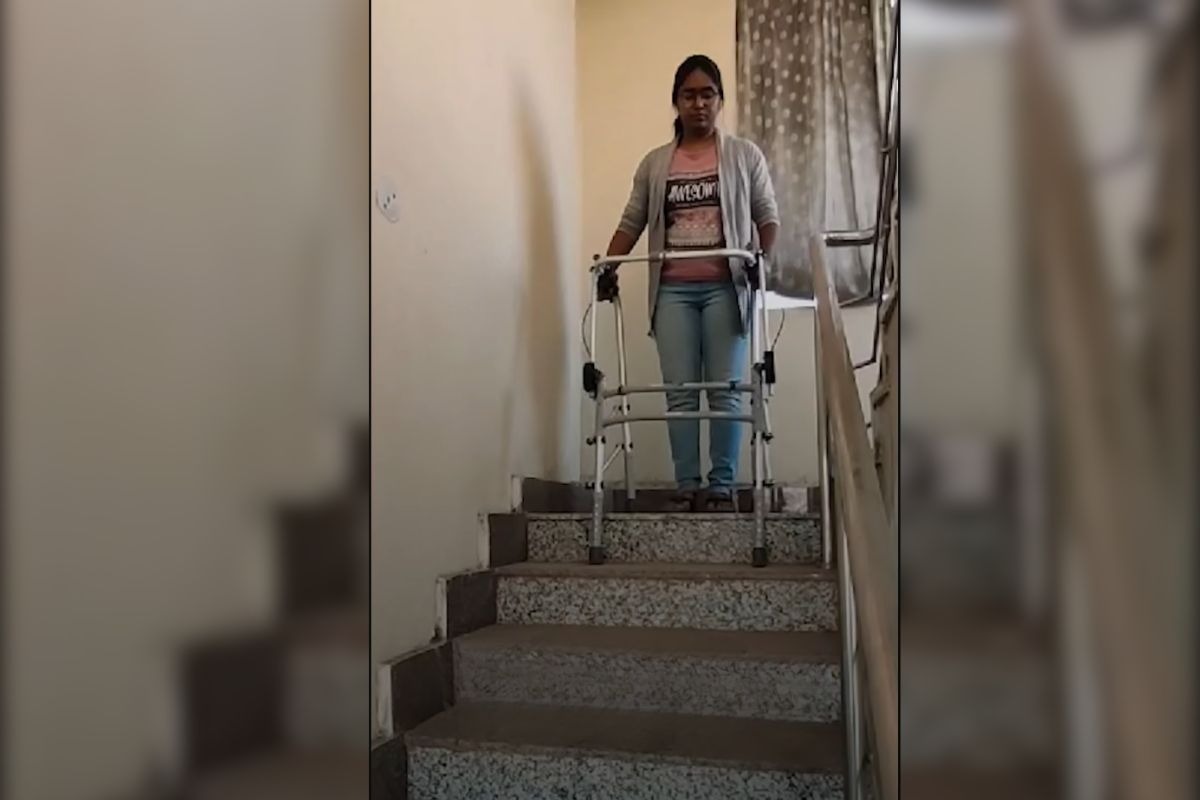
The adjustable-leg walker addresses one specific part of that problem. It does not restore full mobility. But it does return a degree of freedom to people who had lost it, the ability to navigate a staircase without assistance or risk.
Speaking about her ambitions for the product, Shalini says she wants to see more people move without constraints. Her words are plain, and the walker reflects that plainness. The design does not overcomplicate. It solves one problem reliably.
A Conclusion Without Sentimentality
Shalini Kumari is not a symbol or a mascot. She is a person who noticed a problem and set about to solve it. Her grandfather’s difficulty on the staircase was the starting point. What followed was methodical: an idea, a sketch, an application, a collaboration, a prototype, a product, and eventually a first-place award in an international competition. By solving one ordinary problem well, Shalini Kumari demonstrated what grassroots innovation is meant to do: improve everyday life in ways that are immediate, tangible, and humane.
Also Read:India’s Pink-Saree School for Grandmothers
You can connect with DNN24 on Facebook, Twitter, and Instagram and subscribe to our YouTube channel.