

The Other Voice of Our Golden Age
Obituary
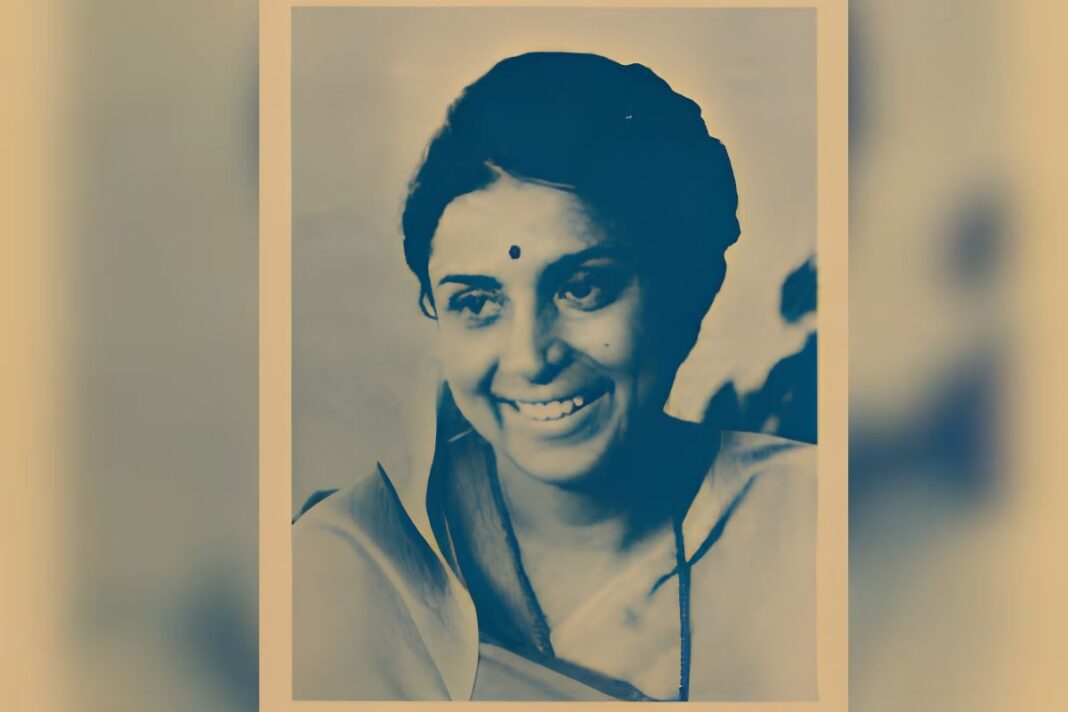
On 31 May 2026, in a modest Mumbai home far from the arc-lights that once glowed to her songs, Suman Kalyanpur’s voice finally fell silent. She was 89. For over two decades from the mid-1950s, her delicate, nazuk voice floated through Hindi cinema and several Indian languages, so seamlessly woven into our collective memory that many listeners, then and now, hum her melodies without even realising they are hers.
Early Life and Formation
Born Suman Hemmadi on 28 January 1937 in Dhaka to a Saraswat Brahmin family originally from coastal Karnataka, she moved with her family to Bombay in the 1940s. Her early inclinations were towards painting — she studied at Sir J. J. School of Art — but music soon took over, guided by classical training under Keshavrao Bhole, Abdul Rehman Khan and others. In the early 1950s, while still in her teens, she began singing on radio and then for films, making her playback debut around 1954.
In 1958, she married Mumbai-based businessman Ramanand Kalyanpur. He accompanied her to recordings, and the couple raised a daughter together. In later years, Suman largely withdrew from the limelight, occasionally appearing at select felicitation functions. Recognition came late: in 2023, she was awarded the Padma Bhushan, an overdue official acknowledgement of a contribution that connoisseurs had long regarded as part of the core canon of Hindi film music.
The Art: Unforced, Transparent, Intimate
Through the 1960s and 1970s, Suman Kalyanpur became an indispensable yet strangely under-credited presence in Hindi film music. Her tone and timbre were so close to Lata Mangeshkar’s that even connoisseurs could be fooled on first hearing, and radio stations notoriously mixed up their credits. As she herself once remarked, she had grown up singing Lata’s songs, and her own thin, delicate voice naturally fell into a similar mould — something she could neither fully avoid nor wished to exploit.
Yet to reduce her to a “Lata-clone” is to miss what made Suman Kalyanpur quietly unique. Within that familiar soundscape she brought an unforced emotional transparency, rarely over-ornamenting a line, letting the composition and the words breathe. This quality is evident in some of her most cherished solos: “Na Tum Hamen Jano” (Baat Ek Raat Ki), with its introspective, half-whispered plea; “Behna Ne Bhai Ki Kalai Se” (Resham Ki Dori), which turned into a rakhi staple across generations; and the poignant “Aaya Na Humko Pyar Jatana” (Pehchan).
Her duets — particularly with Mohammed Rafi and Mukesh — form a parallel history of Hindi film romance. It is difficult to imagine Brahmachari without the effervescence of “Aajkal Tere Mere Pyar Ke Charche”, or Rajkumar without the tender call-and-response of “Tumne Pukara Aur Hum Chale Aaye”. With Rafi she sang “Na Na Karte Pyar Tumhin Se” (Jab Jab Phool Khile), “Tumse O Haseena” (Farz), “Dil Ek Mandir Hai” and “Rahen Na Rahen Hum” (Mamta), among many others that defined the sound of middle-class aspiration and romantic yearning in that era. With Mukesh came songs like “Mera Pyar Bhi Tu Hai” (Saathi) and “Aap Se Humko Bichhade Huye” (Vishwas), where her voice wrapped itself around his pathos without ever turning theatrically sentimental.
Beyond Hindi, she recorded extensively in Marathi, Gujarati, Bengali, Kannada and other languages. Marathi listeners remember “Nimbonichya Zadamaage” and abhangs like “Dev Maza Vithu Sawala” as strongly as Hindi cinephiles recall her great duets. Devotional and bhavgeet recordings kept her close to non-film audiences as well, giving her art a reach and longevity that transcended any single industry.
Industry Politics and the Question of Rivalry
Her career was shaped as much by industry politics as by artistry. When Lata Mangeshkar and Mohammed Rafi fell out over royalty issues and stopped recording duets together in the early 1960s, producers turned to Suman Kalyanpur. She ended up recording a large body of Rafi duets in a relatively short span — reportedly more than a hundred. This success, combined with the uncanny similarity of her voice to Lata’s, fed a narrative of rivalry that the media was only too happy to amplify.
Over time, as Lata’s dominance became absolute, many accounts suggest that producers grew cautious about over-using a singer whose tone could be mistaken for the reigning star’s — for fear, reportedly, of professional friction at the top. Suman’s opportunities narrowed despite her evident popularity with audiences. It would be unfair and unverifiable to attribute deliberate malice to any individual: the documented story is one of structural hierarchy and market dynamics, not of proven personal hostility. Yet the structural outcome — that a singer of Kalyanpur’s calibre remained perpetually in the shadow of another despite commanding a loyal audience — reflects a certain ruthlessness inherent in the star system of Hindi film music.
The Playback Fraternity: A Close-Knit World
The Hindi film music world of the 1960s was small, almost familial in its intensity. Playback singers shared studios, concert stages and social circuits with extraordinary frequency. Suman Kalyanpur was part of this ecosystem alongside contemporaries such as Mohammed Rafi, Mukesh, Manna Dey and Mahendra Kapoor, with whom she shared concert bills and professional occasions across the decade.
Mahendra Kapoor — best remembered for “Mere desh ki dharti” and scores of patriotic and romantic numbers — was among the male voices who shared that professional landscape with Kalyanpur. The two appeared together on stage and in recorded contexts over many years. As with many such long professional associations in that era, their relationship drew the occasional, inevitable whisper of something more personal — whispers that circulated in industry gossip but were never substantiated by either party or by credible reporting. Given the absence of verifiable evidence, it would be neither fair nor accurate to characterise their association as anything other than a warm professional kinship typical of that era. Mahendra Kapoor passed away in 2008; Suman Kalyanpur never publicly commented on any such speculation.
Dignity, Reticence and a Life Lived Off-Stage
Through all of the industry’s politics and the media’s narratives, Kalyanpur herself remained remarkably reticent. She rarely gave interviews, avoided public controversy and maintained that she held Lata Mangeshkar in the highest regard. When Lata passed away in February 2022, Suman described her death as “heartbreaking” and called her work “immortal” — words that hardly suggest personal bitterness and that speak of the grace with which she navigated a complicated professional relationship.
In later years, younger listeners discovered her through digital playlists and “guess the singer” clips in which her songs were routinely mistaken for Lata’s — leading not to resentment, but to renewed appreciation for the subtle differences that made a Suman Kalyanpur rendition distinctly, unmistakably her own.
A Legacy of Craft Without Self-Projection
With her death, Indian music loses not only a great playback singer but also a symbol of a certain older ethic: of craftsmanship without self-projection, of fame carried lightly, of a life lived mostly off-stage even while voicing the dreams of millions. In an age that records everything, she leaves behind comparatively few interviews, but hundreds of songs that continue to surface on radio, television and streaming platforms. For listeners whose childhoods and youth were scored to her melodies, the loss is deeply personal.
In the end, Suman Kalyanpur may be remembered not as “the other Lata”, but as the gentle, precise voice that could make even the most familiar tune feel newly minted, moving and intimate. The records will continue to spin, the playlists will refresh, and somewhere between Rafi’s soaring lines and Mukesh’s sighs, her soft syllables will keep returning — testament to a talent that asked for little and gave so much.
Also Read:Padma Shri Awardee Devaki Amma: The Woman Who Grew Forests
You can connect with DNN24 on Facebook, Twitter, and Instagram and subscribe to our YouTube channel.