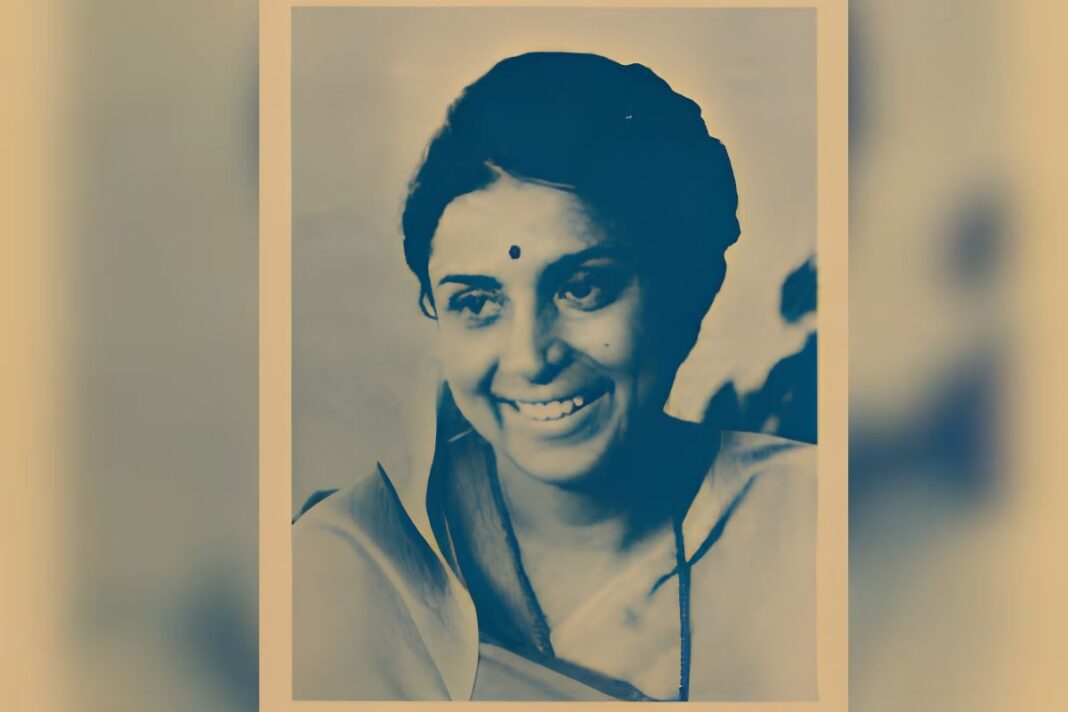

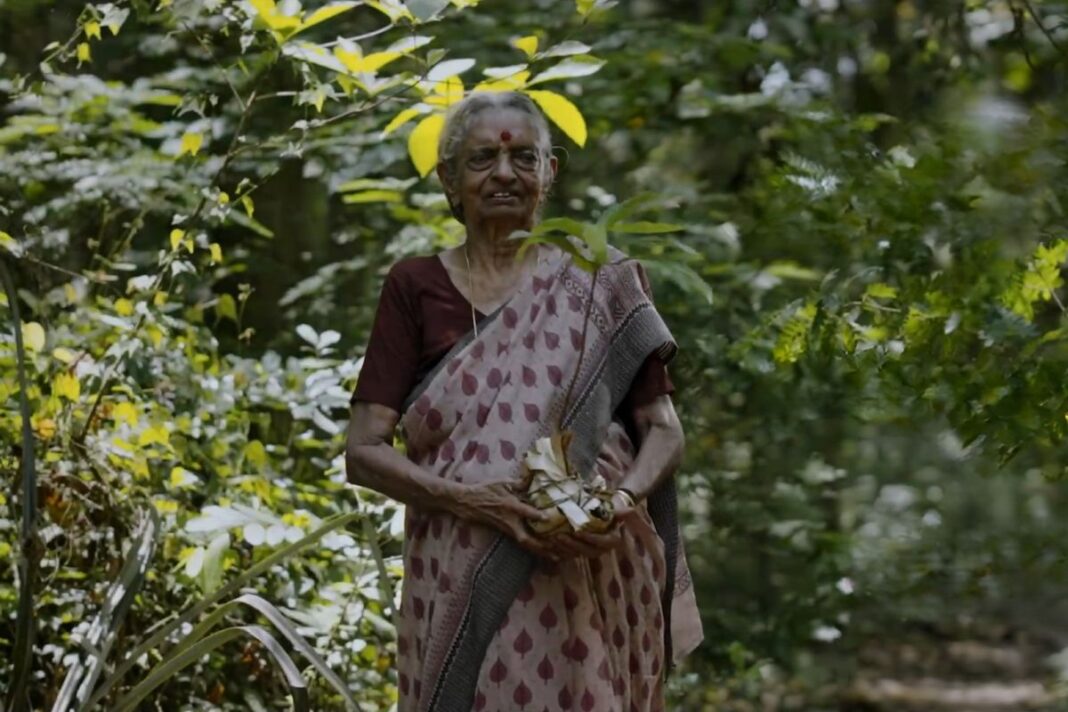

She was 48 years old when an accident left her bedridden. After she recovered, she was unable to continue planting paddy. Instead, she started planting saplings in sandy coastal soil. Her neighbours openly mocked her efforts. Forty-four years later, the Government of India has recognized her afforestation efforts and awarded her one of its highest civilian honours.
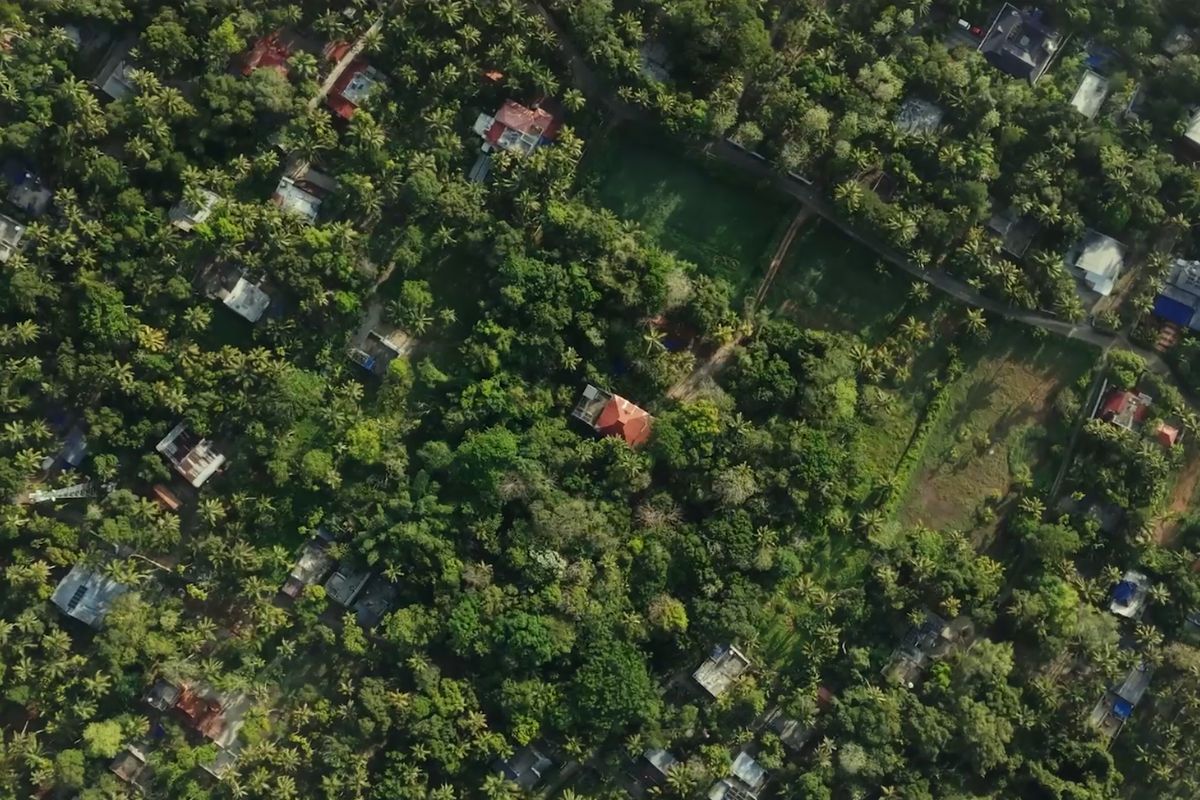
Kollakkayil Devaki Amma, now 92, lives in the coastal village of Muthukulam in Alappuzha district, Kerala. She has been awarded Padma Shri in the “Unsung Heroes” category for her contributions to afforestation. She is the only recipient of a Padma award from Kerala in 2026. Her forest, Thapovanam, stretches across 5 acres near the Arabian Sea and contains over 3,000 rare and indigenous trees, plants, shrubs, and creepers. Alappuzha is the only district in Kerala without any natural forest cover. That fact alone makes what she built more remarkable.
Origin of Thapovanam
The motivation that led Devaki Amma to plant trees was born out of necessity rather than altruism. In her late forties, she suffered an accident that ended her ability to work the paddy fields her family had cultivated for years. Rather than leave the land fallow and unproductive, she and her husband, Gopalakrishna Pillai, began planting saplings, encouraged by friends and relatives who brought seeds and cuttings during their visits.
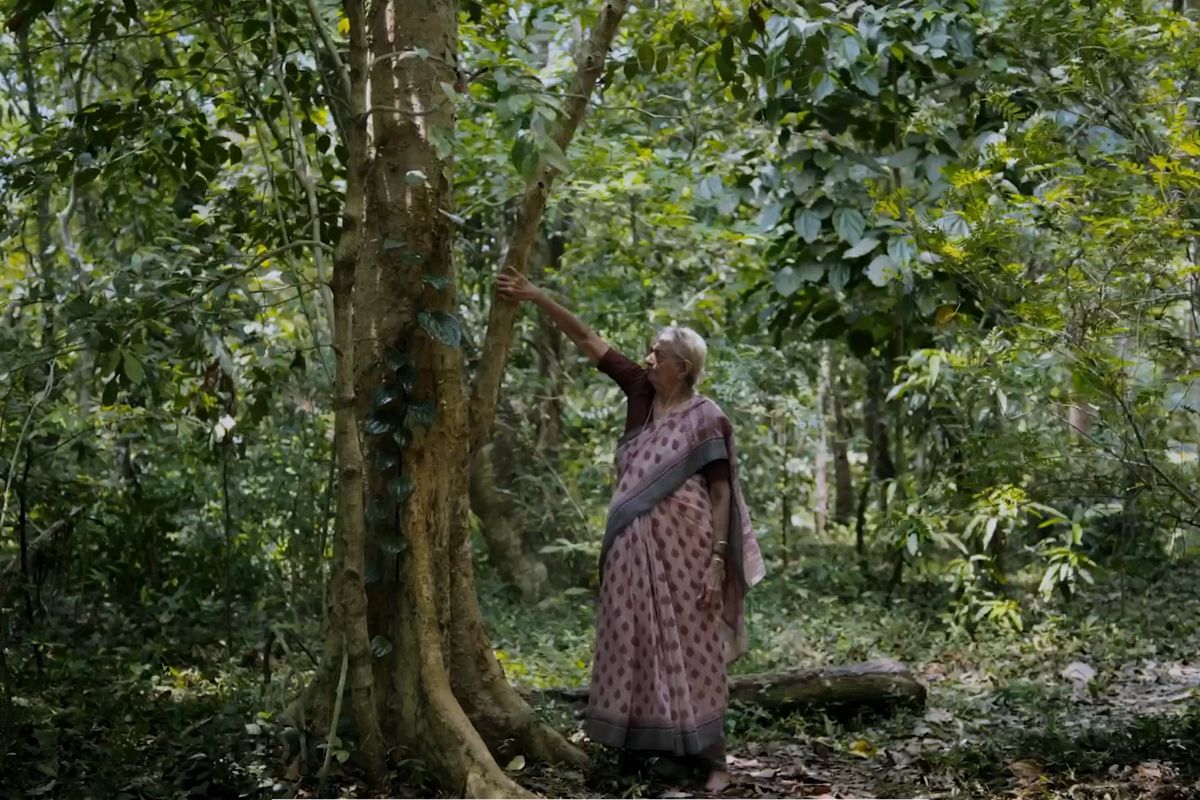
The land near the Arabian Sea was sandy, saline, and had served primarily as a storage ground for paddy and gingelly harvests. People in the area found the effort faintly ridiculous. Nobody believed Alappuzha could support a forest. The district lacked the soil depth, shade cover, and the moisture retention that most tree species require during their early years of growth. They were wrong, as events would prove.
What Thapovanam Became
Over four decades, that five-acre plot at Pullukulangara grew dense with life that surprised trained botanists who arrived to examine it. Thapovanam now hosts more than 3,000 species, including rare and endangered varieties such as Lakshmitharu, Chinese orange, and sang-leaved alangium, as well as common timber trees like teak and mahogany. Medicinal herbs that are difficult to find elsewhere in the district grow here, and Devaki Amma shares them freely with visitors who come specifically for that purpose.
The forest contains two natural ponds and a paddy field that collects water during the monsoon season. Neither pond dries out in summer, which matters considerably in a coastal area where water retention is a persistent difficulty. Groundwater levels in the surrounding area have recovered measurably since the forest took hold and began functioning as a living water system.
The range of wildlife that now inhabits Thapovanam gives a clear picture of ecosystem health. Paradise flycatchers, emerald doves, and forest wagtails stop there during migration. Southern birdwing and blue Mormon butterflies have been recorded. Mongoose, bats, rat snakes, peacocks, and various frogs use the cover year-round. Mushrooms and lichens spread across the floor. The forest is no longer the product of deliberate human planting alone. It sustains and regenerates itself.
Researchers studying biodiversity, climate response, and botany have used the site as a field location. It has appeared in several documentaries and is now recognised as the first artificial forest established in Alappuzha district.
Her Method and How She Developed It
Devaki Amma received no formal training in forestry or environmental science at any point in her life. What she learned came from direct observation, from decades spent reading the land closely, and from accumulated folk knowledge about plants used medicinally in Kerala across generations. Her eldest daughter, Thankamoney, who studied environmental engineering, brought saplings home on weekend visits. Her husband introduced seed varieties he had come across during his travels. Her grandchildren continued the practice as they grew older. One granddaughter, Saranya, is currently a doctoral student in botany, representing the fourth generation with a direct connection to the forest.
This steady family involvement gave Thapovanam a continuity that individual effort rarely sustains over such a long period. The project was never dependent on a single pair of hands, and it has outlasted the specific circumstances under which it began.
Devaki Amma also adjusted her approach as Kerala’s climate shifted around her. The monsoon pattern has changed considerably over the decades, with extended dry periods now followed by concentrated, heavy rainfall rather than the steady seasonal rains of earlier years. During periods of heavy rainfall, her family practises mulching and adjusts the technique at intervals to prevent waterlogging and heat damage to root systems. These adaptations were not drawn from any published forestry guide. They came from observation and repeated experience on the same ground across many years.
Recognition After Four Decades
The Padma Shri was not the first time Devaki Amma’s work had drawn official attention. She had previously received the Indira Priyadarshini Vriksha Mitra Award from the Ministry of Environment and Forests, given for excellence in tree conservation, and the Nari Shakti Award from the Ministry of Women and Child Development, recognising her contribution as part of broader social action.
The Padma Shri carries a different weight. The “Unsung Heroes” category exists specifically for individuals whose contributions have been substantial but largely invisible to the public. That description fits her four decades of quiet, consistent work with considerable accuracy.
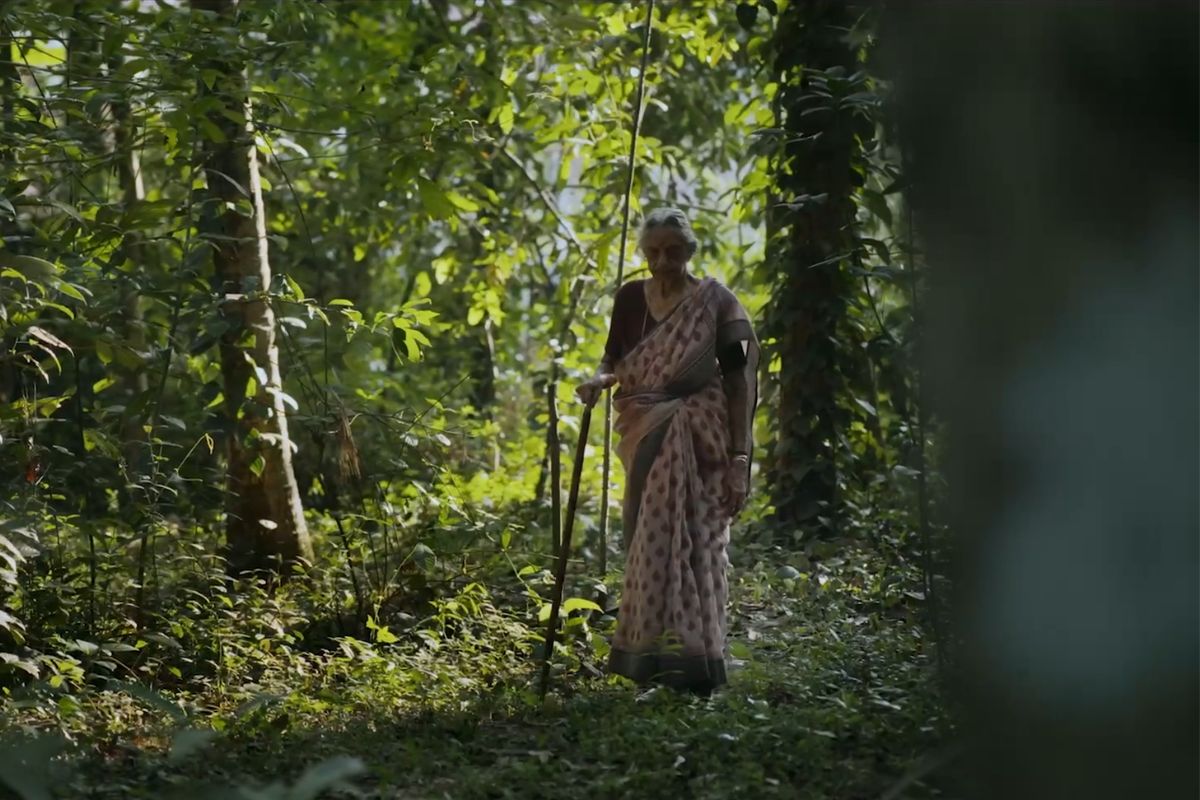
At 92, she continues to speak at environmental events across Kerala and has travelled to Delhi to address wider audiences. She speaks from direct knowledge rather than from theory, drawing on what worked in the specific soil conditions at Muthukulam, what failed, and what required adjustment over many years of practice. She tells visitors that the forest has kept her physically active despite the ailments that come with age, and she asks everyone who comes to plant at least one tree on their own premises. More than 2,000 families in the surrounding area have done so after contact with her or with Thapovanam.
What the Forest Demonstrates
The significance of Thapovanam is not only personal. It is technical and worth examining carefully. Coastal sandy soil in Kerala was long considered poor ground for sustained forest growth. Salt exposure, low water retention, and the complete absence of any existing tree canopy all work against early planting efforts in such locations. Devaki Amma’s forest challenges the assumption that these conditions are fixed and permanent.
Her approach was consistent throughout the decades. She favoured indigenous and locally adapted species that better withstand coastal conditions than introduced varieties would. She built water retention into the landscape through ponds rather than depending solely on rainfall. She planted in multiple layers, combining trees, shrubs, creepers, and ground cover to create a structure closer to natural forest density than any single-species planting could achieve. The principles were not complicated. They demanded only patience and an unbroken commitment to the same ground over a long period.
The oldest tree in Thapovanam is an Indian bael, estimated to be 200 years old. It predates her work entirely, but now stands within a living ecosystem she built around it.
The Record
The figures are worth stating plainly. Forty-four years of continuous work, five acres, more than 3,000 recorded species, more than 2,000 families influenced, and one national honour. They give a measurable shape to what was accomplished.
What the figures do not capture is the full weight of the context. Devaki Amma worked without institutional funding, without a trained team, and without public recognition for the greater part of those four decades. She worked in the only district in Kerala considered incapable of supporting a forest. She built a site that botanists and climate researchers now use for fieldwork.
India has honoured her with the Padma Shri. The more lasting record is Thapovanam itself. The forest will continue long after the award ceremonies are forgotten.
Also Read:Badi Aayi Patrakar: The story of the Women behind Khabar Lahariya
You can connect with DNN24 on Facebook, Twitter, and Instagram and subscribe to our YouTube channel.