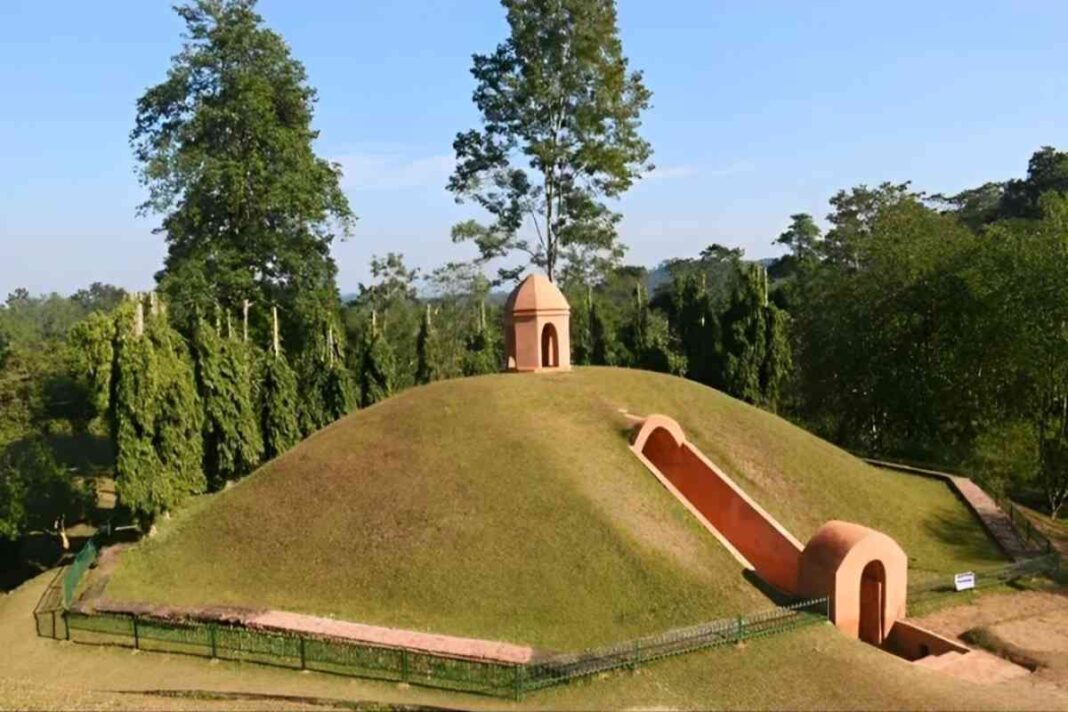

The UNESCO World Heritage Committee has added the Ahom dynasty’s mound burial system, known as Moidams, to its World Heritage List. This decision was made during the 46th session of the committee, held in Delhi. The Moidams, located in Charaideo, Assam, are now recognized as a Cultural Property.
About the UNESCO World Heritage Committee Session
The ongoing session, from 23 to 29 July, is examining 27 new site proposals for the World Heritage List. The committee is also reviewing the condition of 124 existing World Heritage sites, including 57 that are on the List of World Heritage in Danger. The 21-member committee represents 195 countries that have signed the World Heritage Convention.
Significance for Assam and Northeast India
Assam Chief Minister Himanta Biswa Sarma expressed his joy at this achievement. He thanked Prime Minister Narendra Modi, the UNESCO committee members, and the people of Assam. The Chief Minister highlighted three important points:
- This is the first site from Northeast India to be included in the UNESCO World Heritage List under the Cultural category.
- It is Assam’s third World Heritage Site, after Kaziranga and Manas National Parks.
- The announcement was made from India (Bharat).
Sarma described the Moidams as symbols of the Tai-Ahom community’s spiritual beliefs, rich heritage, and architectural skills. He invited people to visit and experience “Awesome Assam”.
What are Moidams?
Moidams are burial mounds of Ahom kings, queens, and nobles. The word “Moidam” comes from the Tai words “Phrang-Mai-Dam” or “Mai-Tam”. “Phrang-Mai” means to bury, and “Dam” refers to the spirit of the dead.
This recognition by UNESCO is a proud moment for Assam and the entire Northeast region. It showcases the rich cultural heritage of the area and is expected to boost tourism and awareness about Ahom history and traditions.
For detailed story, please visit: Awaz the voice
Also Read: The Sacred Pause: Lord Jagannath’s Rath Yatra and the Mazar of Salabega
You can connect with DNN24 on Facebook, Twitter, and Instagram and subscribe to our YouTube channel.