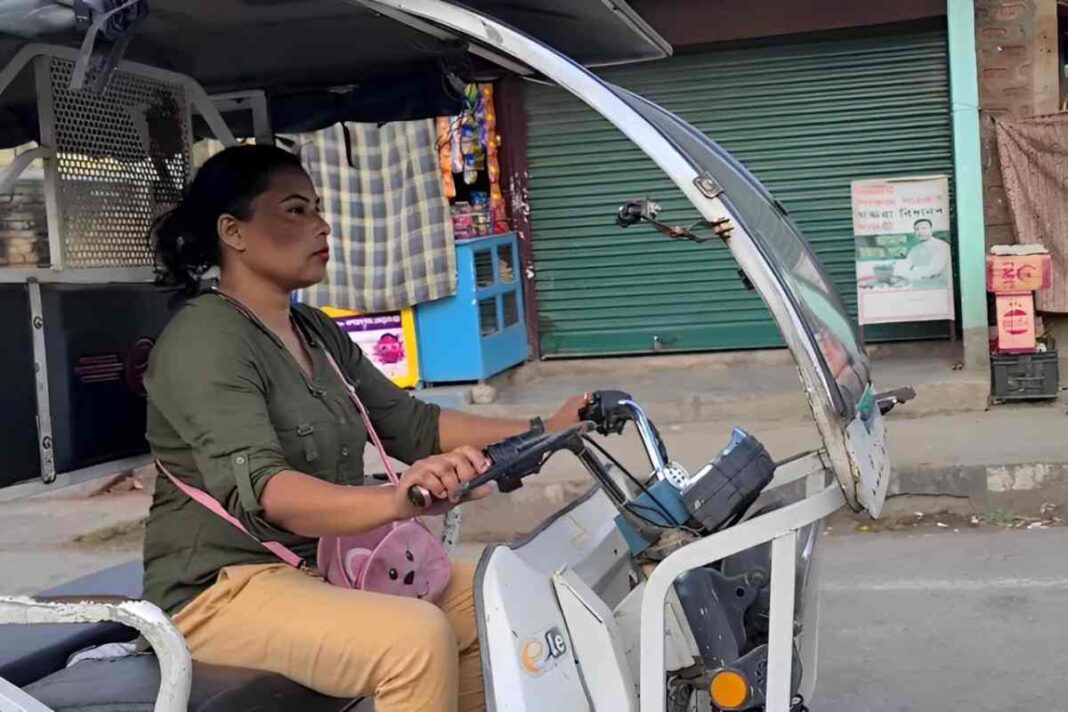

In the bustling streets of Guwahati, Assam’s capital, Pashmina Begum and Pinki Begum are breaking stereotypes and paving the way for women in traditionally male-dominated professions. These two Muslim women have taken up e-rickshaw driving as their chosen career, proving that determination knows no gender or religious boundaries.
Every day, Pashmina and Pinki navigate their e-rickshaws from Lalmati to Rajdhani Mosque via the Bhetapara-Hatigaon road. Their presence in the streets is a powerful statement against the notion that certain jobs are off-limits to women, especially those from Muslim communities.
Overcoming Challenges for Financial Independence
The path chosen by these women is not without its challenges. They face numerous obstacles, including traffic restrictions and poorly maintained roads. However, their resilience shines through as they brave scorching sun, heavy rains, storms, and even floods to earn their livelihood.
Their hard work pays off, with each woman earning between Rs 25,000 to 30,000 per month. This income allows them to support their families and achieve financial independence. For Pashmina and Pinki, this profession offers more than just monetary benefits – it gives them a sense of empowerment and self-reliance.
Choosing Self-Employment Over Traditional Jobs
Pashmina Begum’s journey to becoming an e-rickshaw driver is particularly inspiring. Initially considering private sector jobs, she found the salaries inadequate for supporting her family. The idea of driving an e-rickshaw presented itself as a more lucrative alternative.
The stories of Pashmina and Pinki serve as powerful examples of how women can carve out successful careers in unconventional fields. Their courage and determination not only provide for their families but also inspire other women to explore diverse career paths, challenging societal norms in the process.
For detailed story, please visit: Awaz the voice
Also Read: The Sacred Pause: Lord Jagannath’s Rath Yatra and the Mazar of Salabega
You can connect with DNN24 on Facebook, Twitter, and Instagram and subscribe to our YouTube channel.