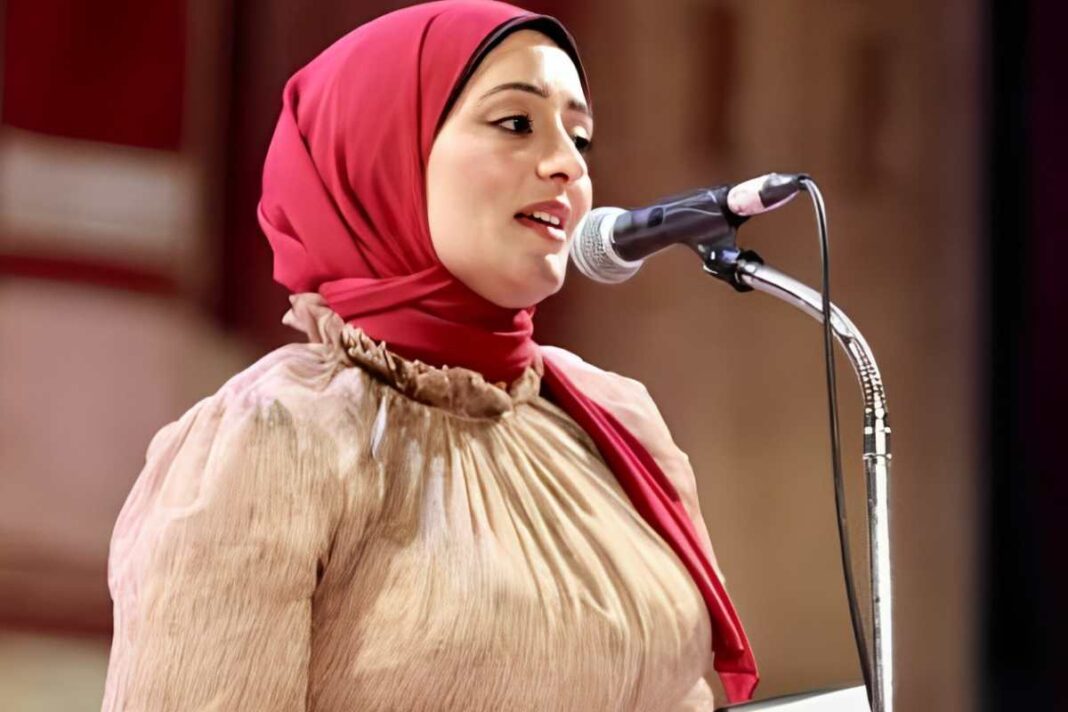

Dr. Walaa Jamal El Esseily, an Egyptian, is the Arab world’s first well-known Urdu poet. Her love for Urdu and India is a beautiful expression of the deep-rooted cultural ties between the two nations. “If I don’t come to India, I don’t get peace. I love India’s civilization and culture; I love to be called ‘Indian,'” she says, reflecting her profound connection with the country.
Tracing the Roots of Urdu in Egypt
The teaching of Urdu language in Egyptian universities has a rich history spanning 80 years. In 1939, the Egyptian government established the Oriental Language Institute at Cairo University to foster cordial relations with the subcontinent. This initiative was further strengthened after 1952 with the introduction of Urdu language broadcasting. The first attempt to introduce Urdu in Egypt was made by few Indians in 1930, with the publication of an Urdu magazine titled ‘Jehan Islami’ from Cairo.
A Poetic Journey of Love and Appreciation
Dr. Walaa Jamal’s love for Urdu poetry blossomed during her college days, leading her to pursue an MA and later a Ph.D. in the same language. “There is sweetness in the Urdu language. This is the secret of my love for this language,” she says. Her first book, “There is an Ocean in Between,” a collection of prose and free verse, marked the beginning of her poetic journey. Since then, she has gifted the Urdu world with numerous articles, features, and essays, earning literary accolades along the way.
Deeply influenced by India’s Ganga-Jamuni civilization, Dr. Walaa Jamal’s poetry reflects her appreciation for the country’s rich culture. Her couplets, such as “I am on the banks of the Nile, but in sight, Jhelum is Ganga, is Jumna, Ravi is Chenab,” exemplify her poetic prowess and her profound connection with India.
Dr. Walaa Jamal El Esseily symbolizes the enduring relationship between India and Egypt and between the Urdu and Arabic languages. Her poetic journey is a testament to the power of language and culture to transcend boundaries and bring people together.
For detailed story, please visit: Awaz the voice
Also Read: India’s Global Leadership: G-20 and Development
You can connect with DNN24 on Facebook, Twitter, and Instagram and subscribe to our YouTube channel.