
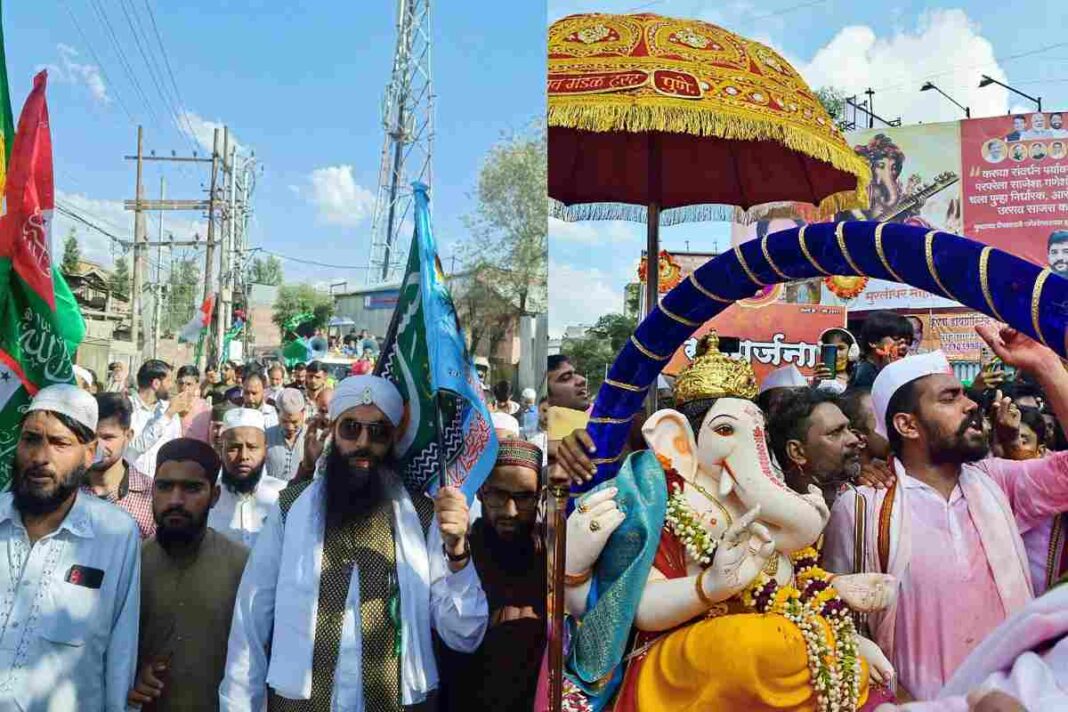

This year, Eid Milad-un-Nabi and Anant Chaturdashi (the final day of Ganeshotsav) fall on the same day. Both festivals are celebrated with grand processions in Maharashtra. To avoid clashes and maintain social harmony, Muslim communities across the state are postponing their Eid Milad processions.
In Pune, the Hilal Sirat Committee decided to hold the Milad procession on September 21, instead of September 16. This decision came after a meeting with Police Joint Commissioner Ranjan Kumar Sharma. The procession will start from Mannu Shah Mosque in Nana Peth at 8 am and end with prayers at Jama Masjid City.
Similar Decisions Across Maharashtra
Mumbai’s Khilafat Committee, after meeting with religious leaders and political party members, decided to postpone their Eid Milad procession to September 18. In Dhule, the Muslim community agreed to hold their procession on September 19, without using DJs. Pimpalgaon’s Muslim Jamaat Trust in Nashik district also decided not to hold the Eid procession on the same day as Ganesh Visarjan.
The Belgaum Muslim community, led by MLA Asif Raju Shet, unanimously decided to hold their procession on September 22. This decision involved various Muslim organisations and religious leaders.
Praise for Community Efforts
These decisions are being widely appreciated for promoting social harmony. Police officials have welcomed the move, as it helps maintain law and order during the festive season. District Magistrate Jitendra Papalkar and his team in Dhule praised the Muslim community’s readiness to maintain brotherhood in society.
The Muslim community’s willingness to adjust their celebrations demonstrates a strong commitment to peaceful coexistence. In previous years, they have made similar accommodations, such as postponing animal sacrifices during Bakri Eid when it coincided with Hindu festivals.
These actions across Maharashtra showcase the spirit of unity and mutual respect between Hindu and Muslim communities. By working together and making compromises, both groups ensure that their important religious celebrations can be observed without conflict, setting an example of communal harmony in India.
For detailed story, please visit: Awaz the voice
You can connect with DNN24 on Facebook, Twitter, and Instagram and subscribe to our YouTube channel.