
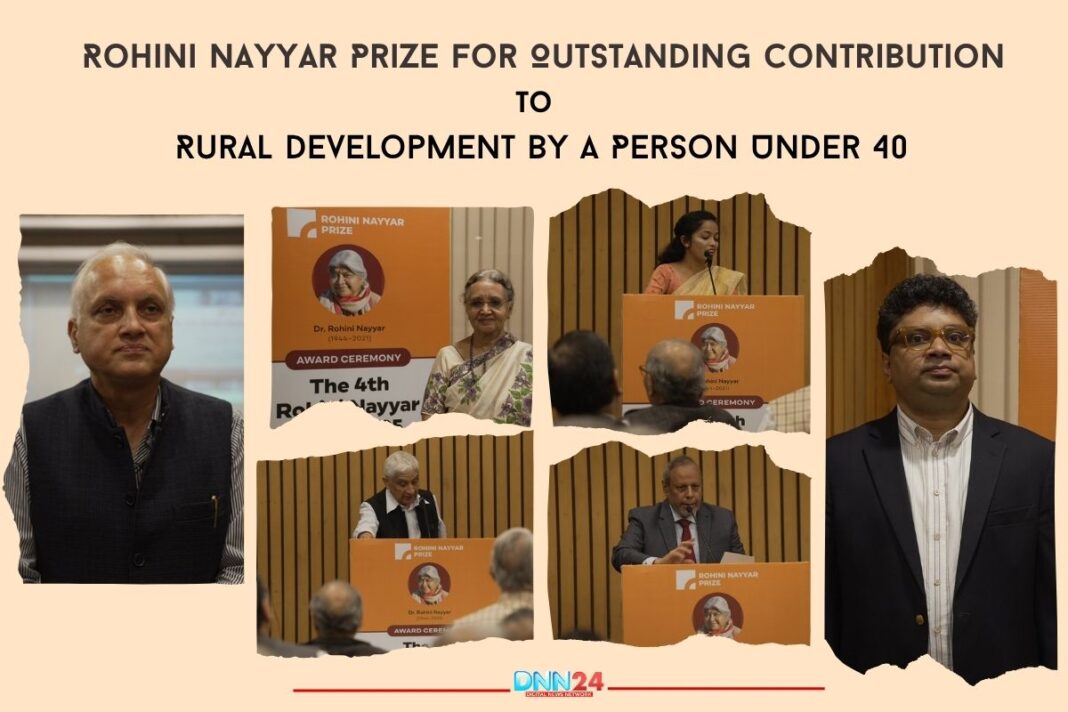

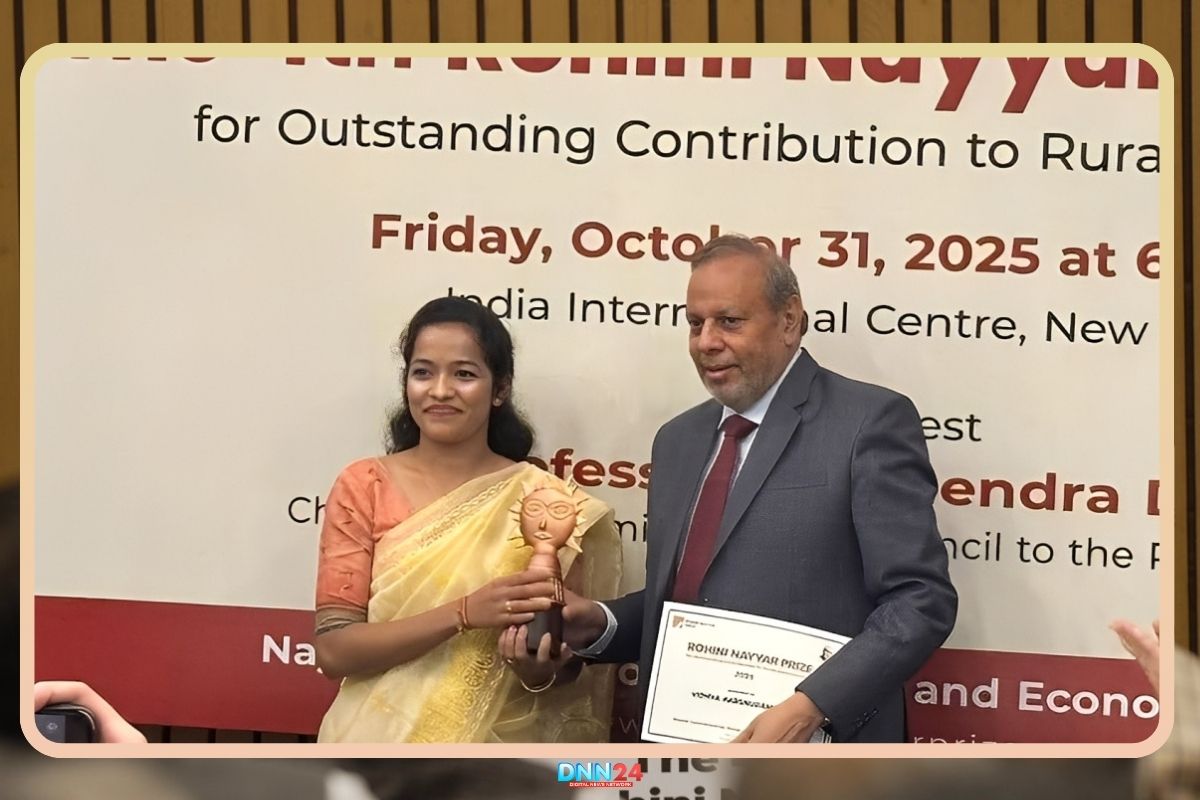
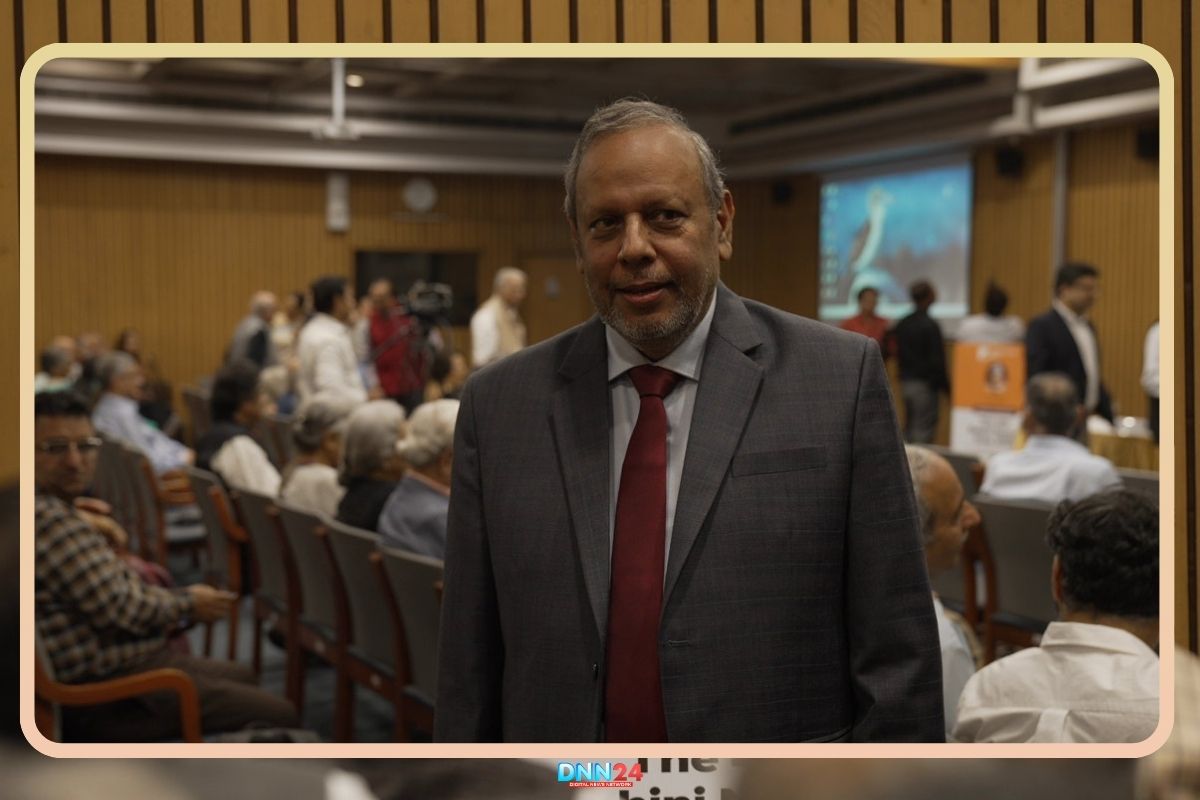
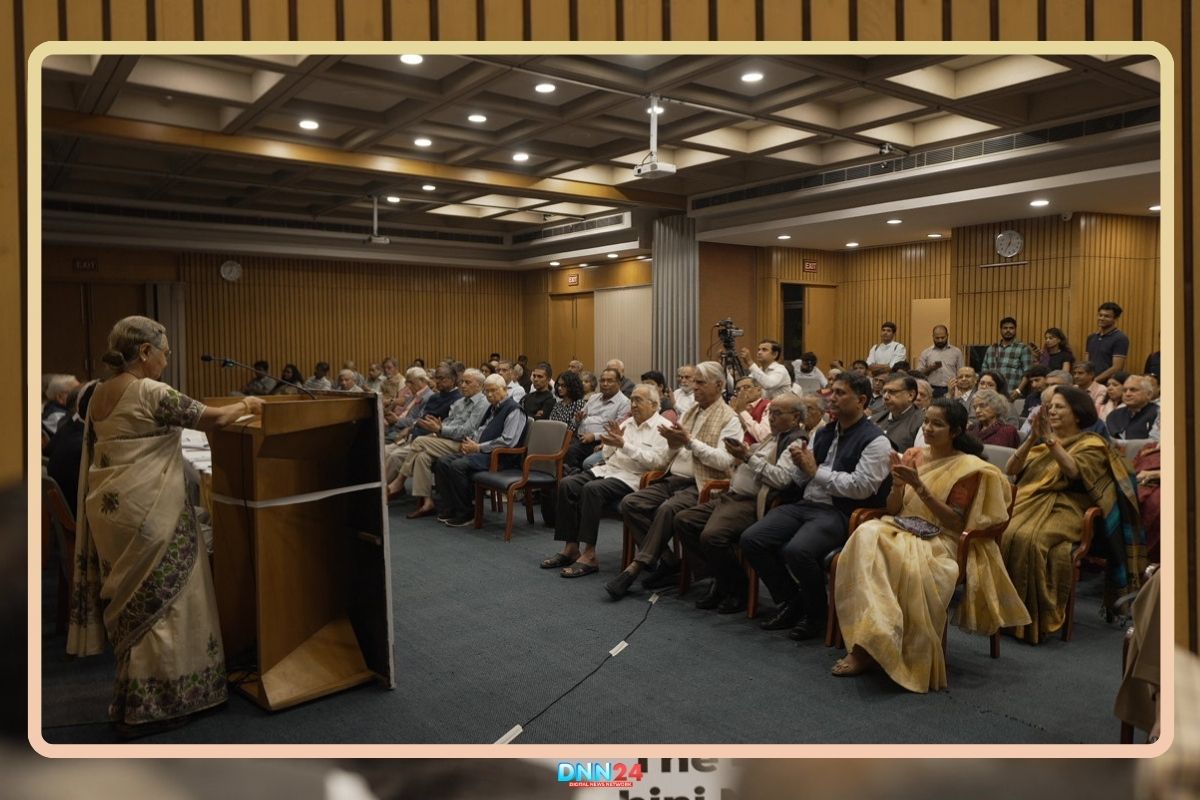
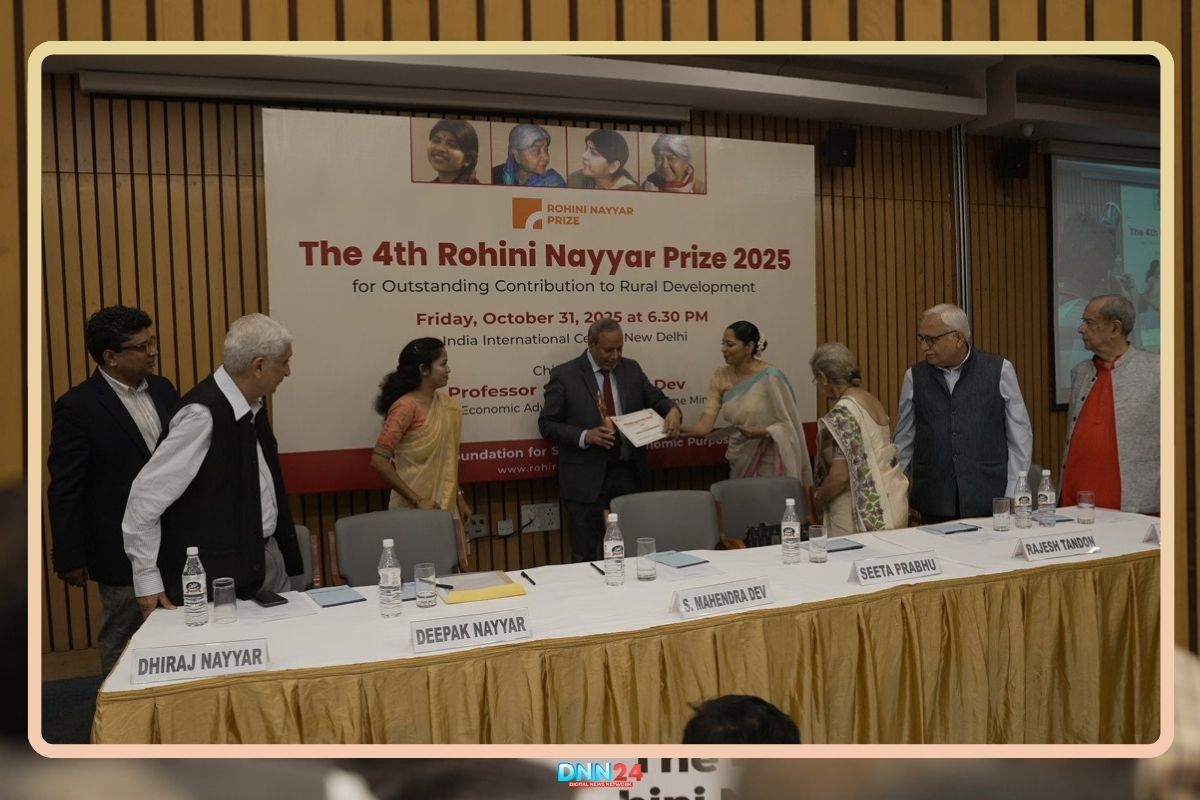
The fourth Rohini Nayyar Prize for Outstanding Contribution to Rural Development went to someone unexpected. Not a seasoned development worker with decades of fieldwork, but a 24-year-old woman from Pune armed with a food technology degree and a conviction that India’s oldest grains hold the answer to its newest nutritional crisis. Vidhya Parshuramkar received the award and its Rs 10 lakh prize from Prof. S Mahendra Dev, Chairman of the Economic Advisory Council to the Prime Minister, in New Delhi on October 31. She is the first woman and youngest person to win this recognition since its establishment.
The award jury included prominent figures from civil society and academia. Dr Ashok Khosla of Development Alternatives, Dr Rajesh Tandon from PRIA, Ms Renana Jhabvala of SEWA, and Professor Seeta Prabhu from the Institute of Human Development and TISS evaluated the candidates for this year’s prize. Their selection reflects a shift in how rural development work is perceived in India. Traditional approaches focused on infrastructure and subsidies. The new generation combines scientific knowledge with grassroots engagement, turning age-old agricultural practices into modern solutions for persistent problems that government programs have struggled to address completely.
From IIT Labs to Village Kitchens
Vidhya Parshuramkar completed her M.Tech in Food Technology from IIT Kharagpur before most people had even figured out their career paths. But her education did more than provide technical skills. It showed her how traditional Indian foods, particularly millets, could be transformed into powerful nutritional interventions through scientific processing. This realisation became the foundation of Agrozee Organics, the social enterprise she now leads, and its flagship program, Millets Now.
Her approach differs from typical development projects. She does not distribute free food or run temporary feeding programs. Instead, she builds systems that connect farmers growing climate-resilient crops with communities in need of better nutrition, while creating economic opportunities for women in between. The model treats food as a chain of relationships rather than just a commodity. Farmers get stable markets for forgotten grains. Women’s groups gain income through processing and distribution. Children receive nutrition that government midday meals often fail to provide adequately. Each link strengthens the others.
Agrozee produces biofortified, ready-to-eat millet products specifically designed to combat malnutrition and iron deficiency anaemia, conditions that affect millions of Indian children despite decades of intervention programs. The products are not charity handouts, but scientifically formulated foods that taste good enough for children actually to enjoy eating. This distinction matters more than it might seem. Many nutritional programs fail because beneficiaries refuse to consume the offered food, rendering the entire effort pointless.
The Nutri Dabba Revolution
The Nutri Dabba programme represents the practical application of Vidhya’s vision. Her team delivers millet-based snacks to schools, targeting the nutritional gaps that regular meals leave unfilled. Iron deficiency causes fatigue, poor concentration, and developmental delays in children. It remains widespread in rural India despite various government schemes. The snacks provide concentrated nutrition in forms children enjoy, making compliance easier than traditional supplementation programs that rely on pills or fortified flour.
But the programme extends beyond feeding children. It empowers women-led Self-Help Groups by training them to produce and distribute these snacks, creating local employment and building capacity within communities. Over 7,000 smallholder farmers now grow millets for Agrozee, giving them access to markets that value these once-neglected crops. Climate change makes water-intensive crops, such as rice, increasingly difficult to sustain in many regions. Millets require less water and are more drought-resistant, making them a practical choice for farmers facing uncertain rainfall patterns.
The initiative combines sustainable agriculture with community health in a way that addresses multiple problems simultaneously. Farmers get income security. Women gain economic independence. Children receive better nutrition. The environment benefits from reduced water use and chemical inputs. This integrated approach reflects a systems-thinking perspective that is often missing from single-focus development programs, which solve one problem while creating others.
Building Tomorrow’s Food Systems Today
Agrozee utilises digital outreach and community partnerships to amplify its impact beyond what traditional NGO models can achieve. Technology enables the organisation to connect directly with schools, farmers, and women’s groups, thereby reducing the need for intermediaries and enhancing efficiency. Climate-resilient farming practices become more attractive when farmers see immediate economic benefits rather than just environmental arguments. The business model makes sustainability profitable, rather than sacrificial.
Vidhya’s work represents a futuristic approach to rural development, treating villages not as problems needing charity but as systems requiring better design. Her methods show how scientific training applied to social issues can create solutions that work because they make economic sense to everyone involved. The recognition through the Rohini Nayyar Prize validates this approach and hopefully encourages similar innovations across India’s rural landscape.
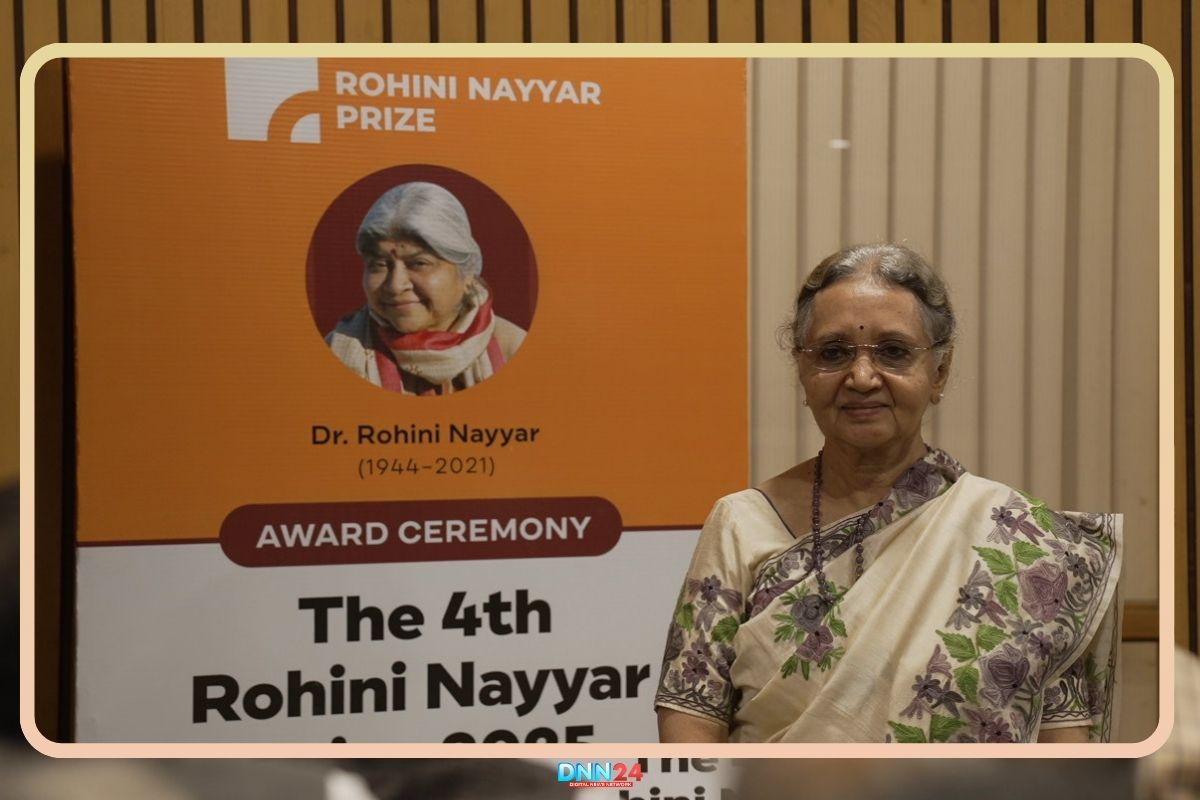
The Rohini Nayyar Prize honours the memory of Dr Rohini Nayyar, a scholar-administrator who dedicated her career to rural development issues in India. Her family established the Nayyar Foundation for Social and Economic Purpose to continue her work by recognising outstanding contributions in this field.
The foundation’s directors include Professor Deepak Nayyar, former Vice Chancellor of the University of Delhi, Mr Dhiraj Nayyar of Vedanta Limited, and Dr Gaurav Nayyar from the World Bank. Previous winners include Mr Sethrichem Sangtam from Nagaland in 2022, Mr Dinanath Rajput from Chhattisgarh in 2023, and Mr Anil Pradhan from Odisha in 2024. The prize awards Rs 10 lakhs along with a citation and trophy to individuals aged 40 or under who demonstrate exceptional impact in rural development work.
Also Read: Students’ Sea Turtle Conservation Network: Chennai’s Midnight Warriors Saving Ancient Lives
You can connect with DNN24 on Facebook, Twitter, and Instagram and subscribe to our YouTube channel.