
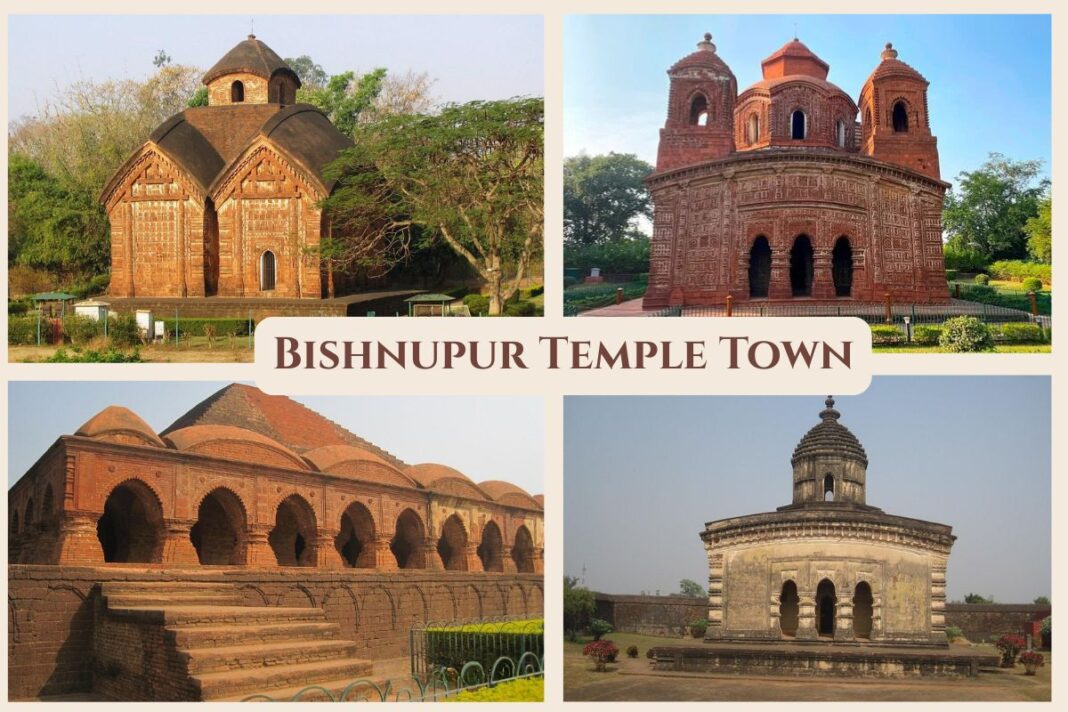

The terracotta walls speak in tongues ancient and persistent. Each burnt clay brick bears witness to kingdoms that rose beside the red soil of Bankura, where artists once pressed stories into wet earth and fired them into permanence. Welcome to Bishnupur, where architecture became narrative, and temples became chronicles carved in terracotta.
This is not another heritage town wearing its past as a costume. The craft here grew from necessity. Bengal lacked stone, so architects turned to what the earth provided. They discovered that burnt clay could hold detail as fine as any marble, could weather centuries of monsoons, and could tell stories that granite would crack trying to contain. Adi Malla founded the dynasty centuries ago, but it was Jagat Malla who moved his kingdom here and set in motion the transformation that would make Bishnupur a canvas for the finest terracotta work India has ever produced.
During the seventeenth century, while Mughal grandeur dominated the north with its marble and precious stones, Bengali artisans perfected an art form that required neither. Raja Jagat Malla and his descendants commissioned temples that would become textbooks in terracotta, each panel a page, each motif a paragraph in the grammar of devotion.
Rasmancha: Where Light Becomes Architecture
King Hambir built Rasmancha in 1600 and created something without precedent in Bengal or beyond. The temple refuses easy classification. It stands on laterite, rises in pyramidal tiers, and houses a single chamber surrounded by galleries that turn sunlight into a meditation on passage and time.
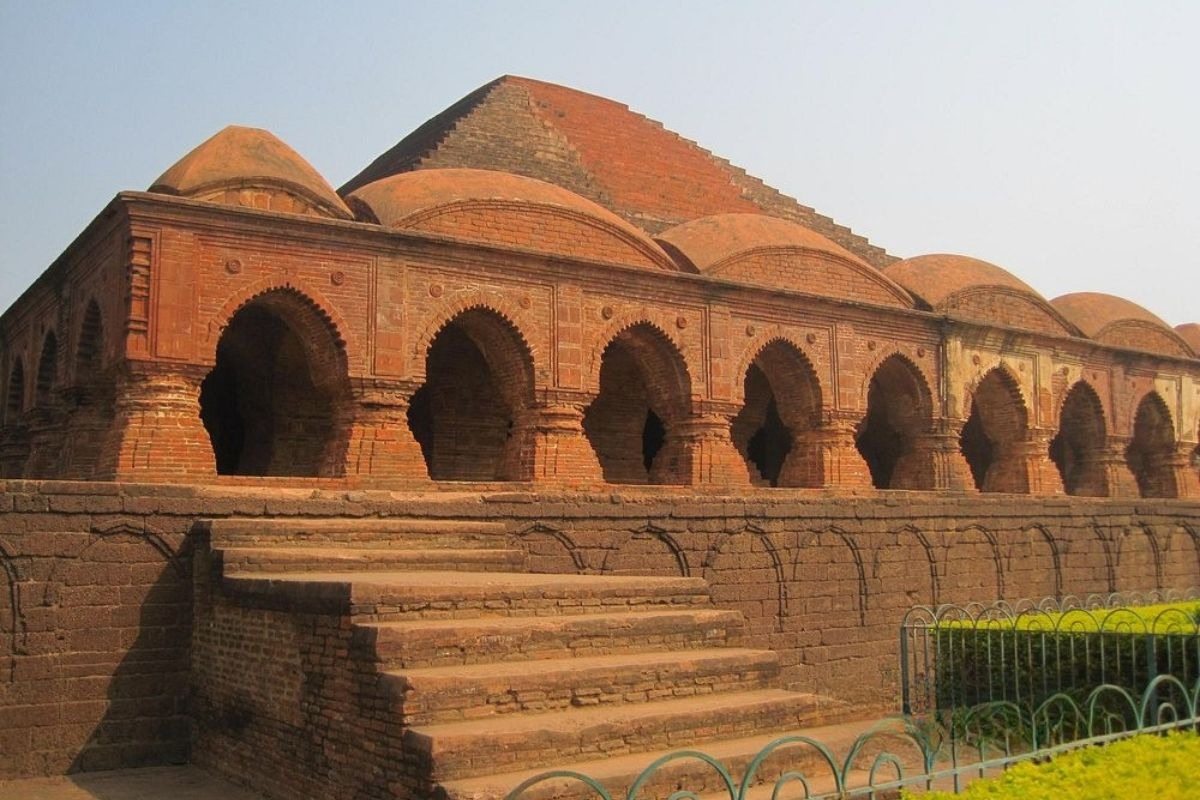
Walk the three circumbulatory galleries during the day and watch how light plays conspirator with shade. The pillars create rhythm. The arches frame moments. Terracotta lotus motifs bloom eternally on surfaces that have watched four centuries pass. After dark, when lamps glow from within the monument, the galleries transform into something between theater and temple, where history performs for anyone willing to slow down and listen.
Mrinmoyee Temple: Where Dreams Commanded Kings
The oldest temple in Bishnupur carries a story that begins in sleep. In 997 AD, Maa Mrinmoyee appeared in King Jagat Malla’s dreams with instructions. Build me a dwelling, she said, or perhaps commanded. The king obeyed. The temple has been reconstructed over the centuries. However, the idol remains unchanged, still made of clay drawn from the Ganga, still bearing the same presence that invaded royal dreams more than a millennium ago.
This is where Bengal celebrates its oldest Durga Puja, a festival that has witnessed 1,021 autumns. The ritual follows its own calendar. First comes the worship of Baro Thakurani, the eldest. Then Mejo Thakurani receives offerings. Finally, Choto Thakurani completes the trinity. During Mahastami, at the precise moment of Sandhipuja, a cannon splits the evening air. Then vegetables fall to the blade, offerings that link past to present through repetition that has become inheritance.
Jorbangla Temple: The Double Hut Tells Double Tales
Raghunath Singh commissioned this temple in 1655, and the architects gave him something extraordinary. Jorbangla means paired huts, and the structure mimics the double-sloped roofs of Bengali village homes, but scaled to divine proportions. The porch and shrine stand joined, their curved thatch roofs meeting as hands pressed together in prayer.
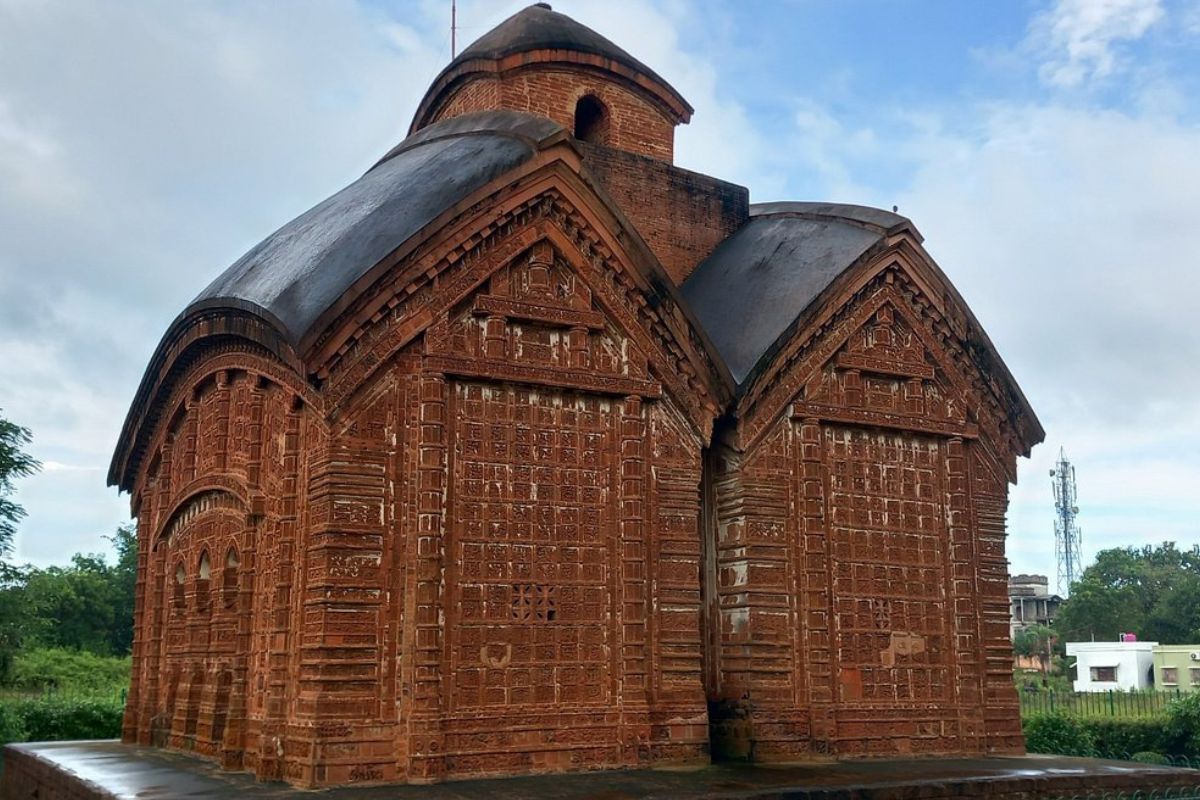
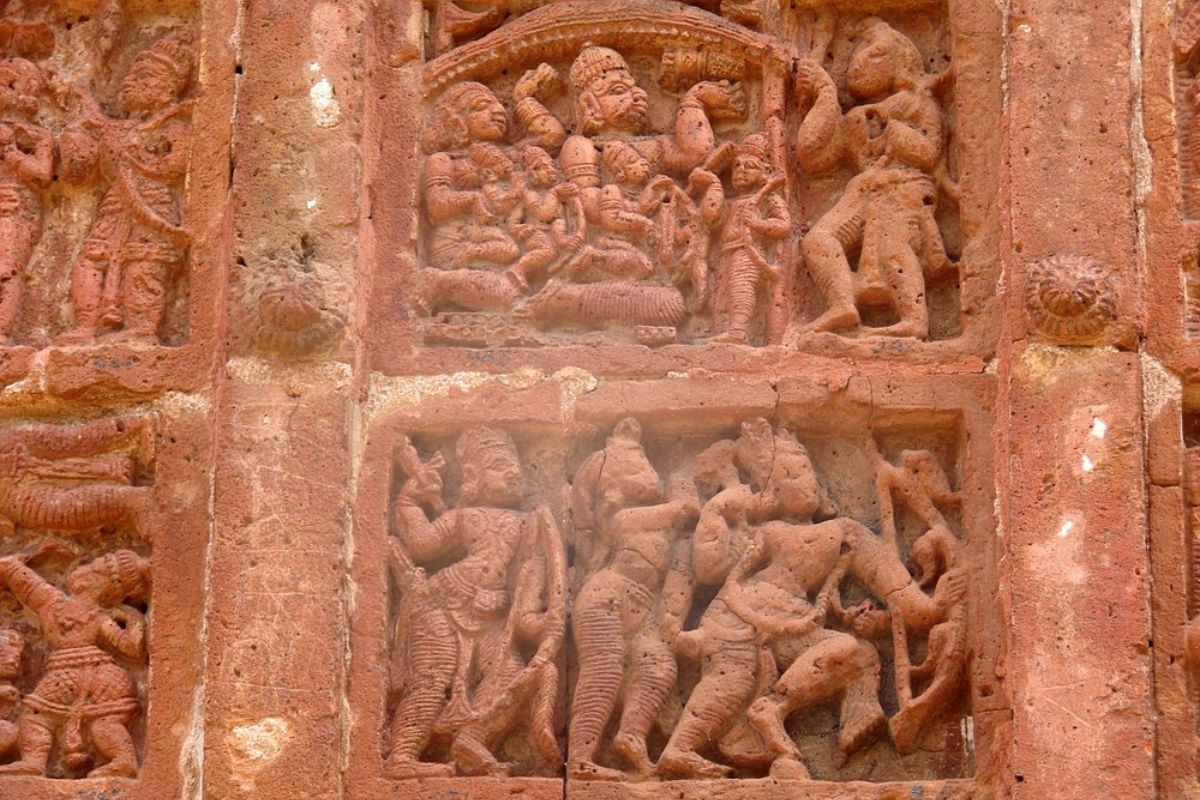
The terracotta panels demand hours. Mahabharata scenes flow into Ramayana episodes. Krishna’s childhood mischief freezes mid-motion in burnt clay. Bhisma lies on his bed of arrows. Ram weds Sita. Parvati sits with her sons. Balgopal steals butter. Laxman confronts Surpanakha. Each panel functions as a window into an epic narrative, preserved not in a manuscript but in the very walls that house divinity.
Gar Darja: Fortifications That Whisper War
Two gateways guard the old fort, monuments to times when kingdoms defended their borders with stone and strategy. Local people call them Gar Darja. Near Murcha Hill, a small stone mound precedes the main entrance. Pass through the modest gate, and the perspective shifts. The gigantic gateway that once welcomed royalty and challenged enemies rises before you.
These gates were built for violence and survival. The terrace provided a vantage point for guards. Secret chambers held soldiers who waited for the moment to strike. When trespassers approached with hostile intent, surprise attacks would pour from the Gar, turning architectural advantage into military victory.
Shyam Rai Temple: Five Towers Pierce Heaven
People call it Panch-chura, the five-spired one. King Raghunath Singh built it in 1643, creating an architectural style that balances mass with grace. Triple arched passages open on four sides, inviting the world in while the five pinnacles reach toward what lies beyond.
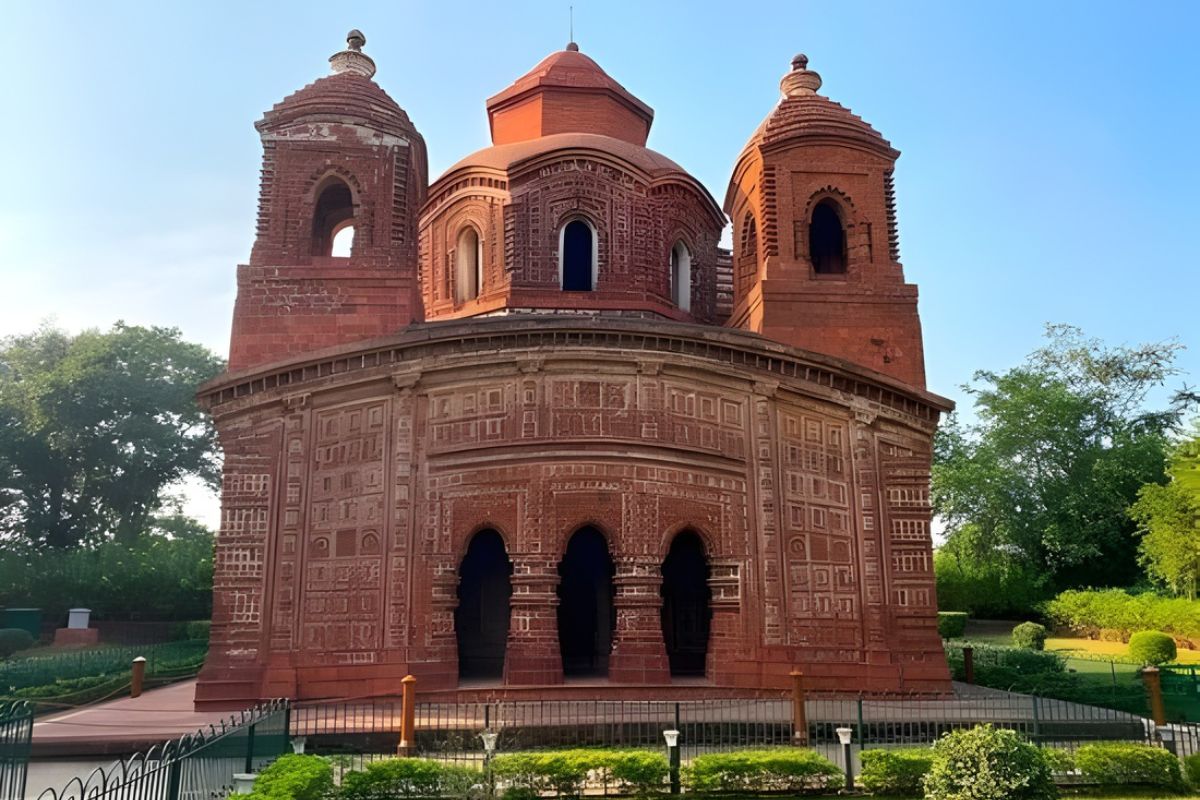
Both interior and exterior panels tell a story in terracotta at its finest. Indra rides Airavata into battle. Ram faces Ravana in a cosmic confrontation. Krishna Lila unfolds in countless scenes. Radha and Krishna embrace. Hunting parties chase prey through ancient forests. The giant Raschakra shows Radha and Krishna surrounded by Gopinis, divine love made manifest in clay that will outlast memory.
Jore Shreni Temple: The Laterite Trio
The name suggests a pair, but three temples actually stand in this complex. King Krishna Singh commissioned them in 1726, building two prominent temples of identical size and one smaller companion. The Eka-Ratna style, single-towered and austere, uses rust-colored laterite that glows differently at different angles of light.
The larger temples rest on square bases measuring 11.8 meters per side, rising 12.8 meters above their low platforms. All three feature the Bengali chala-style roof topped with sikharas that point toward heaven. Covered porches wrap around three sides of the inner sanctuaries. Three arched openings pierce each side except the rear wall, creating play between solid and void, between shelter and exposure.
Lalji Temple: Hidden Treasures Behind Locked Gates
The Lalji Temple rises from its walled garden in eastern Bishnupur like a statement carved in stone. When I arrived, guards turned me away. Renovation had sealed the compound shut. Still, I climbed a mound to the south and photographed what I could see from that vantage point.
Bir Singha Dev commissioned this temple in 1658, just two years into his twenty-six-year reign as the Malla dynasty’s fifty-second ruler. His son, Durjan Singha Dev, would later build the celebrated Madan Mohan temple to the north. But this structure, dedicated to Radha and Krishna, came first. It announced power and piety in equal measure.
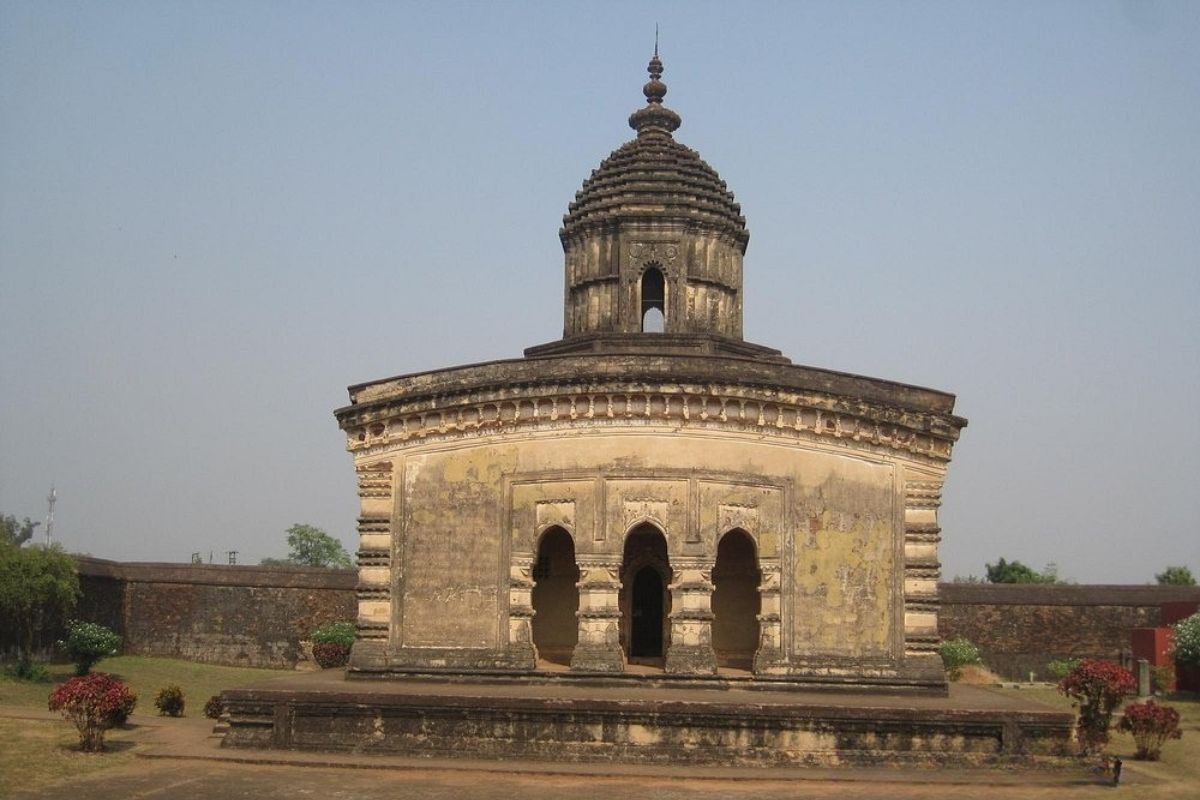
Laterite blocks form the walls, decorated with stucco reliefs that once gleamed with paint. Terracotta panels have vanished over centuries. A covered walkway circles the square plinth. The char chala roof supports a single tower. A dancing hall stands at the front, while an Orissan-style Raghunath tower punctuates the eastern gateway.
During Dussehra, chariots still carry the deities through streets lined with devotees, keeping old traditions alive in modern Bankura.
Archaeological Museum: Where Fragments Teach History
The Acharya Yogesh Chandra Purakirti Bhawan houses what remains of civilizations. A hundred sculptures from the 10th through 12th centuries are housed in climate-controlled rooms. Five thousand manuscripts preserve knowledge written when Bishnupur was still finding its architectural voice. Folk arts, photographs, textile specimens, and ancient objects fill galleries that transform fragments into narrative.
This museum exists for those who need context before temples, who want to understand the hands that shaped the terracotta and the minds that designed the temples. Come here first or last, but come prepared to recalibrate your understanding of what artisans could achieve with clay and vision.
Madanmohan Temple: Living Worship in Ancient Halls
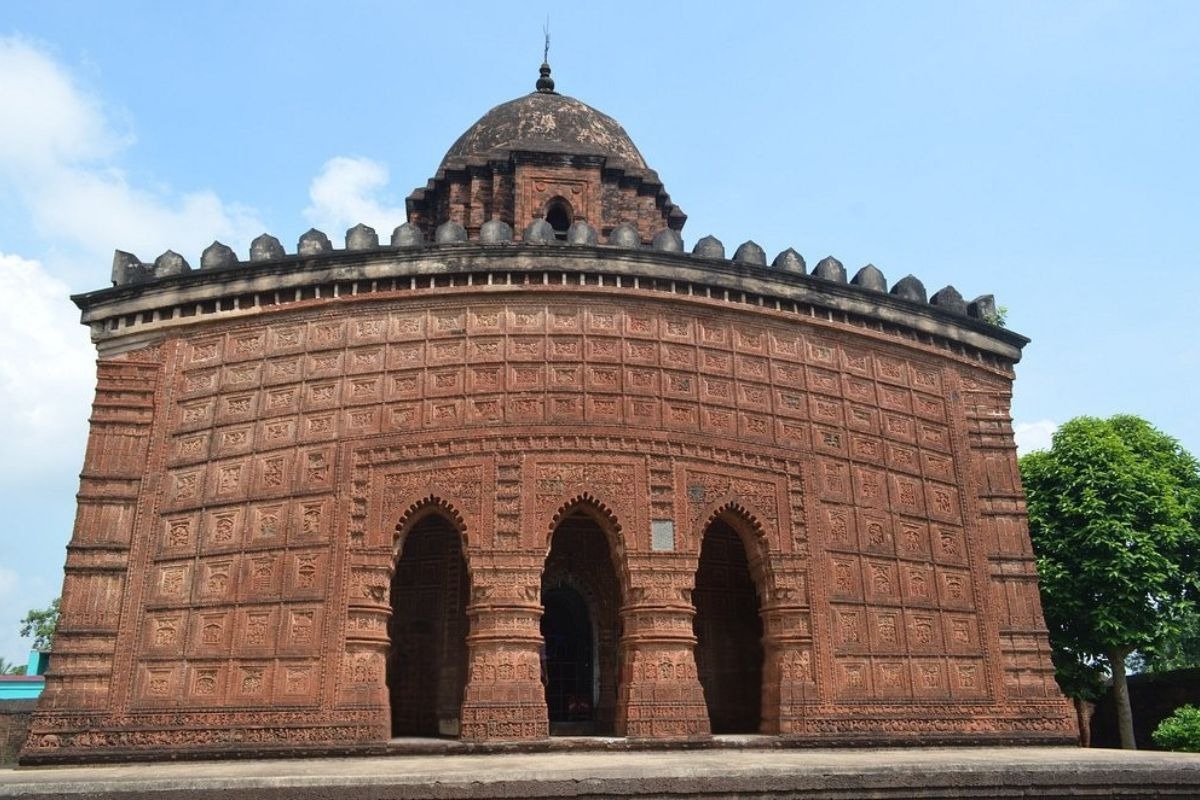
This single-pinnacled temple dedicated to Vishnu carries messages in terracotta that scholars still decode. Malla Raja Durjan Singh Dev established it in 1694 in the name of Lord Madan Mohan. Unlike museums frozen in past glory, this temple remains active. Priests still chant. Devotees still gather. The terracotta art serves not as a historical curiosity but as a living context for continuing faith.
Lalbandh: Love Stories Written in Water
Bir Singh excavated seven lakes in 1658. Pokabandh, Shyambandh, Kalindibandh, Jamunabandh, Gantatbandh, Krishnabandh, and Lalbandh served practical purposes. They provided drinking water. They formed defensive barriers against invading armies. However, Lalbandh carries additional history.
Malla Raj Raghunath Singha fell for a Persian dancer named Lalbai. He took her under royal protection, and when love demanded monument, he dug this large pond and named it for her. History remains in the water, which still reflects the same sky that watched a king honor his dancer with a lake that bears her name.
Sareswar and Saileswar Temple: Pilgrimage at Dihar
Eight kilometers from Bishnupur, in the village of Dihar, twin temples dedicated to Mahadev wait for those willing to travel beyond the main attractions. A Nandi bull sits at the entrance to the Sareswar Temple, an eternal guardian carved in stone. Both temples use laterite and follow the Oriya Deul style, an architecture that speaks a different dialect than the terracotta temples of Bishnupur proper.
During Mahashivratri and Gajan festivals, this quiet village transforms into a pilgrimage destination. Devotees arrive to honor Shiva in temples that attest to Bishnupur’s artistic influence extending beyond its immediate borders, into villages that developed their own architectural responses to the divine.
The Terracotta Legacy Continues
Bishnupur still weaves its famous Baluchari sarees, fabric that carries forward the same attention to narrative detail that the terracotta temples embody. Artisans still create forms from clay. The town has not abandoned its inheritance for the easier paths of modernity.
Visit Bishnupur not as a tourist consuming sights but as a student approaching texts. Each temple is a manuscript. Each terracotta panel is a page. The architecture speaks Bengali, Hindi, and Sanskrit, and the universal language of devotion is made visible. Walk the galleries. Study the panels. Let the light guide you through spaces designed to transform observation into understanding. The burnt clay has stories to tell, and centuries have not diminished its voice.
Also Read: Edakkal Caves: Ancient Whispers Carved in Stone
You can connect with DNN24 on Facebook, Twitter, and Instagram and subscribe to our YouTube channel.