

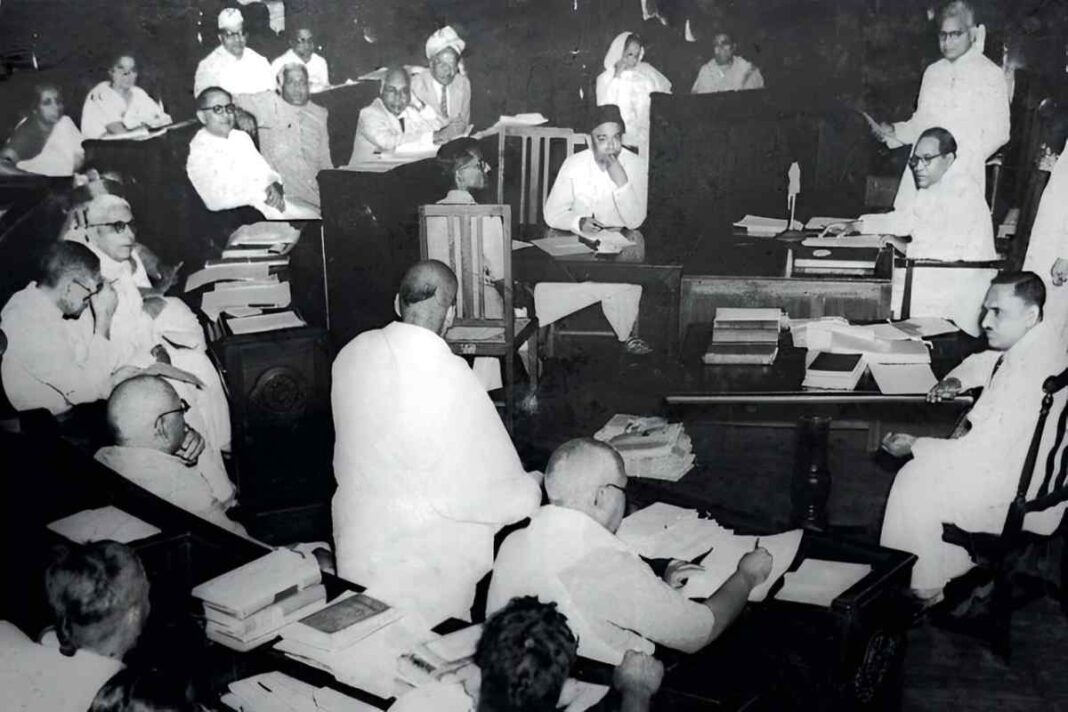

In the echoes of 1949, Tajamul Hussain’s impassioned words reverberated through the Constituent Assembly, challenging the British Crown and the Muslim League. The assembly’s legitimacy had been questioned since its inception in 1946, criticized for not being a true representation of India’s diversity.
Overcoming Allegations: A Hindu Body?
The British-backed Muslim League, securing 73 out of 78 Muslim-reserved seats, boycotted the assembly, branding it a ‘Hindu body.’ Winston Churchill echoed this sentiment, further muddying the waters. However, the truth was far from their claims.
A Unifying Shift: Muslim Members Join
Post-Partition in July 1947, 27 Muslim members elected on the Muslim League ticket joined the assembly, choosing India over Pakistan. Their decision was a testament to their loyalty, contrary to the divisive narrative perpetuated by the British government.
Leading Integration Efforts
Prominent Muslim figures like Naziruddin Ahmad, Maulana Abul Kalam Azad, and B. H. Zaidi played pivotal roles in committees, debates, and resolutions within the assembly. Their presence aimed to send a resounding message – Muslims are integral citizens of India.
Rejecting Minority Status
Hasrat Mohani vehemently rejected the term ‘minority’ for Muslims, advocating a united political front transcending communal lines. B. H. Zaidi echoed this sentiment, emphasizing the need for affirmative action based on economic disparities rather than religious considerations.
Fostering Unity: A Shared Vision
Muslim voices in the Constituent Assembly were not advocating for reservations. Instead, they emphasized unity, integration, and equal partnership in building a diverse and harmonious nation. Their stance was clear – they were Indians first and foremost.
For a detailed story, please visit: Awaz the voice
Also Read: Embracing Eternity: The Heartfelt Story of the Mini Taj Mahal in Guwahati, Assam
You can connect with DNN24 on Facebook, Twitter, and Instagram and subscribe to our YouTube channel.