
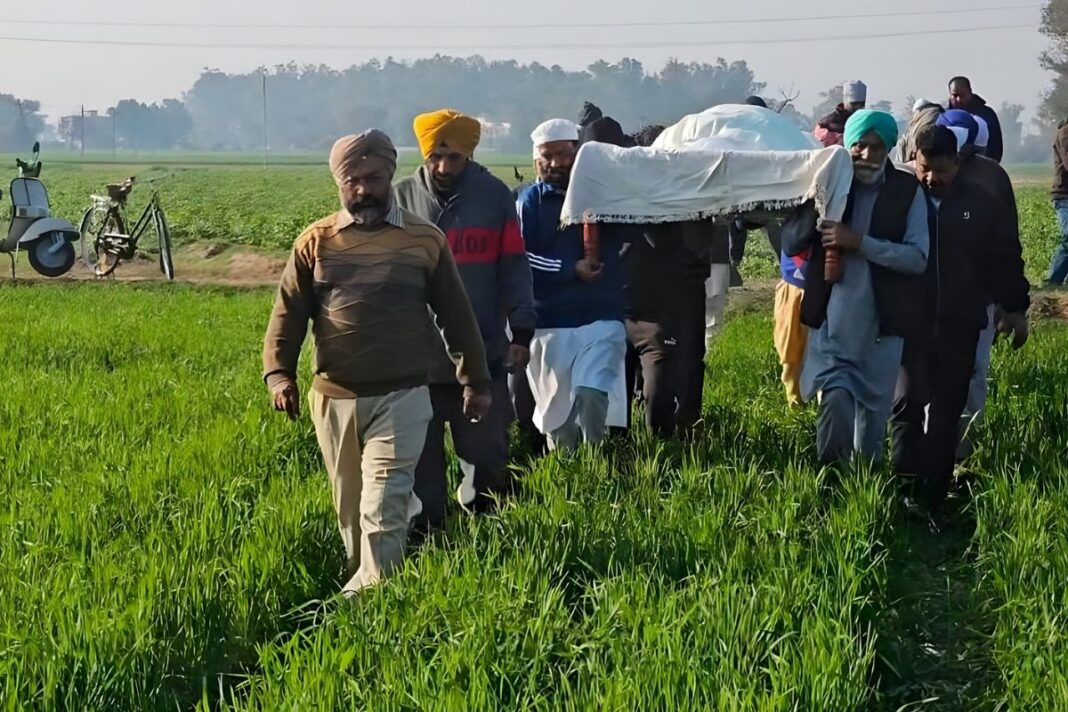

The mud had turned treacherous that January morning. Jagdish Singh watched from his farmland as mourners carried a bier through waterlogged fields, stumbling under the weight of grief and sodden earth. They were headed to a Muslim graveyard that had stood at the edge of Mehna village in Punjab for 70 years, without any proper access. The sight moved Singh into action. Within hours, he and his nephews had pledged 90 feet of their own farmland to solve what the local government had ignored for decades.
Background of the Access Crisis
Mehna village sits in Moga district, where a dozen Muslim families live amidst a predominantly Sikh population. The ancestral graveyard dates to the years following Partition, when many such sites emerged without formal planning or infrastructure. No one had drawn a road to the burial ground. For seven decades, Muslim families seeking to bury their dead were forced to request permission from multiple landowners and carry bodies across private fields.
They faced difficulties during the monsoon season, when rains transformed the shortcut into a morass. The feet of the pallbearers sank into mud. Crops suffered damage. Mourners arrived at funerals exhausted and covered in dirt before the burial even began. The Muslim community had, over the years, appealed to panchayat members and district officials, submitting formal requests for a dedicated pathway. Nothing materialised. Each funeral repeated the same frustrating struggle during rains.
The graveyard’s location beyond cultivated land meant it fell through administrative cracks, deemed too insignificant for official action despite the recurring distress it caused families during their most vulnerable moments.
The Donation Decision
On January 25, 2026, Singh witnessed the funeral procession of the mother of a retired policeman. The scene moved him beyond passive sympathy. He discussed the matter with his nephews, Shamsher Singh and Rajwinder Singh, who co-owned the adjacent farmland. All three agreed immediately. They decided to carve out a strip of land measuring 90 feet in length, with the Muslim community determining its width.
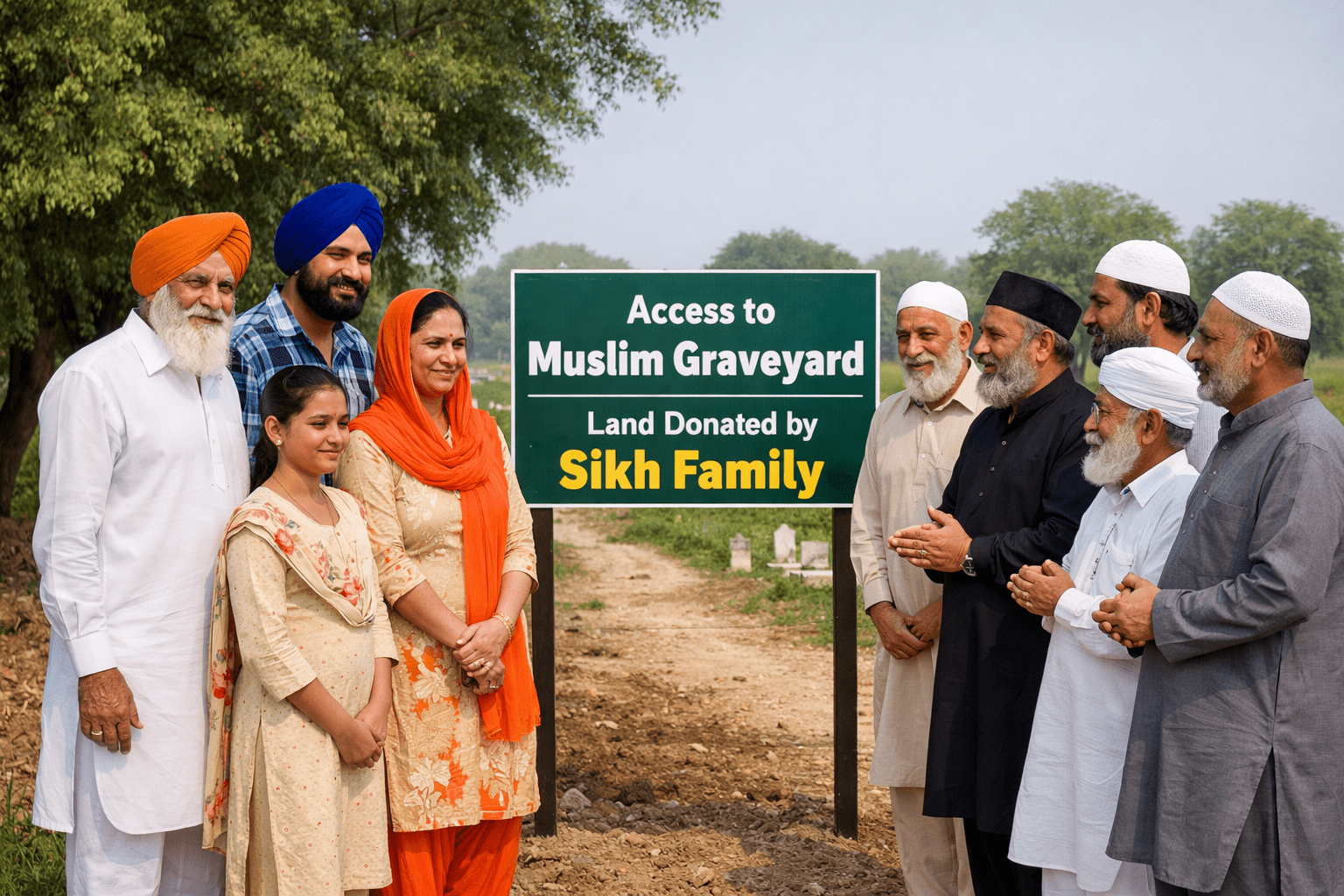
The donation meant permanently dividing their farmland and reducing the available cultivation area. Punjab’s agricultural economy makes every acre valuable. Yet the family refused to calculate the cost against their conscience. “We felt the pain of our Muslim brothers and realised they needed a permanent path,” Jagdish Singh told reporters afterwards. The statement was simple. No speeches about tolerance or unity. The family viewed the act as a basic neighbourly duty rather than an exceptional charity.
This philosophy aligns with core Sikh principles. The concept of “sarbat da bhala,” meaning the welfare of all people, appears throughout Sikh scripture and tradition. The practice of seva, or selfless service, guides many community actions in Punjab. The Singh family did not announce their plan on social media or seek recognition. They informed the village panchayat and began clearing the designated strip of land for immediate use.
Response from the Muslim Community
Maulvi Aas Mohammad, the local religious leader, described the gesture as historic. He predicted future generations would remember the donation as an example of genuine brotherhood between the two faiths. Village sarpanch Amandeep Singh praised the act publicly noting it reflected Punjab’s longstanding traditions of harmony and mutual respect among different communities.
Muslim residents of Mehna expressed profound gratitude. Several families had endured the indignity of the muddy procession route for burials of parents, spouses, and children over the years. The new pathway eliminated a source of recurring anguish. Community members honoured the donors at a gathering that included both the Singh family and panchayat officials.
News of the donation spread rapidly after local media reported it in early February 2026. Social media users shared accounts across platforms. The response was overwhelmingly positive. Many comments contrasted the story with frequent reports of communal tension elsewhere in India. Others noted how individual initiative had accomplished what years of official petitions could not.
Historical Context in Punjab
Punjab has produced numerous similar examples of interfaith cooperation throughout its history. During the 1984 anti Sikh riots, many Muslim villages provided shelter to Sikh families fleeing violence, an act that built enduring goodwill between the communities. Gurdwaras regularly assist people of all faiths during natural disasters or personal crises. Hindu and Sikh families participate together in festivals like Holi, while Sikhs and Muslims often celebrate Eid collectively in mixed villages.
Moga district itself has deep agricultural roots and relatively stable communal relations compared to some other regions. The donation occurred during a period when Punjab faced economic pressures from fluctuating crop prices and ongoing farmer protests over national policies. These stresses can sometimes fuel resentment. The Mehna incident demonstrated that grassroots solidarity persists despite broader challenges.
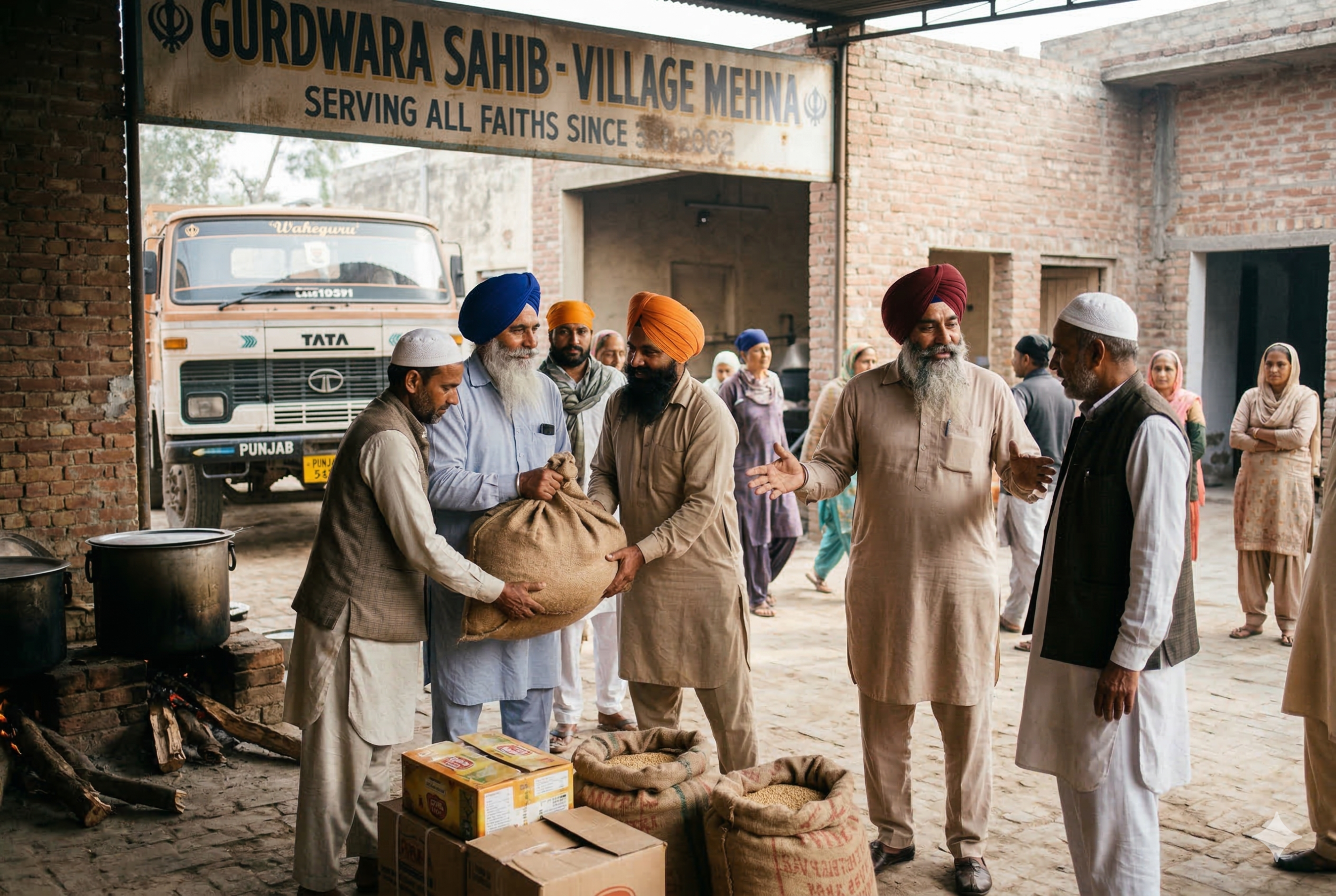
Scholars of Punjabi culture view such gestures as practical applications of Guru Nanak’s teachings about the equality of all people regardless of faith. The founder of Sikhism emphasised compassion and service over ritual divisions. The Singh family’s donation required no theological justification in their own minds. It simply matched the values they had absorbed from childhood.
Implications for Rural Governance
The resolution of the graveyard access problem bypassed official channels entirely. This reality highlights both the power of individual conscience and the failure of local government systems. Muslim families had submitted requests for a proper road for years without receiving even a formal response, let alone action. The story raises questions about how authorities prioritise the needs of minority communities in administrative planning.
Thousands of similar sites exist across India, where minority graveyards, temples, or mosques face access difficulties due to urban growth or land disputes. Mehna village offers a replicable model. Community members with available land might consider voluntary easements. Local governments could survey isolated religious sites and proactively develop access routes before problems reach crisis levels.
The incident also suggests that empathy-driven solutions can emerge faster than policy reforms. While systemic change remains necessary, waiting for bureaucracy to function often proves futile for communities in immediate need. Grassroots action fills the gap, though it should not have to.
Media Documentation and Lasting Impact
The Times of India published the first major report on February 8, 2026, followed by The Logical Indian on February 9. International outlets, including The News Pakistan, covered the story as an example of cross-border harmony themes. No factual disputes or conflicting versions emerged. Details remained consistent across all sources.
Village workers have begun formally demarcating the pathway. The 90-foot strip will become a permanent route, maintained by the panchayat with community support. For Muslim families in Mehna, the change means conducting funerals with dignity restored. The physical path represents something larger: proof that ordinary people can mend divisions through concrete acts rather than abstract pronouncements.
Jagdish Singh and his nephews likely did not anticipate national attention. They saw suffering and possessed the means to end it. Their gift measures 90 feet, but its symbolic reach extends much farther across the landscape of what neighbours owe one another.
Also Read:Volleyball Revolution Spawns Gender Equality in Assam
You can connect with DNN24 on Facebook, Twitter, and Instagram and subscribe to our YouTube channel.