


Ayodhya, renowned as Lord Rama’s birthplace, is a hub of North India’s vibrant Ganga-Jamuni culture. Despite recent challenges, its rich heritage continues to thrive, symbolizing India’s diverse and harmonious syncretic traditions. Media sensationalism, the influence of divisive characters on social platforms, and radical voices from both sides had fostered the perception that Ayodhya had been irreparably ‘Hinduized’
Historically, Ayodhya served as a testimony to the Ganga-Jamuni civilization, a peaceful combination of Hindu and Muslim traditions that defined most of North India. Despite its significance with Lord Rama’s birth, Ayodhya had been a melting pot of civilizations, prospering as the capital of the Nawab of Awadh until Lucknow inherited that position.
Echoes of Awadh’s Literary Legacy
During the 19th century, Ayodhya flourished as a literary powerhouse, drawing eminent poets and authors from around India. This time saw a remarkable affinity between Hindus and Muslims, establishing an atmosphere where cultural interchange thrived. However, the stormy decades of the 1980s and 90s threatened to destroy this legacy, as community tensions intensified, exacerbated by contentious politics.
Resilience and Renewal: A Poetic Reckoning
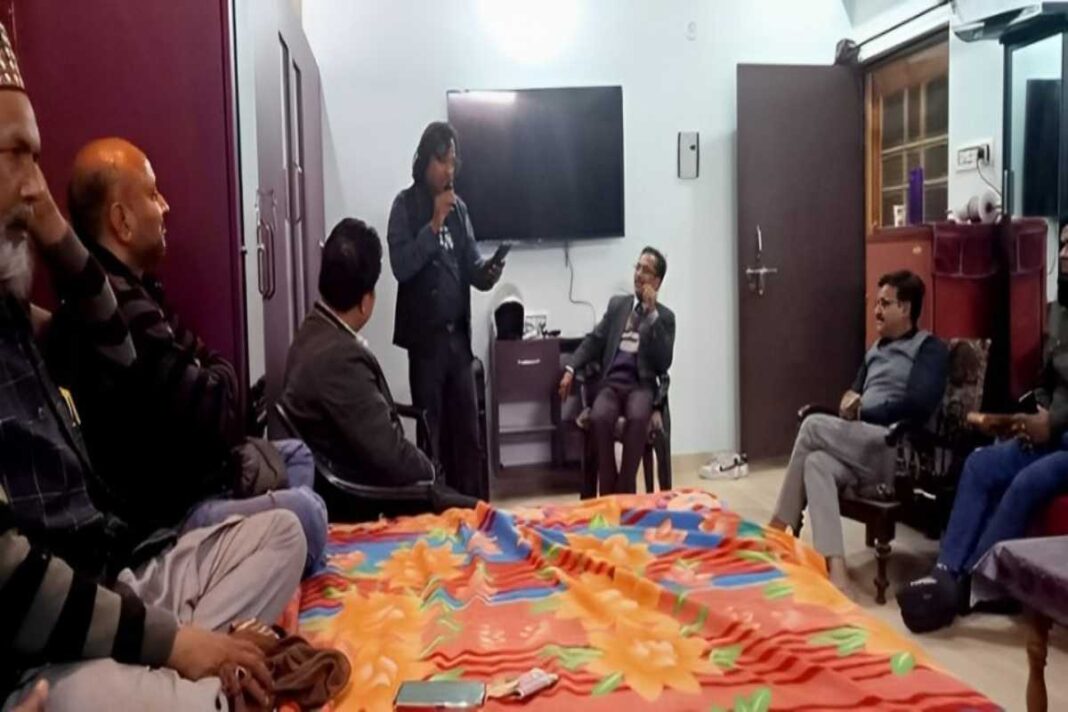
Yet, The visit to Ayodhya exposed a different reality. Amidst the shadow of social turmoil, a secret assembly of poets assembled, rejecting the narrative of cultural degradation. Hosted by Dr. Saif Ahmad, a neurologist living in the US, and arranged by local jeweler Noorain Ansari, this gathering recalled the spirit of Awadh’s history.
Celebrating Unity Through Verse
Poets, both Hindi and Urdu, took center stage, crafting lyrics that underlined the tenacity of Ayodhya’s syncretic spirit. Amidst Farhat Irfani’s allegorical flights and Ramjit Yadav ‘Bedar’s emotional couplets, a communal call for unification developed. Lamenting the divisive discourse of current politics, poets like L. D. Sharma and Niraj Sinha appealed for a return to the virtues of empathy and compassion.
In essence, Ayodhya’s syncretic spirit, however damaged, remains tenacious, awaiting those who dare to nurture and resurrect it.
For a detailed story, please visit: Awaz the voice
Also Read: Embracing Eternity: The Heartfelt Story of the Mini Taj Mahal in Guwahati, Assam
You can connect with DNN24 on Facebook, Twitter, and Instagram and subscribe to our YouTube channel.