
Quad program alumnus Pranay Kotasthane explains how Pax Silica is shaping trusted technology alliances and advancing U.S.-India collaboration in the AI era.
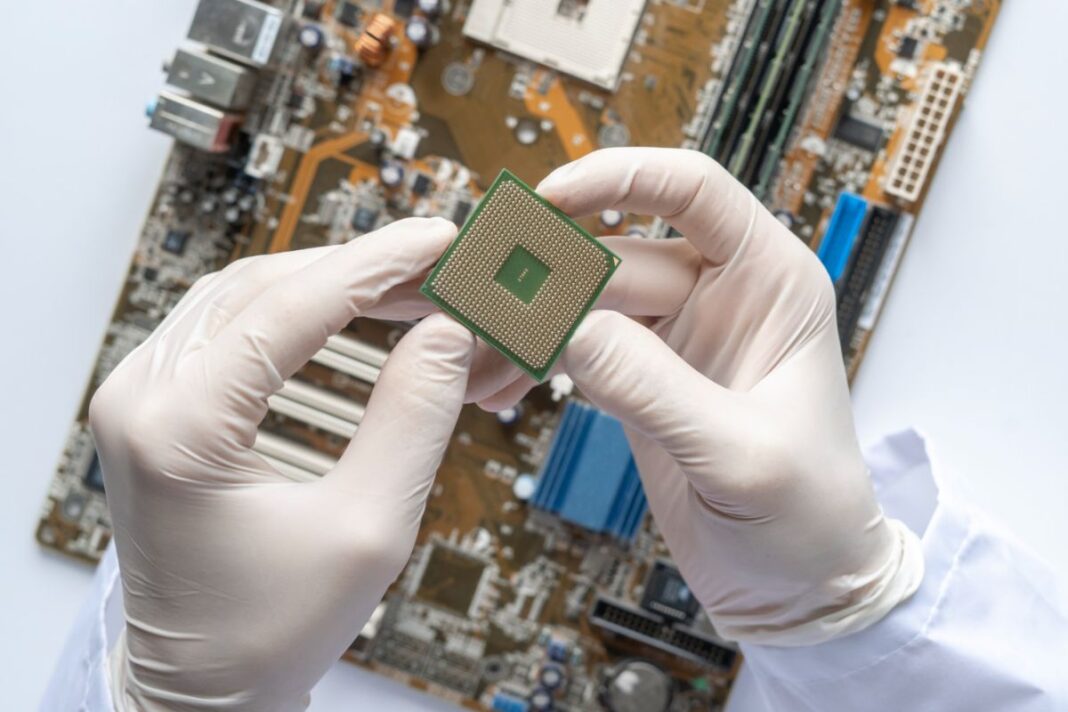
Semiconductors power everyday technologies—from mobile phones to household appliances—but their production depends on a complex global network. Materials, design, manufacturing, and assembly are often spread across multiple countries, making the system highly interconnected.
For decades, the system was built for efficiency. Companies focused on producing faster, cheaper chips by distributing production across specialized global hubs. But recent disruptions, from pandemic-driven shortages to rising geopolitical tensions, have exposed the risks of this model, where localized shocks can ripple across industries worldwide.
Pax Silica, a United States-led initiative of partner nations, seeks to address these challenges by building a more durable technological and economic order. Rather than focusing only on semiconductors, it expands to the full chain that powers the artificial intelligence (AI) economy.
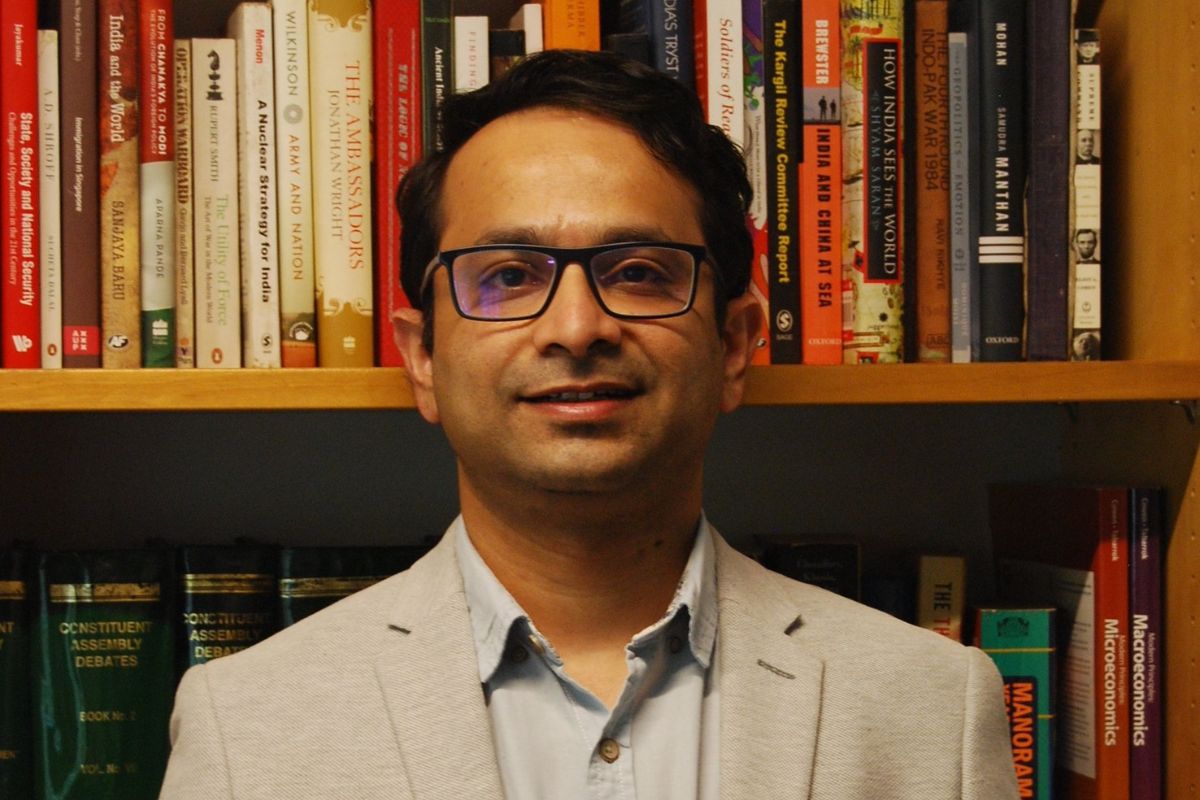
“Pax Silica is not just about computer chips; it is a technology grouping for the AI age,” explains Pranay Kotasthane, chair of the high-tech geopolitics program at the Takshashila Institution and an alumnus of the U.S. State Department’s Quad Leaders Lead On-Demand (LLOD) program. The initiative spans the “minerals-to-models” supply chain, from critical minerals and manufacturing to data and AI systems, and is built on the recognition that no country can be entirely self-sufficient in this domain.
From efficiency to trusted collaboration
“In principle, Pax Silica seeks to create a ‘trusted zone’ across the full AI-age technology stack. Within this zone, aligned nations would allow a relatively free flow of minerals, energy cooperation, manufacturing capacity, chip design, intellectual property, AI models, digital infrastructure, and data,” explains Kotasthane. “The members collectively cover enough of the stack that no external actor can exercise coercive leverage over any single segment.”
The diversification piece works by distributing capability across multiple allied geographies at each layer. If one mineral source is disrupted, alternative partner sources can step in; if one manufacturing node faces a contingency, others can absorb some of the load.
“In the old paradigm, the cheapest chip won. In the Pax Silica framework, the trusted technology wins,” says Kotasthane. “Trusted in the sense that its provenance, from raw mineral to deployed AI system, passes through aligned nations.”
Pax Silica represents a fundamental shift. “It is not an efficiency play. It is a security-and-prosperity play,” Kotasthane says. “The core idea is that some economic efficiency must be sacrificed to build resilience, reduce single-source dependencies, and ensure that the infrastructure of the AI economy is controlled by trusted partners.”
Trusted partnerships, full stack
By prioritizing coordinated action among allied nations, Pax Silica encourages partners to specialize in complementary segments of the technology stack rather than replicate the entire chain. “The idea is not that each country replicates the whole chain,” he notes, “but that trusted partners specialize in complementary segments and have capabilities across all supply chain stages.”
By integrating resources, talent, and production across multiple geographies, the initiative strengthens operational continuity and supports long-term strategic alignment among participating countries.
India’s strategic role
India joined the Pax Silica initiative in February 2026, advancing the shared vision for U.S.–India cooperation under the Transforming the Relationship Utilizing Strategic Technology (TRUST) initiative. At the same event, the United States and India also formalized a commitment to a pro-innovation regulatory framework. “The U.S.-India relationship is a natural fit because the complementarities are deep,” explains Kotasthane. “The United States leads in chip design tools, EDA (electronic design automation) software, equipment, and frontier AI models; India provides design talent at scale, enterprise AI integration capability, and an enormous market.”
On chip design, he notes that India has an estimated “20 percent of the world’s design engineers and design centers of the top American semiconductor firms located in the country,” with chips powering Pax Silica “being designed in Bengaluru, Hyderabad, and Noida.” Beyond design, India contributes to other layers critical to the AI-age technology stack, including software, enterprise AI integration, and energy and mineral resources, making it a strategic partner in enabling a secure and resilient supply chain.
By aligning U.S. leadership in technology and AI with India’s capabilities, Pax Silica demonstrates how collaboration among trusted partners can ensure continuity, diversification, and resilience across the global technology ecosystem.
– By Syed Sulaiman Akhtar
The above article was published in SPAN Magazine and is being reproduced here with their permission.