

In the aftermath of World War I, the British government proposed the draconian Rowlatt Act, which aimed to curb the right to freedom of speech and expression for Indians. This move was met with fierce opposition from Indian leaders, including Mahatma Gandhi, who pledged to resist the act through civil disobedience. A committee of fourteen leaders, including Swami Shraddhanand, a prominent figure in the Arya Samaj’s Shuddhi and Gauraksha movements, organized a Satyagraha (non-violent resistance) in Delhi on March 30, 1919.
The Bloody Suppression and Martyrdom
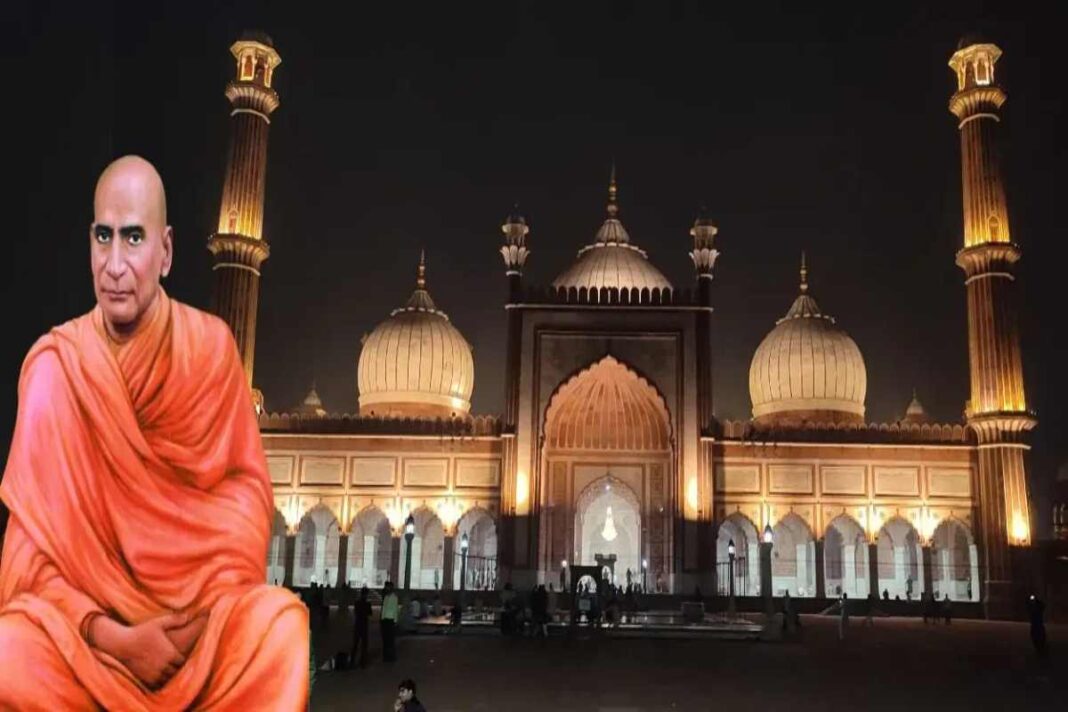
The Satyagraha in Delhi witnessed a brutal crackdown by British forces, resulting in the deaths of more than 50 unarmed protesters. British Gurkha soldiers met Swami Shraddhanand, dressed in his saffron robes, with pointed rifles and threats as he marched fearlessly with thousands of people towards the Clock Tower in Chandni Chowk. Despite the imminent danger, Swami Shraddhanand stood his ground, ready to sacrifice his life for the cause.
A Remarkable Gesture of Hindu-Muslim Unity
They decided to hold a special prayer service for the martyrs (shahid) at the famous Jama Masjid in Delhi after the bloodshed. This was an important event that symbolized reconciliation and unity between Hindus and Muslims. The organizers made an unprecedented move by inviting Swami Shraddhanand and several Hindus to attend the prayers at the mosque. Amidst the cheers of “Hindu Muslim ki Jai” (Long live Hindu and Muslim), Swami Shraddhanand, a Hindu Sanyasi, addressed the thousands of Muslims gathered from the pulpit of the Jama Masjid, delivering a powerful lecture on Hindu-Muslim unity.
The remarkable gesture of inviting a Hindu Sanyasi to address the congregation at the Jama Masjid sent a resounding message of solidarity and brotherhood, transcending religious boundaries and inspiring generations of Indians to come. It was a powerful testament to the strength of the non-violent resistance movement and the unwavering determination of the Indian people to achieve freedom through unity and non-violence.
For detailed story, please visit: Awaz the voice
Also Read: India’s Global Leadership: G-20 and Development
You can connect with DNN24 on Facebook, Twitter, and Instagram and subscribe to our YouTube channel.