

During Muharram, Shia Muslims globally remember the martyrdom of Imam Hasan and Imam Hussain at Karbala. In India, the Shia community (10-15% of Muslims) observes Muharram with an Indian touch, honouring their customs and traditions.
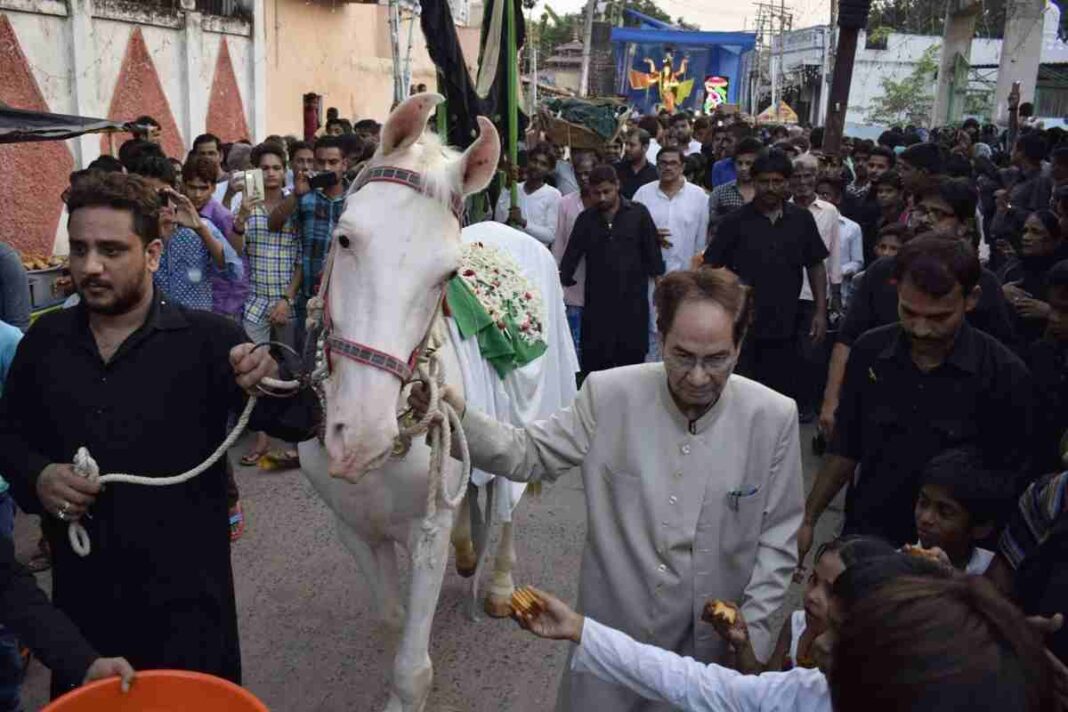
Throughout Muharram, Shia individuals don black-coloured clothing and partake in ritualistic mourning processions across cities, towns, and villages. The display of flags called “Alum,” crafted in memory of Imam Hussain’s army in Karbala, constitutes a significant element of these processions. The Panjtan Pak symbol on the flag represents Prophet Mohammad, Ali, Fatima, Imam Hasan, and Imam Hussain. Some groups carry Alums, while individuals hold smaller ones during the processions. The procession is led by people with large lamps, accompanied by a majestic horse named Zuljanah, considered Imam Hussain’s horse and treated with utmost care.
On the 10th day of Muharram, people take out Tazias, symbolic of Imam Hussain’s fasting. Made of wood, mica, and coloured paper, these Tazias vary in size and craftsmanship, reflecting the artisans’ imagination. Each Tazia is adorned with a dome.
The Muharram processions recreate the scenes of Karbala, evoking deep emotions, and participants express their grief through Marsiyya and Nauhe (songs of mourning) while thumping their chests. Some even go to extreme lengths, injuring themselves with iron chains and swords, reciting “Ya Hussain, Ya Hussain.”
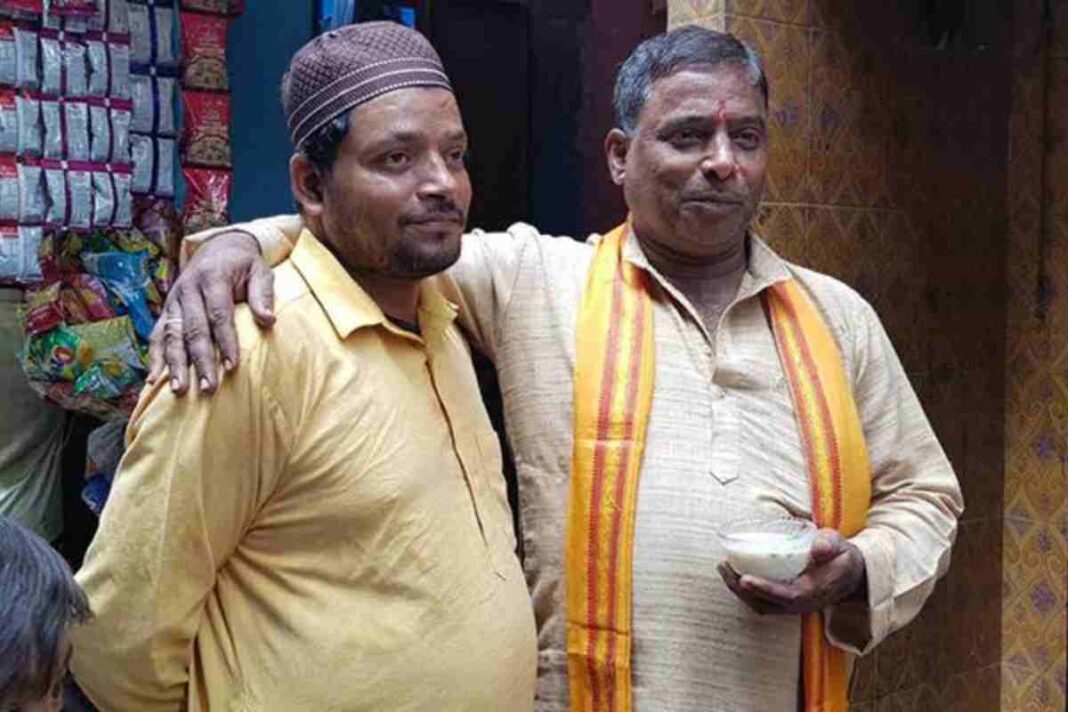
Interestingly, Hindus also actively participate in the Muharram processions, demonstrating unity and respect for each other’s faiths. Hindu women even seek Tabarukh (consecrated food) distributed during Muharram, believing it has healing properties when consumed during illness.
In contrast to Hindu processions of joy, the Muharram processions exude solemnity and grief. Nonetheless, this communal display of remembrance and unity during Muharram showcases India’s harmonious coexistence of diverse religious practices.
For a detailed story, please visit: Awaz the voice
Also Read: Breaking the Silence: Normalizing Menstruation and Challenging Taboos
You can connect with DNN24 on Facebook, Twitter, and Instagram and subscribe to our YouTube channel.