
Year 2025 was a turbulent one for Bangladesh politics marked by mob violence on the streets, atrocities against religious minorities and refugees and persecution of independent media, topped by Islamist resurgence. The new government, led by Tarique Rehman, has brought in stability but has its work cut out. Sanchita Bhattacharya, Research Fellow at Institute for Conflict Management analyzes the year that was.
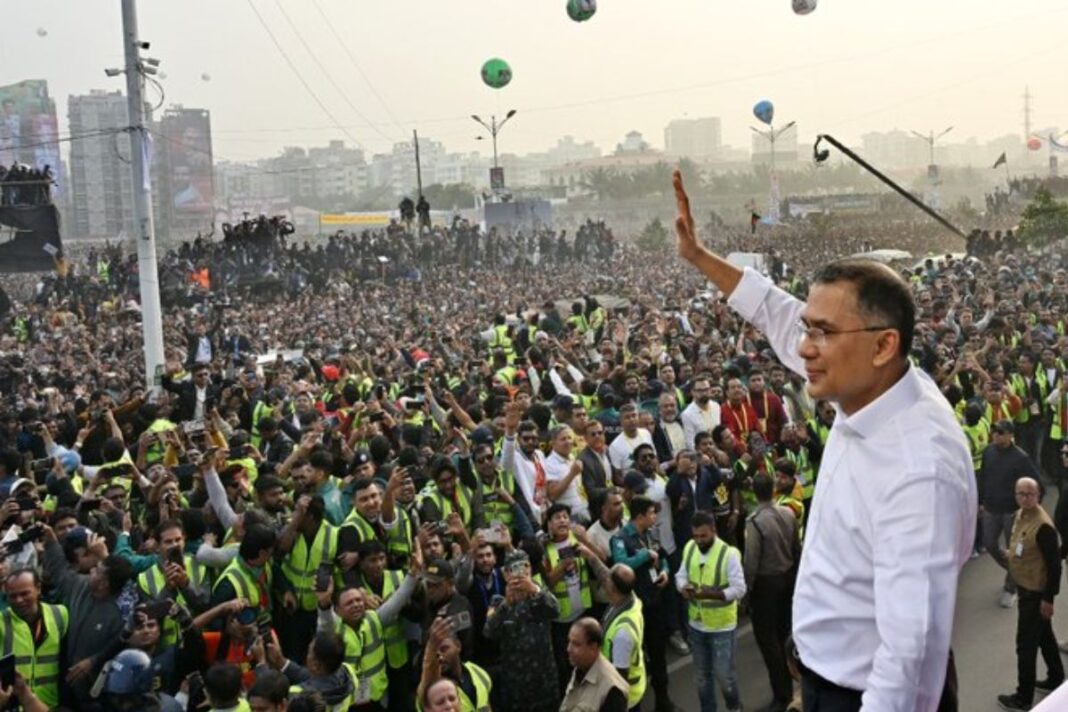
The past year in Bangladesh has been profoundly tumultuous, marked by acute lawlessness, escalating violence, and institutional breakdown under the Muhammad Yunus-led interim administration, culminating in Tarique Rahman’s oath-taking as Prime Minister on February 17, 2026 in the Jatiya Sangsad. Out of 297 results declared, the BNP-led alliance won 212, with BNP alone winning 209 seats. Despite the ban on the Awami League, the National Citizen Party (NCP), which spearheaded the student-led uprising that forced Sheikh Hasina to leave Bangladesh in August 2024, was reduced to a marginal force with six seats only. The resurgence of Islamist radical Jamaat-e-Islami (JeI), however, is cause for concern: from just two seats in 2008 to 77 in the current Jatiya Sangsad, with the resultant status as Leader of the Opposition, the development is likely to unsettle the democratic constituency.

In 2025, mob culture became a defining feature of the Bangladesh streets with chaos and vigilantism dominating under the Yunus administration. As reported on December 31, 2025, data compiled by the Manabadhikar Shongskriti Foundation (MSF) and Ain o Salish Kendra (ASK) indicated a year marked by shrinking democratic space, widespread impunity, and growing insecurity. MSF recorded 428 incidents of lynching that killed 166 people in 2025; and 599 incidents of political violence affecting 5,604 people. Of them, 86 were killed and 5,518 injured, including 97 who sustained gunshot wounds.
Instead of suppressing the anarchy and violence, the Interim Government launched ‘Operation Devil Hunt’ to suppress political opponents, especially Awami League supporters, who were maligned as ‘fascists’. On February 11, 2025, Home Advisor Jahangir Alam Chowdhury stated:
“It [Interim Government] aims to bring fascists, their accomplices, miscreants, anarchists and terrorists under the purview of the law and ensure exemplary punishment. Fascism had been eradicated, yet its collaborators continue to conspire against the government both domestically and internationally…”
In the first phase (February 8 – March 2, 2025), 12,220 people were arrested; 188 locally made weapons were recovered; and 50 firearms were seized. In the second phase, which began on December 13, 2025, 15,009 people were arrested and 218 firearms were seized (as of January 9, 2026). The second phase began with an escalation in violent incidents, following the shooting of Sharif Osman Hadi, leader of the Inqilab Mancha, on December 12, in Dhaka. He eventually succumbed to his injuries in Singapore on December 18. According to the Ain o Salish Kendra (ASK), 102 people were killed in political violence in 2025.
Meanwhile, according to partial data collated by the South Asia Terrorism Portal (SATP) through 2025, there was not a single case of fatality related to proscribed Islamist terrorist groups in Bangladesh, although a total of 57 arrests of Islamist terrorists/radicals were recorded. The Interim Government under Yunus maintained a policy of appeasement and support for radical Islamist groupings, which operated with absolute impunity. For instance, on August 22, 2025, Shafiur Rahman Farabi of the banned militant Ansarullah Bangla Team (ABT), who was serving life imprisonment in the case of the murder of writer-blogger Avijit Roy (February 26, 2015), was released on bail granted by the High Court. On June 3, Maulana Abu Taher, former ‘chief’ of Harkat-ul-Jihad-al Islami Bangladesh’s (HuJI-B’s) Dhaka unit, was released from Kashimpur Jail in Gazipur District, after 19 years of imprisonment.
Further, as reported on April 11, 2025, in the preceding eight months, 148 operatives of Jama’atul Mujahideen Bangladesh (JMB), accused in cases of terrorism, were released on bail. On July 11, 2025, ABT organized a protest rally in Dhaka city, demanding the release of Abu Ammar Jununi, ‘chief’ of the Rohingya militant Arakan Rohingya Salvation Army (ARSA). Moreover, ABT leaders mobilized funds for legal support to Jununi. On November 16, 2025, JMB leaders and operatives openly held a meeting with representatives of Islamic State (IS) at Satana Jame Mosque in Kurigram District. Discussions focused on organizing the youth and gaining community support.
Militant Islamist organisations also openly conducted training and recruitment drives to entice the youth of Bangladesh towards radical and violent ideology. Significantly, as reported on November 26, 2025, an Islamic Dawah Movement linked with Hizb-ut-Tahrir (HuT) had been intensifying radical activities across Bangladesh under the garb of religious workshops, targeting youth, especially school and college students. Earlier in the year, from July 11 to July 18, JMB organized a training session for its cadres at Tarbiatul Ummah Qawmi Madrassa in Kushtia District to train them in small arms handling, manufacturing IEDs, hand bombs, petrol bomb, etc.
Apart from militant organisations, various Islamist parties and organisations in Bangladesh flexed their muscles and openly challenged the Bangladeshi establishment and democratic norms. On August 13, 2025, for example, the Chief of Islami Andolan Bangladesh (IAB), Syed Muhammad Rezaul Karim, called for unity among Islamic parties to establish Islamic rule. On October 25, Bangladesh Khelafat Majlis (BKM), during the 8th session of its Central General Council meeting in Dhaka city, called for the establishment of an Islamic Caliphate, implementation of the death penalty for insulting Allah and Islam, and declaration of Qadianis (Ahmadiyas) as non-Muslims. On November 1, Ahle Hadith Jubo Sangha (AHJS) and JMB jointly organized a meeting at Purandarpur Ahle Hadees Jame Masjid in Meherpur District, calling upon the country’s youth to prepare for jihad. It was also decided that AHJS members would receive training from JMB in small arms and explosives. Earlier, on July 12, 2025, an HT round-table meeting proposed state reforms based on principles including radical changes to the existing state structure; sovereignty in all aspects of administration to be attributed to Allah; acceptance of the flawless way of political life shown by Allah; and preserving and following the way of politics according to the Quran.
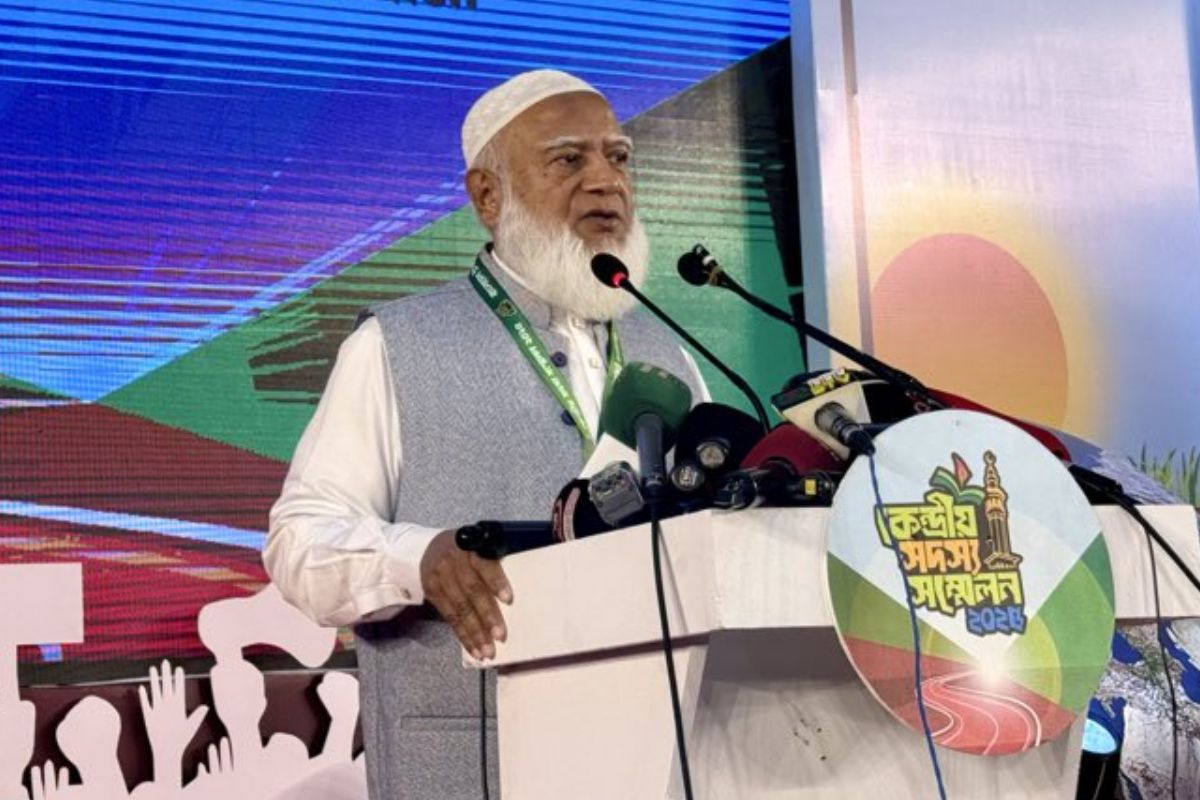
The Jamaat’s altered position in Bangladeshi politics was crucial. Once a marginal parliamentary force, Jamaat has emerged as the main opposition. Nearly 39 per cent of Jamaat’s victories, or 26 seats in total, came from BNP and AL strongholds, 14 in BNP bastions and 12 in AL citadels. The revocation of the ban on Jamaat by Yunus’ Interim Government on August 28, 2024, gave fresh impetus and legitimacy to the party. The party’s cadres had long been working at grassroots level and had built strong networks. In the last decade and a half, the permanent members of Jamaat increased from 23,863 to 73,046. It also recorded a threefold rise in the number of its activists, up to 639,000 from 221,000 over the same period. JeI’s student wing, the Islami Chhatra Shibir, swept the 2025 university polls (Dhaka University, Jahangirnagar University, Rajshahi University etc.), creating a robust following amongst the educated youth of the country.
2025 marked the Awami League’s annihilation from the political space in Bangladesh. On May 10, the party was banned under the Anti-Terrorism Act. Later, on November 17, the International Crimes Tribunal-1 (ICT-1) sentenced deposed Prime Minister, Sheikh Hasina, to death in absentia. The Yunus administration maintained a vengeful attitude towards the defunct AL and Home Adviser Jahangir Alam Chowdhury directed the Police to bring “Awami League criminals” under the law even if no cases were registered against them, warning of action against officers who failed to comply. After Tarique Rahman became Prime Minister, some random incidents of flag hoisting at local AL offices were reported from some districts. However, the ban on AL continues.
The condition of religious minorities remained alarming in Bangladesh through 2025, with numerous cases of killings, false arrest, rape, robbery, forcible conversion to Islam, and the burning, vandalism and destruction of their homes, business establishments and places of worship. The Bangladesh Hindu Buddhist Christian Unity Council (HBCUC), on January 28, 2026, disclosed that at least 522 incidents of communal violence occurred across Bangladesh in 2025, including 66 deaths, 95 attacks on places of worship and 102 attacks on homes and business establishments, sharply contradicting the government’s claim that only 71 incidents had communal undertones. The HBCUC report also documented 38 incidents of abduction, extortion and torture; 47 incidents of physical assault and death threats; and 36 cases of arrest and torture on allegations of blasphemy. On 14 January, 2026 a report by Human Rights Watch (HRW) mentioned at least 51 incidents of violence against Hindus throughout 2025, including 10 killings. The grim situation was discussed in the 60th Session of the UN Human Rights Council in Geneva.
Independent media outlets in Bangladesh faced orchestrated mob violence and arbitrary arrests in 2025. Manabadhikar Shongskriti Foundation (MSF) recorded 289 incidents affecting 641 journalists, and cited the continued use of the Cyber Security Act and Ordinance to file cases against journalists. Ain o Salish Kendra recorded harassment or abuse of at least 381 journalists. Of them, 123 faced legal cases, 118 were physically attacked, 20 received death threats and 23 were targeted by law enforcement. Media freedom came under severe threat on December 18, 2025, when a violent mob attacked, robbed and set fire to the offices of The Daily Star and Prothom Alo in Dhaka city. New Age Editor Nurul Kabir was also harassed. On the same day, cultural institution Chhayanaut was also vandalised. Subsequently, on December 22, 2025, the Committee to Protect Journalists, in solidarity with six other organisations, released a statement declaring:
“We, the undersigned, strongly condemn the violent attacks on December 18, 2025 on the offices of Prothom Alo and The Daily Star… and the vandalism of Chhayanaut… These apparently coordinated acts of violence represent a grave escalation in attacks against independent media, journalists, activists, and cultural spaces in Bangladesh… the harassment and physical intimidation of journalists present at the scene reflects the growing boldness of those who seek to undermine media freedom in the absence of effective state protection…”
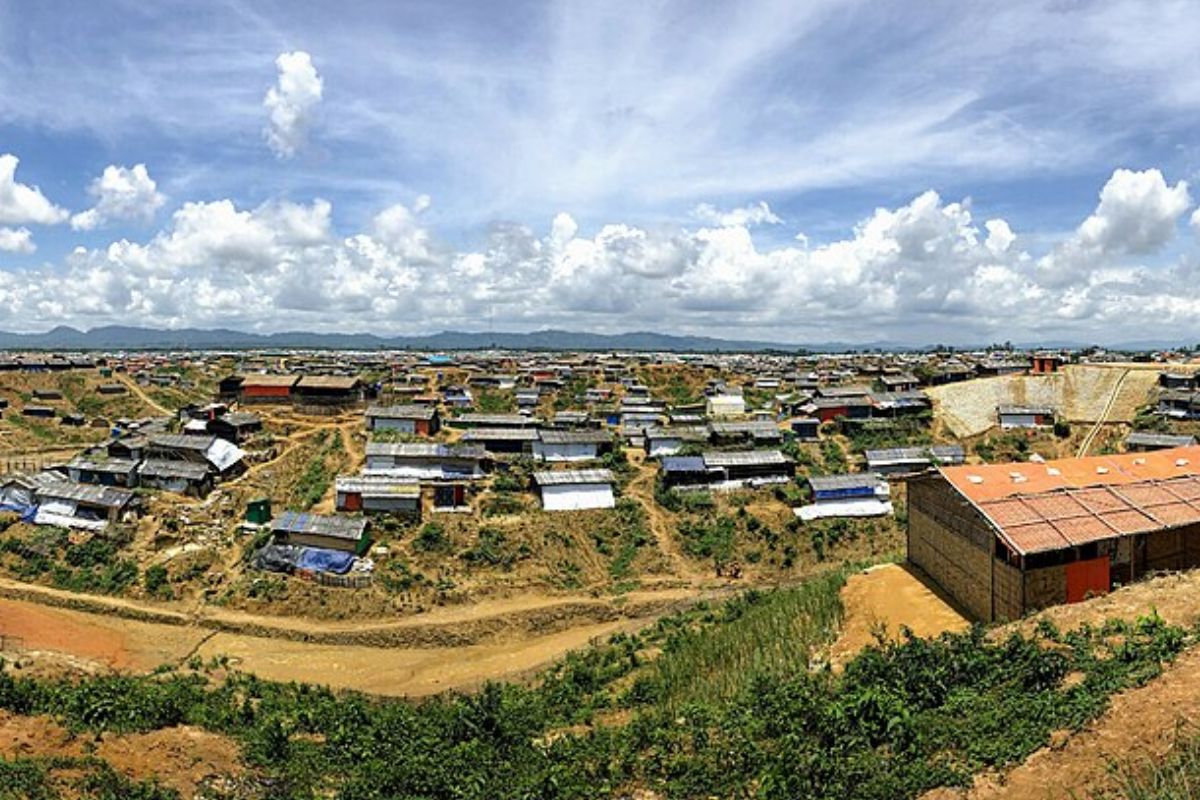
The Rohingya crisis in Bangladesh intensified in 2025 as the country hosted over 1.2 million refugees in overcrowded Cox’s Bazar camps, with a fresh influx of nearly 150,000 arrivals amid renewed violence in Myanmar’s Rakhine State, marking the largest influx since 2017. Significantly, on March 16, 2025, the Rapid Action Battalion-11 (RAB-11) arrested Ataullah Abu Ammar Jununi, the ‘commander-in-chief’ of the Arakan Rohingya Salvation Army (ARSA), in Narayanganj District. The arrest was made on charges of illegal entry, sabotage and terrorist activities in Bangladesh. The situation remains tense, as the Arakan Army from Myanmar pushes refugees into Bangladesh and, within the camps, ARSA, along with the Rohingya Solidarity Organisation (RSO), seeks to carve out respective zones of dominance through various criminal activities. According to data collated from the quarterly publications of The Joint Protection Monitoring Report for 2025 [January to December], 24 killings, 1,407 security incidents, 437 abductions, and 193 assaults had taken place in the refugee camps of Cox’s.
The Yunus regime was marked by violence, arbitrariness, unrestrained mob actions, selective repression and institutional paralysis, which undermined the Interim Government’s legitimacy. The failure to forge comprehensive political consensus and the upsurge of factional violence created a void that the BNP, under Tarique Rahman has filled. With the aftereffects of severe and sustained human rights violations, atrocities against indigenous people and religious minorities, uncontrollable violence in Rohingya camps, and the stifling of free voices still lingering, the coming months will be crucial for the new administration.