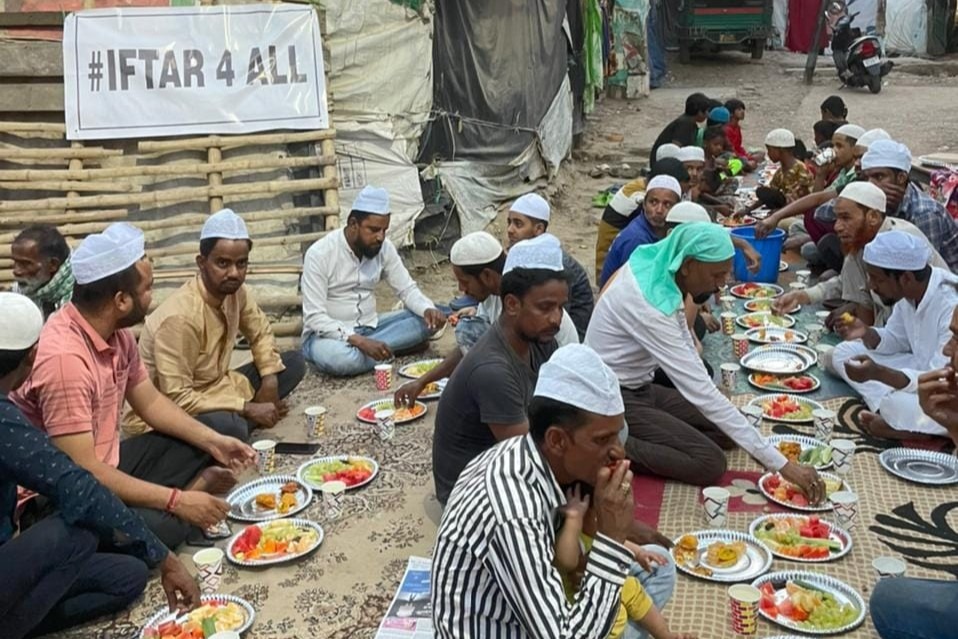

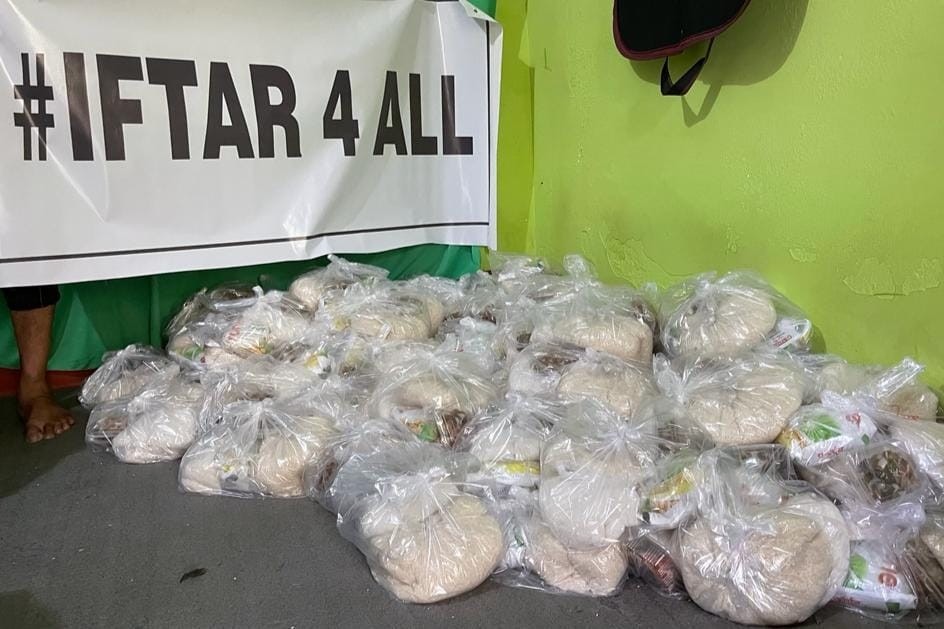
An evening in 2017, outside the All India Institute of Medical Sciences in Delhi, marked the beginning of what would become a nationwide movement. Supreme Court advocate Anas Tanwir and a handful of volunteers distributed 800 iftar packets to people sleeping on the footpath outside the hospital. Most of the recipients were relatives of patients who had travelled from distant villages and were running low on money for food. That modest effort has since grown into Iftar4All, a decentralised volunteer network operating across half a dozen Indian cities.
The initiative targets populations that public policy often overlooks. Patients waiting outside government hospitals, labourers at railway stations, homeless people on urban streets, and families in night shelters receive free meals at sunset during Ramzan. Volunteers assemble packets containing dates, fruits, water, samosas, bananas, wafers, and buttermilk. Each packet costs approximately 45 rupees and reaches people regardless of their religious background.
Birth of a Movement
Iftar4All traces its roots to a 2017 Facebook post by writer Nazia Erum. In the post, she had asked friends about their experiences with iftar gatherings, questioning whether the traditional meal breaking the Ramzan fast had become too insular. Her hashtag gained attention and sparked small interfaith gatherings in homes around Noida. These private events demonstrated an appetite for broader community engagement during the holy month.
Tanwir saw an opportunity to extend this spirit beyond middle-class drawing rooms. Along with volunteers, including Shakaib Azhar Chaudhry, he organised the first public distribution at AIIMS Delhi. The choice of location was deliberate. India’s premier government hospital draws patients from every state, many of whom arrive with limited resources. Families camp outside wards for weeks, struggling to afford even basic meals while caring for sick relatives.
The first year revealed stark inequalities in society that made Tanwir realize- “how privileged we were, and how many people around us need help.” This realisation became the foundation for expanding their operations. The group established a Facebook page and began coordinating through WhatsApp. Growth happened organically through word of mouth rather than formal advertising or institutional backing.
Architect of the Initiative
Anas Tanwir brings multiple dimensions to his advocacy work. He practices as an Advocate-on-Record at the Supreme Court of India, handling cases related to civil liberties and minority rights. He founded the Indian Civil Liberties Union, which defends constitutional freedoms, and Project Iqra, an educational initiative. He also serves as National President of the Indian Union Lawyers League. Beyond legal practice, Tanwir writes poetry that blends Urdu literary traditions with contemporary social commentary.
Personal experiences shaped his commitment to religious harmony. During Ramzan 2023, Tanwir was fasting while stuck in Delhi traffic. His Uber driver, Yatin Kumar, was fasting for Navratri, the Hindu festival. Without prompting, Kumar offered to share water and fruits with Tanwir when the time came to break their respective fasts. Tanwir tweeted about this exchange, noting that such gestures across faiths now seem remarkable enough to warrant public attention. The incident reflected what he calls Ganga-Jamuni tehzeeb, the syncretic culture characterising Indian social life.
Operations and Logistics
Iftar4All operates without centralised funding or a formal organisational structure. Volunteers coordinate city chapters independently, adapting distribution strategies to local conditions. Delhi teams concentrate on AIIMS and railway stations. Bengaluru volunteers from groups like Beyond Boundaries target Victoria Hospital, NIMHANS, and Kidwai Cancer Institute, aiming for 750 packets daily throughout the fasting month.
The operational model emphasises simplicity and scalability. Local volunteers source food, assemble packets, and identify distribution sites where vulnerable populations concentrate. WhatsApp groups facilitate coordination. Some packets include printed quotes reinforcing the charitable ethos, such as “He is not a believer whose stomach is filled while his neighbour is hungry.”
Funding comes entirely from personal contributions and small donations. Organisers appeal for support to sustain operations throughout the full month of Ramzan. Rising food costs challenge the grassroots financing model, yet the absence of institutional backing preserves the initiative’s character as a citizen movement rather than a program.
Geographic Spread
From its Delhi origins, Iftar4All expanded to Mumbai, Hyderabad, Lucknow, and Guwahati by 2018. Recent years have seen activity in West Bengal and Jammu and Kashmir. Bandipora volunteers distribute packets at cardiology hospitals and railway stations, focusing on street vendors. Bengaluru’s 2026 effort distributed over 2,250 packets in the first three days of Ramzan.
Each city chapter operates independently while sharing the core mission. Distribution sites extend beyond hospitals and stations. Volunteers have organised iftars at juvenile homes, night shelters, refugee camps, and even Delhi’s Tihar Jail. Some chapters host interfaith iftars at gurudwaras, temples, and churches, creating spaces for dialogue across religious communities.
Social Impact and Cultural Context
Iftar4All revives traditional Ramzan practices while drawing on broader Indian traditions of communal eating. The Sikh tradition of langar, formalised by Guru Amar Das, serves free meals at gurudwaras to all visitors regardless of background. Hindu temples have similar traditions. Islamic principles of sadaqah and ensuring neighbours do not go hungry find expression in this cross-faith framework.
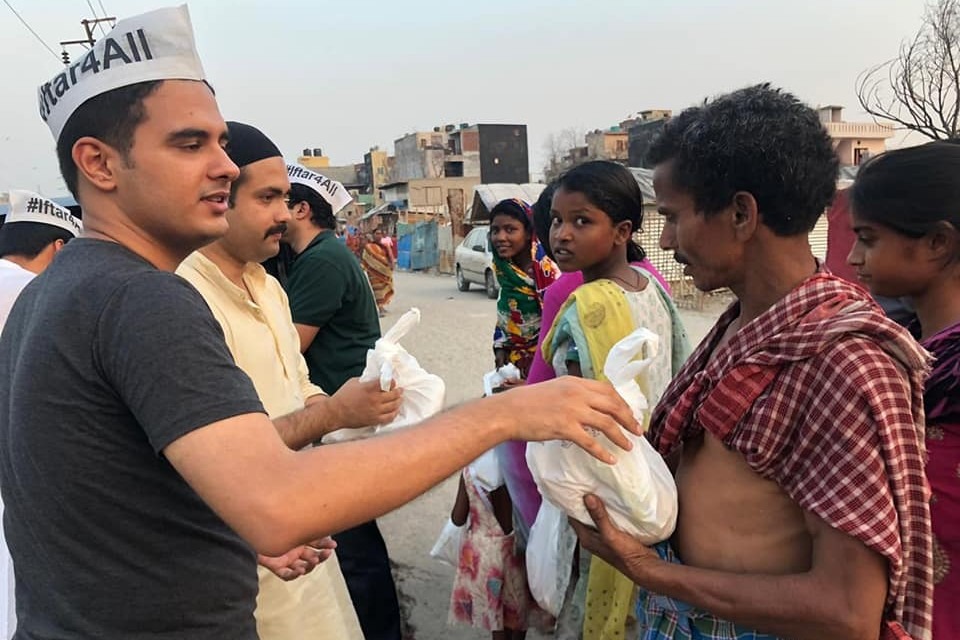
The initiative deliberately avoids political associations. Tanwir has criticised elite iftar parties that become exercises in tokenism and spectacle. By concentrating on streets, hospitals, and stations, Iftar4All redirects attention to populations facing genuine hardship. This approach depoliticises the iftar, returning it to its original charitable purpose.
Continuing Challenges
Funding remains the primary operational challenge. Volunteers often cover costs out of their own pockets amid rising food prices. Future plans include reaching more shelters and rural areas. The eight-year momentum demonstrates sustained commitment despite logistical obstacles.
Iftar4All represents a particular form of civic engagement. It bypasses formal institutions and political structures to address immediate needs through direct action. In a nation where religious identity increasingly shapes public discourse, the initiative models an alternative based on shared meals and mutual care. Whether such efforts can scale to address systemic inequalities remains uncertain, they certainly preserve traditions of neighbourly obligation that modern urban life often erodes.