
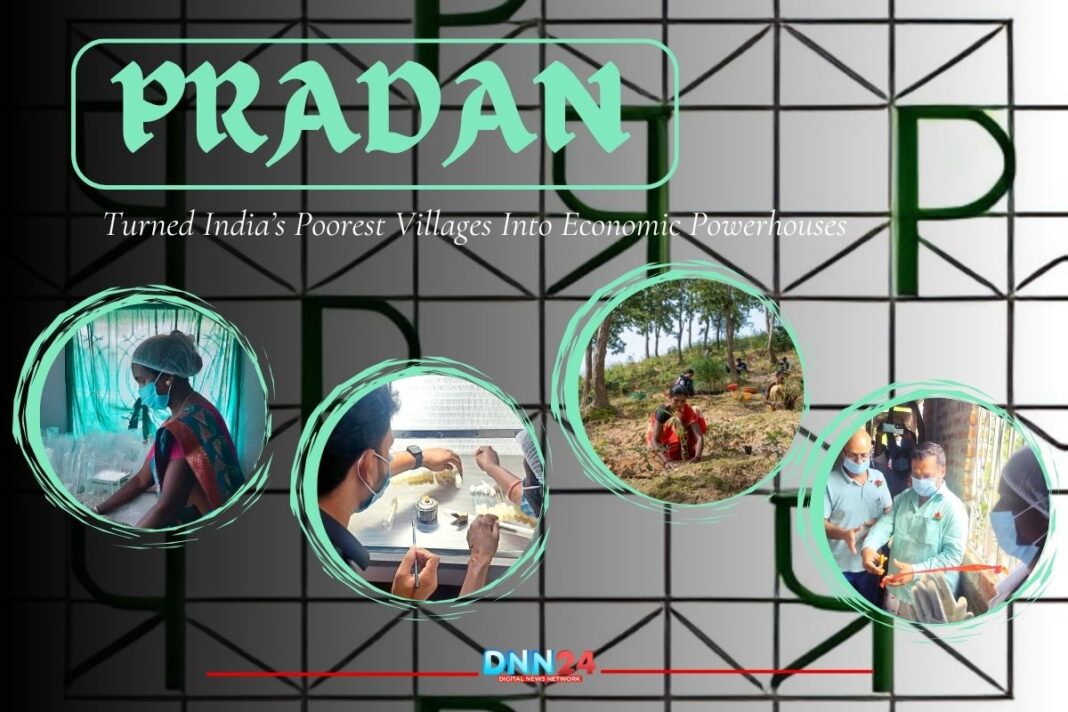

PRADAN, which stands for Professional Assistance for Development Action. The name itself declared their approach. They would bring professional rigour to development work, treating poor communities as capable partners rather than helpless beneficiaries. The first villages they entered in Bihar and Madhya Pradesh greeted them with suspicion. Outsiders had come before with promises that evaporated quickly. But PRADAN’s team did something different. They moved into villages for months at a time, learning local languages, eating local food, and working in fields alongside farmers.
They organised women into small groups and taught them basic accounting, agricultural techniques, and market linkages. The work was painfully slow. Initial projects failed repeatedly. Crops withered, businesses collapsed, and savings groups disintegrated. Yet the team persisted, meticulously documenting failures and adjusting methods based on suggestions from the villagers themselves. This patient, rigorous approach would eventually touch millions of lives across eight Indian states, creating economic transformation in regions that government programs had failed to reach for decades.
Building Economic Systems From Scratch in Forgotten Regions
It’s most significant work happened in forming and strengthening self-help groups among rural women. The organisation understood that poverty was not just about a lack of money, but also a lack of access to economic systems. In Jharkhand, Odisha, Chhattisgarh, and Bihar, PRADAN professionals spent years creating financial infrastructure where none existed. They helped women form savings groups, teaching them to pool small amounts of money weekly. These groups became stepping stones to formal banking. Women who had never entered a bank suddenly found themselves holding passbooks and negotiating loans. The transformation was methodical. It did not simply teach savings.
They connected groups to government credit schemes, helped navigate bureaucratic paperwork, and trained women to maintain accounts that could withstand audits. In Odisha’s tribal belt, PRADAN organised over fifteen thousand women into producer groups focused on agriculture. These groups collectively cultivated crops, processed produce, and sold directly to markets, eliminating intermediaries who had exploited farmers for generations. The Agriculture Production Cluster project demonstrated this approach perfectly. PRADAN teams lived in tribal villages for eighteen months, mapping local resources, identifying market opportunities, and training women in quality control and collective bargaining.
Initially, traders refused to deal with women’s groups, dismissing them as inexperienced. PRADAN professionals accompanied these groups to wholesale markets, vouched for the quality of their produce, and helped establish direct relationships with buyers. Within three years, women who had never left their districts were negotiating contracts with urban retailers and government procurement agencies. The economic impact was measurable. Average household incomes in participating villages increased by sixty to seventy per cent, not through handouts but through systematic market integration and skill development.
Transforming Barren Land Into Productive Ecosystems
It recognised early that sustainable livelihoods required environmental restoration. Across central India, the organisation pioneered watershed management projects that turned degraded land into productive agricultural zones. The work was technical and labour-intensive. In Chhattisgarh and Madhya Pradesh, PRADAN teams conducted detailed surveys of water flows, soil conditions, and erosion patterns. They collaborated with village communities to construct check dams, contour trenches, and farm ponds, utilising traditional techniques in conjunction with modern engineering. What made PRADAN’s watershed work unique was community ownership. Rather than hiring contractors, the organisation trained villagers to construct water harvesting structures themselves.
Women participated equally, learning masonry and earthwork alongside men. Communities contributed labour, while PRADAN secured funding through government schemes, such as the Mahatma Gandhi National Rural Employment Guarantee Act. One watershed project in Gumla district, Jharkhand, transformed twenty villages. Before PRADAN’s intervention, the region faced acute water scarcity for eight months of the year. Agriculture was possible only during the monsoons. PRADAN teams spent two years working with village committees to plan water conservation structures across 15 square kilometres. They trained farmers in soil testing, crop rotation, and organic composting. The project created permanent water sources, allowing year-round cultivation.
Making Government Schemes Actually Deliver Results
PRADAN’s most challenging work involved reforming how government development programs functioned at the grassroots level. The organisation partnered with major national initiatives, including the Integrated Rural Development Programme, Swarna Jayanti Gram Swarozgar Yojana, and the National Rural Livelihoods Mission. These partnerships aimed to fix a persistent problem: government schemes allocated enormous budgets but struggled to reach intended beneficiaries. Corruption, bureaucratic apathy, and poor implementation meant that funds rarely translated into real development.
PRADAN positioned itself as a bridge between policy and practice. Their professionals embedded themselves in district administration, attending coordination meetings, training government officials, and accompanying field staff during village visits. They created systems for transparent fund disbursement, ensuring that loans reached women’s groups without intermediaries extracting bribes. In Bihar, PRADAN collaborated directly with the state rural development department to restructure the process by which self-help groups accessed government credit.
The organisation developed training modules for bank managers, teaching them to assess group creditworthiness based on savings discipline rather than traditional collateral requirements. This simple change unlocked millions in government loans for women who previously had no access to formal credit. It also held government programs accountable through documentation. The organisation maintained detailed records of fund flows, project outcomes, and beneficiary feedback. When district officials ignored villages or delayed fund releases, PRADAN presented data forcing action. This advocacy work was often contentious. Bureaucrats resented outside scrutiny, and politicians disliked transparency that reduced opportunities for patronage.
Creating Market Linkages That Changed Village Economics Forever
PRADAN’s livelihood work focused intensively on connecting rural producers to urban markets. The organisation recognised that increasing production meant nothing if farmers could not sell at fair prices. Across its operational areas, PRADAN established producer companies and marketing federations that aggregated village produce and negotiated bulk sales of these products. In Madhya Pradesh, the Swayamshree Project created market linkages for forest produce collected by tribal women. Traditionally, these women were sold to local traders at exploitative rates, earning barely enough to survive. PRADAN organised them into collection centres, standardised quality grading, and connected them directly to companies manufacturing processed foods and cosmetics.
The price differential was stunning. Women who earned fifteen rupees per kilogram selling to intermediaries began receiving forty-five rupees through PRADAN’s marketing federation. The project expanded to cover tamarind, mahua flowers, and medicinal herbs. PRADAN also worked on value addition. Rather than selling raw produce, women learned processing techniques that increased the market value of their products.
They made tamarind paste, packaged dried herbs, and produced mahua-based products. PRADAN connected these groups to e-commerce platforms and organic food stores in cities, opening entirely new markets. Training was rigorous. Women learned packaging standards, food safety regulations, and invoicing procedures. PRADAN professionals accompanied groups to trade fairs, helped design product labels, and negotiated with retailers. The goal was not just immediate sales but building long-term business relationships.
Training a Generation of Grassroots Development Professionals
It’s institutional contribution extends beyond direct village work. The organisation created a unique training model that has shaped hundreds of development professionals across India. PRADAN recruits young graduates, often from small towns and rural backgrounds, and puts them through intensive field-based learning. Recruits spend their first two years living in villages, working under the guidance of experienced mentors. They learn by doing: organising meetings, filling government forms, mediating community disputes, and teaching accounting to women’s groups. This apprenticeship model produces professionals who have an intimate understanding of rural realities.
Recruits are taught to listen more than they speak, to learn from villagers rather than impose solutions. The organisation deliberately avoids the expert mentality typical in development work. Instead, PRADAN professionals view themselves as facilitators whose role is to unlock the potential that already exists within communities. Many alums have gone on to lead other development organisations, government programs, and social enterprises. They carry forward the methods they learned: patient engagement, systematic documentation, community ownership, and professional accountability. Several state rural development departments now employ former PRADAN professionals in leadership positions, spreading the organisation’s approach through government systems. It also influenced academic thinking about development.
The Measurable Impact of Four Decades of Work
Numbers tell part of It’s story. The organisation currently works across eight states, partnering with over 300,000 women organised into more than 20,000 self-help groups. These groups manage collective savings exceeding one hundred crore rupees and have accessed government loans worth several hundred crores. Agricultural interventions have covered over two lakh acres, watershed projects have restored tens of thousands of hectares, and market linkages have generated annual business worth hundreds of crores for rural producers. But numbers capture only surface achievements.
The more profound transformation lies in changed social dynamics. Women who never left their homes now travel to district headquarters, negotiate with officials, and make financial decisions for their families. Communities that once accepted poverty as an inevitable fate now plan development projects and hold their governments accountable for providing services. Villages that depended entirely on monsoon agriculture now practice year-round cultivation using watershed resources they built themselves. PRADAN’s work has demonstrated that professional development practice, sustained over time, can create structural change in rural economies. The organisation has proven that women from marginalised communities, when provided with proper support and market access, can effectively manage complex businesses and compete successfully in formal markets.
Also Read: Truly Tribal: Hidden Village Art Revolution That’s Quietly Changing India
You can connect with DNN24 on Facebook, Twitter, and Instagram and subscribe to our YouTube channel.