
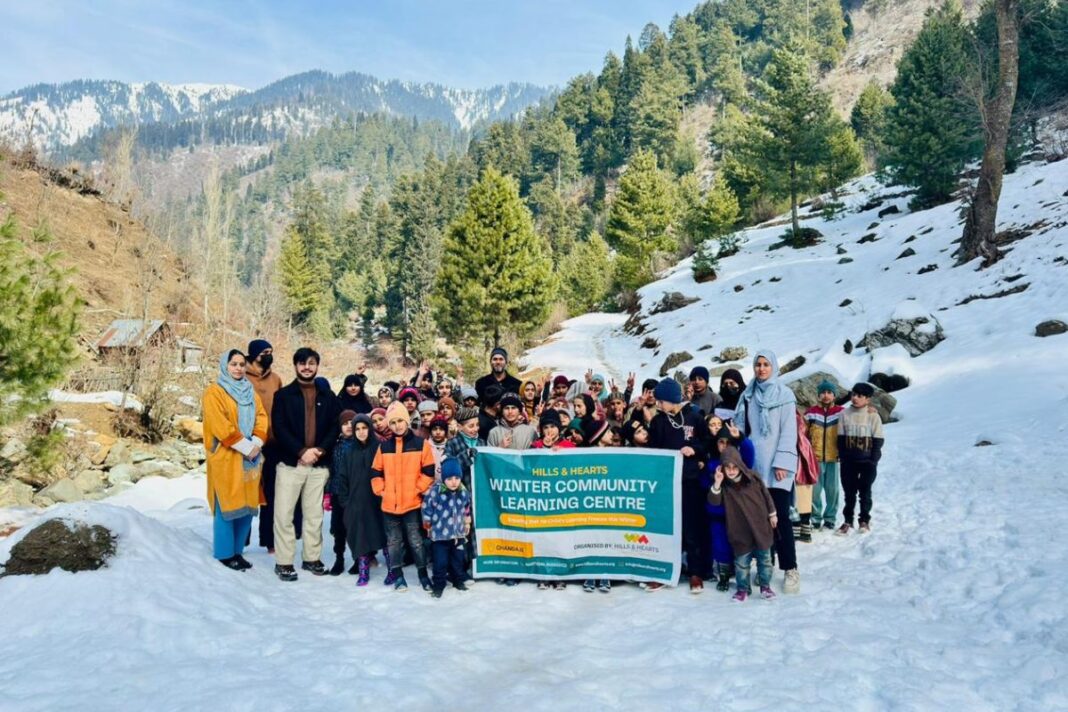

Hills and Hearts is a grassroots foundation in Jammu and Kashmir working to restore educational continuity for children left behind each winter when schools close across the valley. Led by local youth, it advances equity, employment, and empowerment, placing 400 students back in classrooms through community-driven, sustainable action.
The Numbers That Started It All
Every year, when the first snowfall lines the mountain roads of Jammu and Kashmir, there is a shift within schools. According to the Unified District Information System for Education Plus (UDISE+) 2024-25 report, the secondary school dropout rate among General category students is 12.9 per cent. For Scheduled Tribes, the figure rises to 17.7 per cent and for Scheduled Caste students, it reaches 15.7%. These are not merely statistics on a government spreadsheet. Each percentage point represents a child who failed to return to school after the winter break.
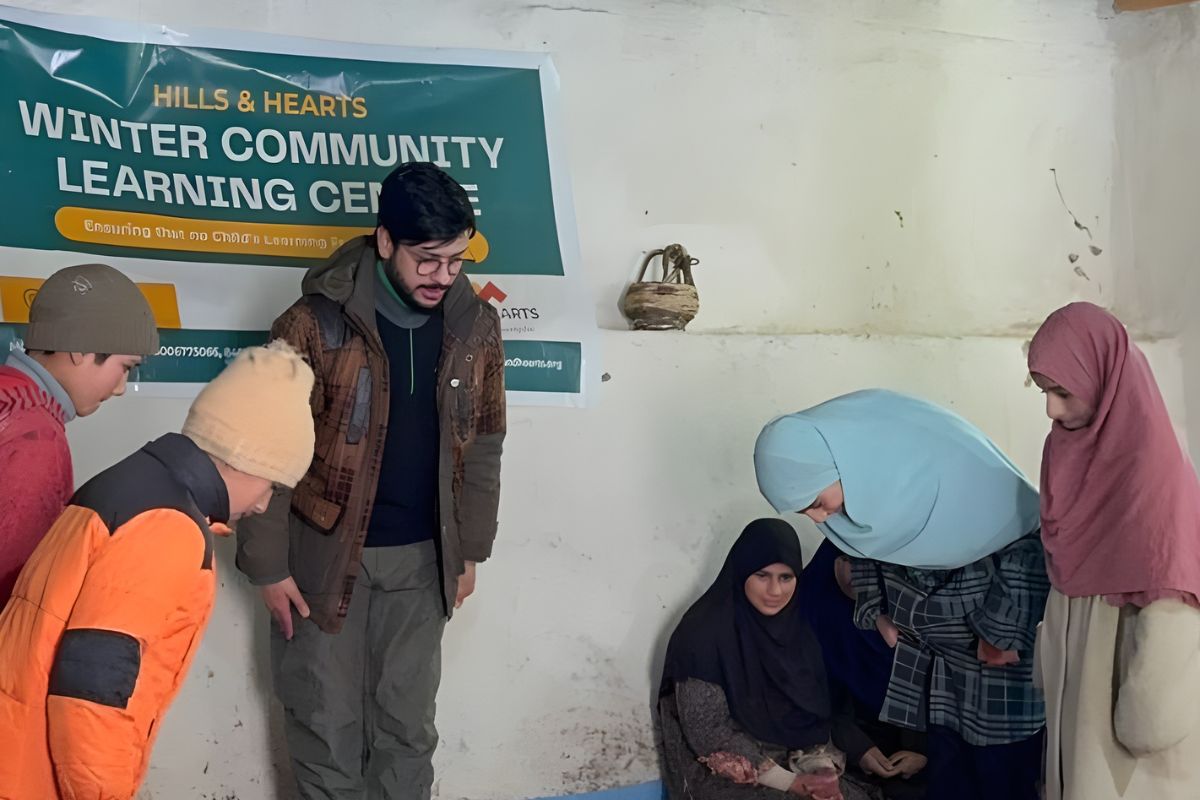
The winter school break in Jammu and Kashmir typically stretches across three months. In the high-altitude villages of the valley, those three months are not merely a holiday. Roads become impassable. Temperatures drop well below freezing. Families in tribal and labour-class settlements shift entirely into survival mode. The last thing anyone in these conditions can arrange is a tutor, a study group, or even a quiet hour for a child to sit with a textbook.
For first-generation learners, the effect is particularly profound. Research on learning loss consistently shows that extended breaks cause what educators call a learning slide. When a child who already struggles with foundational concepts loses three months of practice and routine, the gap that opens up is rarely closed in one semester. Over several years, that cumulative gap becomes the quiet reason a child stops attending school altogether.
Three Centres, One Clear Purpose
The Hills and Hearts Foundation, a grassroots social welfare organisation based in Jammu and Kashmir, decided to work directly inside that gap. In the winter of 2024-25, the foundation established three Winter Community Learning Centres in the remote high altitude villages of Chandagi, Ketson, and Reshwari in Bandipora district. These are not urban outreach programmes or government partnership schemes. They are locally operated centres in the very villages where the dropout data is collected.
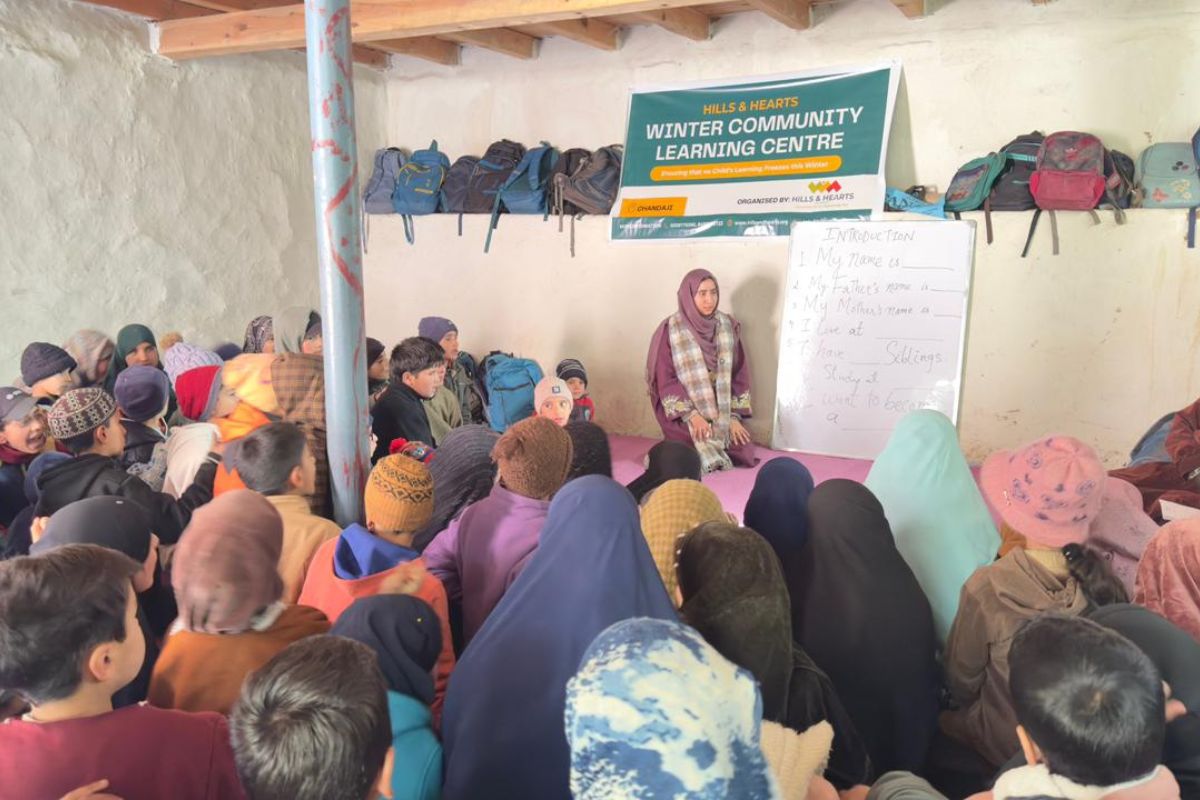
The three centres serve more than 400 children from tribal and labour-class families. The centres maintain a structured academic environment throughout the peak winter months, offering consistent support in core subjects as well as extra-curricular activities to keep children engaged. The staff running these centres are young volunteers from the local community. These are not outsiders arriving to fix a problem they have read about. They are young people from the same region, often from similar backgrounds, who have chosen to invest their time in the children around them.
The Motivation behind the Foundation
The founder of Hills and Hearts Foundation is Kifayatullah Malik, a National Presidential Awardee whose work in the region predates the foundation itself. His framing of the problem is clear and direct. According to him, when a child loses three months of academic momentum each year, the cumulative gap becomes a major factor in their dropping out later. The winter learning initiative is the foundation’s response to that observation, translated into action at the village level.
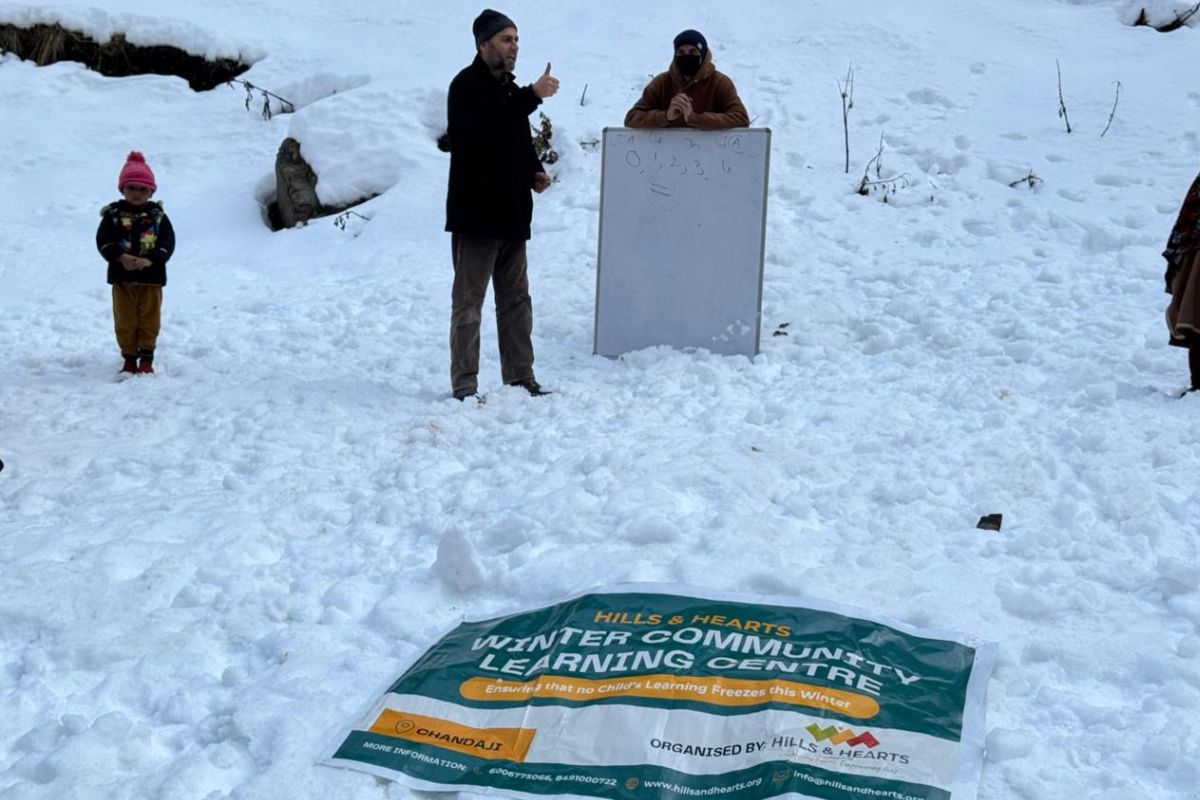
Hills and Hearts Foundation is dedicated to educational equity, employment, empowerment, and sustainable development across Jammu and Kashmir. Its leadership comes from local youth, and its solutions are designed for conditions that outsiders rarely understand. The foundation’s model is deliberately community-driven, which means the centres are run by people who understand what it costs a family to keep a child in school through extreme winters, and who equally understand what it costs that child not to be there.
The Particular Challenge of High-Altitude Villages
It is worth considering the geography because it is a problem. Chandagi, Ketson, and Reshwari are not merely rural. They sit in high-altitude terrain where seasonal isolation is a reality. When schools close for winter, the villages do not simply go quiet, as a city neighbourhood might during a school holiday. The communities become genuinely cut off from many of the services and structures that urban and even semi-urban families take for granted.
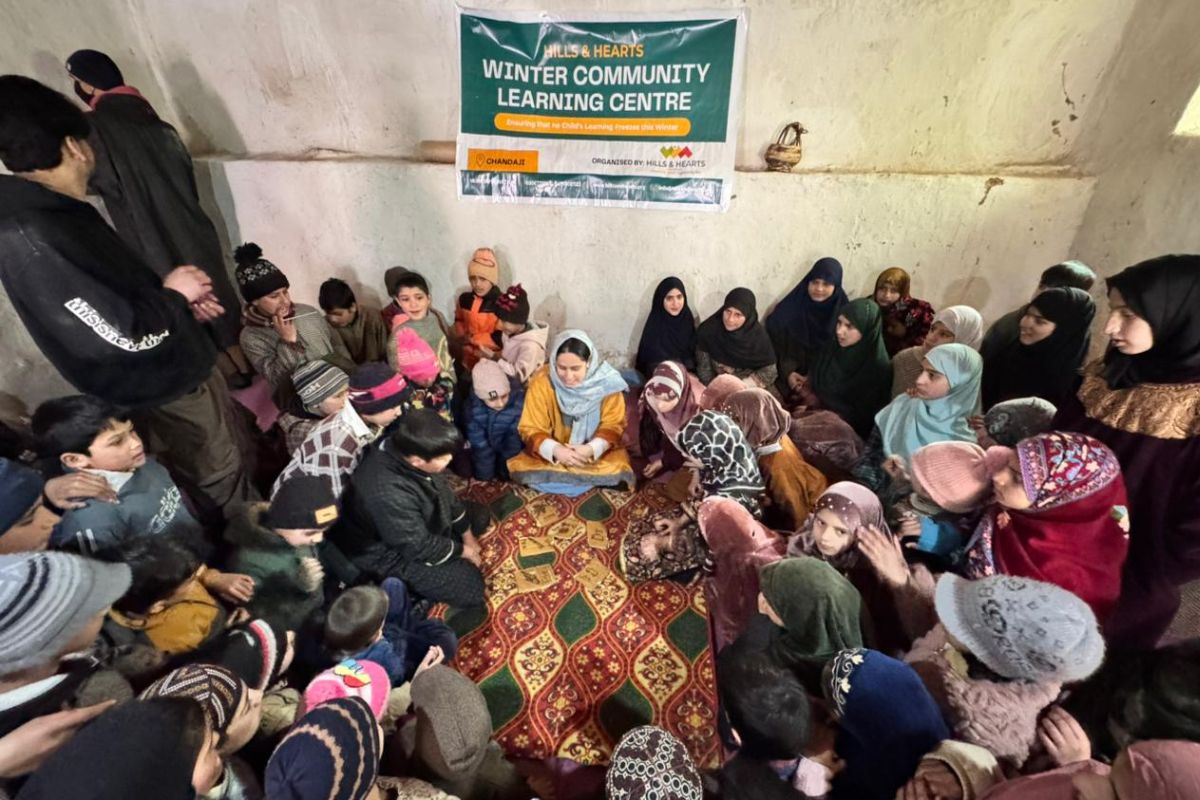
For a tribal family in one of these villages, the winter months are a time of intensive domestic labour, particularly for children who are old enough to help. Firewood collection, animal care, cooking over open fires in difficult conditions, managing younger siblings while parents work: all of this takes time and energy that cannot be redirected toward academic study without some external structure. The Winter Community Learning Centres provide that structure in a setting that the families already know and trust.
A Proven Pattern, Applied With Local Knowledge
Community learning centres during school breaks are not a new concept in education policy. What makes the Hills and Hearts model distinct is its precision of placement and depth of local understanding. The foundation did not open centres in the district headquarters or in villages that already had reasonable access to resources. It chose three specific remote locations where the dropout rate is the highest, and built its programme there.
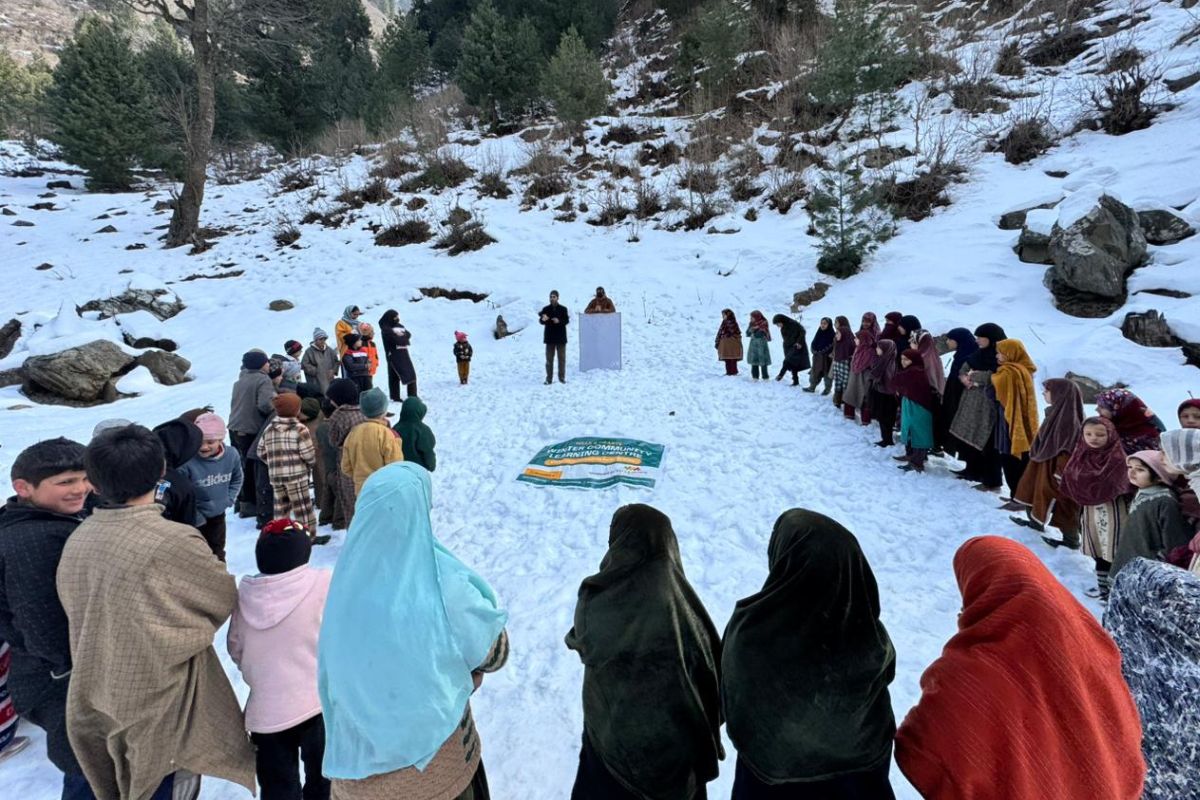
The use of local youth volunteers is both a staffing strategy and a community signal. When a child from Reshwari sees a young man or woman from the same village leading a learning session, the message received is that education belongs to this place too. It is not something that arrives only when an outside agency decides to show up. That kind of demonstration, sustained across an entire winter, carries more weight than a motivational speech ever could.
What 400 Children Represent in Practice
The number 400 sounds modest when set against the scale of the dropout problem in Jammu and Kashmir. But it is worth considering what 400 children in three remote high-altitude villages actually means in operational terms. It means three functioning centres, each with sufficient materials, volunteers, and a consistent enough schedule that families send their children regularly. In terrain and conditions where getting anything done consistently is itself a challenge, sustaining three active learning centres across a full winter is a substantial organisational achievement.
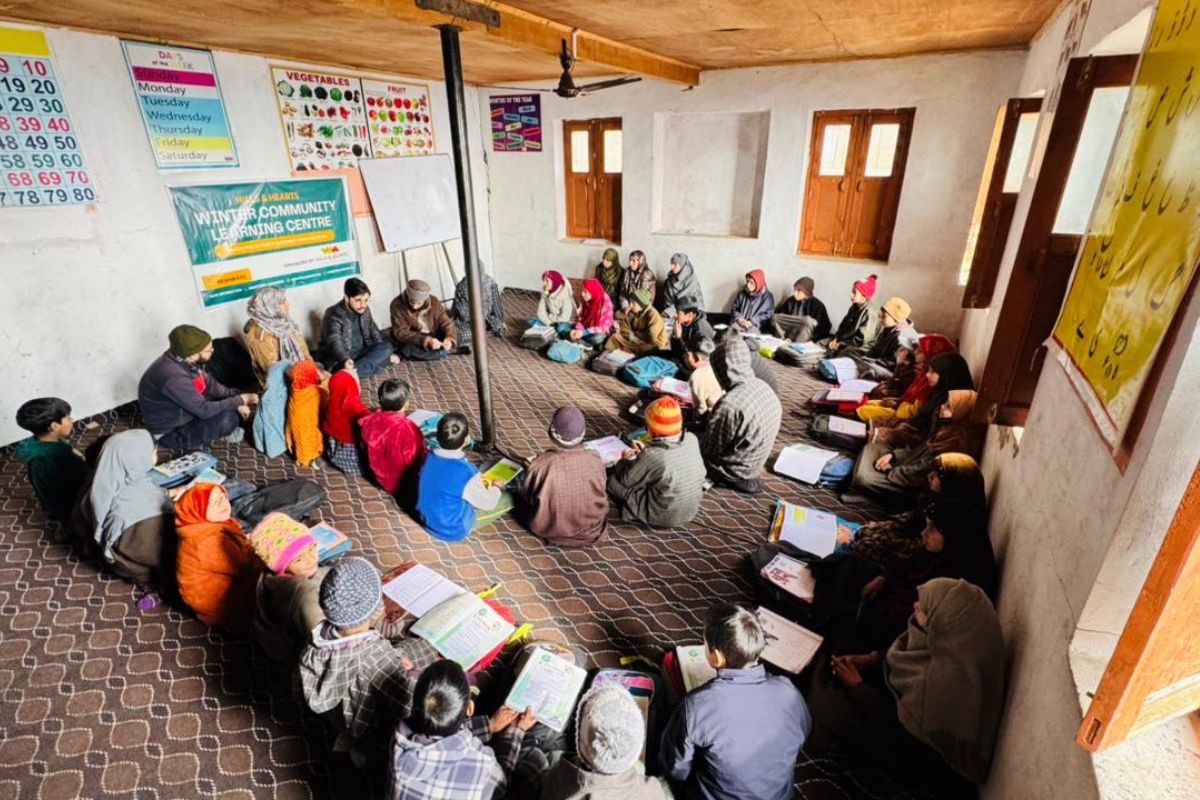
Each of those 400 children, in the foundation’s framing, is a child who returns to school in spring without a three-month gap in their learning. Over five or six years of schooling, that difference in continuity accumulates into a meaningfully different academic outcome. The child who never loses momentum is the one who makes it to secondary school and beyond. The dropout statistics recorded in the UDISE+ report are, in part, the stories of children for whom that continuity was never available.
The Organisation Behind the Initiative
Hills and Hearts Foundation operates across multiple areas of community welfare in Jammu and Kashmir, with education forming the central pillar of its work. The foundation’s broader mandate covers employment generation, community empowerment, and sustainable development initiatives tailored to the region’s specific conditions. It is not a large organisation with deep institutional funding. It is, by its own description, a grassroots body led by local youth. That structural simplicity is part of what allows it to operate in villages that larger organisations rarely reach.
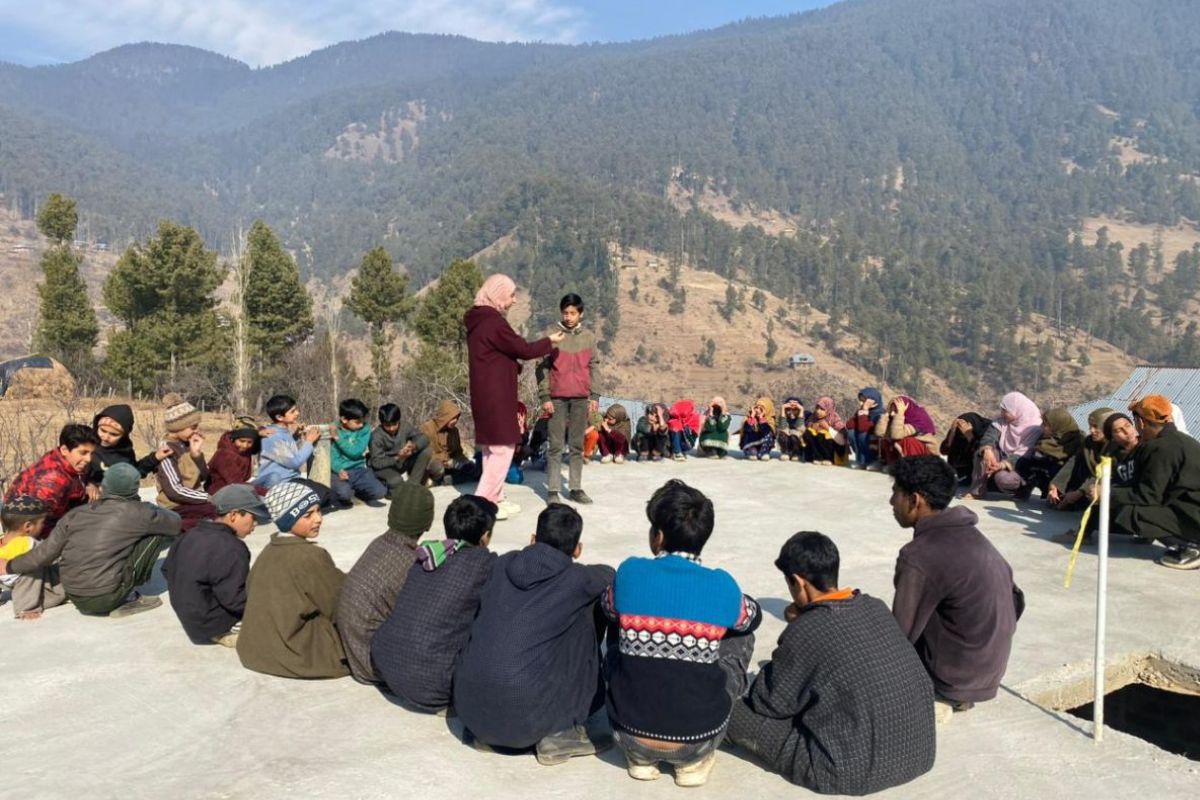
The winter learning initiative is the organisation’s most visible programme at present. Still, it sits within a wider body of work that has been building in the region for several years under the direction of its founder and its network of local volunteers.
A Bridge That Holds Through the Cold
The UDISE+ report will produce its figures again next year. Whether those figures show an improvement in tribal student retention in Jammu and Kashmir’s remote districts will depend on several factors, many of which are beyond the control of any single organisation. What the Hills and Hearts Foundation has demonstrated, in three villages during one winter, is that school closure does not mean an interrupted education.
Geography, the foundation’s work suggests, need not be destiny. When the local youth decide that the children in their village will not lose another winter to isolation, they change what the data will say about those children five years from now. In Chandagi, Ketson, and Reshwari, that decision has already been made.
Also Read:Green Pencil Foundation: Built a movement that touches 10,000 lives across seven states.
You can connect with DNN24 on Facebook, Twitter, and Instagram and subscribe to our YouTube channel.