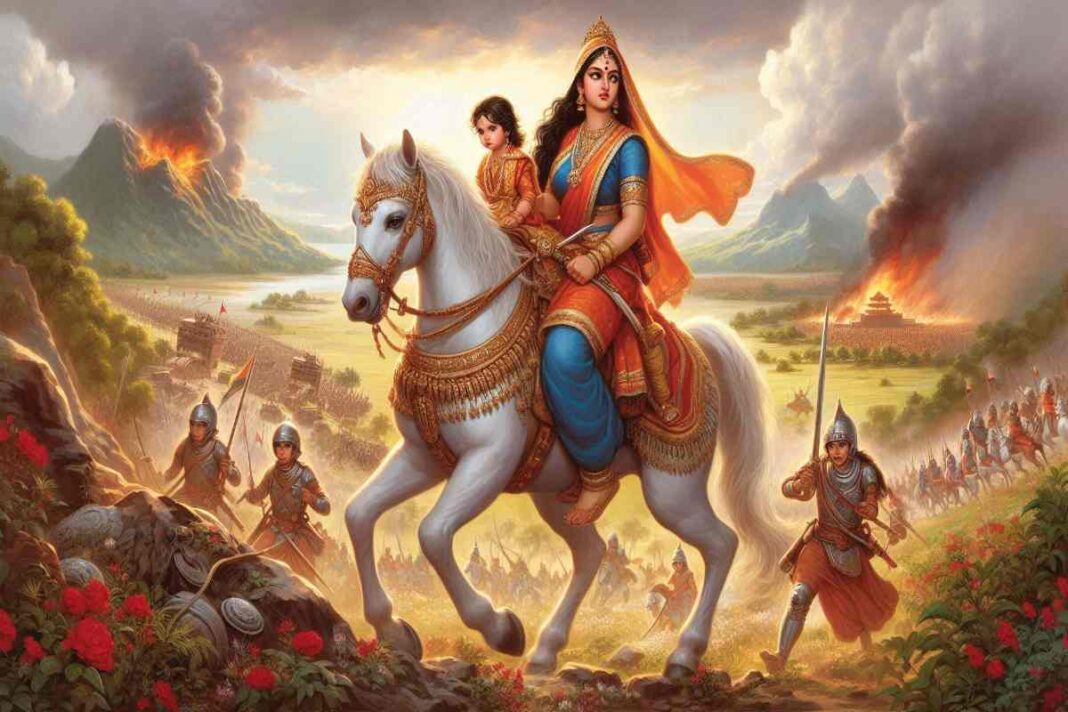

Rani Lakshmibai was quite different from other Indian women of her time. She was just 24 years old when she fought against the British, the same age as freedom fighter Bhagat Singh when he died. British officers described her as a very beautiful woman who rode horses like men and led armies bravely. Unlike most royal women who stayed behind curtains (purdah), she came out to meet her people and run her kingdom after her husband’s death. She had a strong sense of justice and wasn’t afraid to be different from what society expected of women.
Leadership During the 1857 War
When the British attacked Jhansi, Rani showed amazing leadership skills. She asked all women to come out and help in the fight by bringing food and taking care of wounded soldiers. Though she had no military training, she became so good at war planning that other male leaders like Tantia Tope accepted her as their equal. Her best military plan was to capture the Gwalior fort when things looked bad for the Indian fighters. Even British officers said this was a brilliant idea. The British Governor-General was so worried that he said if Gwalior joined the fight, he would have to run away the next day.
Legacy and Importance
More than 150 years have passed, but Rani Lakshmibai remains the most famous woman warrior in Indian history. Even British General Hugh Rose, who fought against her, called her “the bravest and best military leader” among all fighters. She died fighting on the battlefield on June 18, 1858. What makes her special is that she fought not just for her kingdom but turned the fight into India’s first war for independence. She once said fighting against the British had become her dharma (duty), which meant much more than just duty – it was her life’s purpose. She was different because even British officers respected her, praising her honesty, intelligence, and fair play. Today, she is remembered as someone who showed what Indian women could achieve and who fought bravely for her country’s freedom.
For detailed story, please visit: Awaz the voice
Also Read: Building Hope: The Story of Semchan Welfare Society in Leh
You can connect with DNN24 on Facebook, Twitter, and Instagram and subscribe to our YouTube channel.