



In most restaurants, the kitchen remains hidden behind closed doors. At Anahata Cafe in New Delhi, the entire cooking process unfolds before customers. Women who spent years confined to their homes prepare Vietnamese spring rolls and Indonesian curries in the presence of patrons. However, this is not a cooking demonstration. This is where homemakers evolve into chefs, where confidence replaces doubt, and where a vegetarian menu serves as the backdrop for social transformation.
Meenakshi Kumari, who runs the cafe, does not hire experienced professionals. She does not require a culinary degree. She takes women who have never worked outside their homes and teaches them to operate a commercial kitchen. The results challenge common assumptions about professional training and workplace readiness.
The Woman Behind the Concept
Meenakshi struggled against conventional expectations throughout her career. People told her the venture would fail. Family members pressured her to marry rather than open a cafe. Critics insisted she could not manage such an operation alone. She proceeded anyway.
Her father taught her to channel frustration into productive action. That lesson shaped her approach to both business and social change. She does not view Anahata Cafe as charity work. Instead, she describes it as an operation that strengthens people while running a profitable business. The distinction matters. Charity creates dependence. Employment builds capability.

The cafe targets women over 19. Some are homemakers. Others are young women who have never received opportunities for professional work. Meenakshi believes age becomes irrelevant when necessity drives action. When people need to work, they find ways to work. She focuses on women who lack confidence or access rather than those with polished resumes.
Open Kitchen Philosophy
Meenakshi started with a cafe called Roots. That venture taught her something crucial about customer trust. Diners could not see how their food was prepared. They could not verify freshness. They could not observe which ingredients went into each dish.
The open kitchen at Anahata Cafe solved these problems. Customers watch vegetables being chopped. They see bread toasting. They observe the chef adding spices to their curry. This transparency creates conversation. Diners speak directly with cooks. They request modifications. They learn about ingredients and techniques.
Meenakshi argues that food represents more than sustenance. Meals prepared with care and attention affect people differently than dishes assembled mechanically. The open kitchen lets customers witness that care. It also keeps the staff accountable. Everyone performs better when their work remains visible.
Menu and Operations
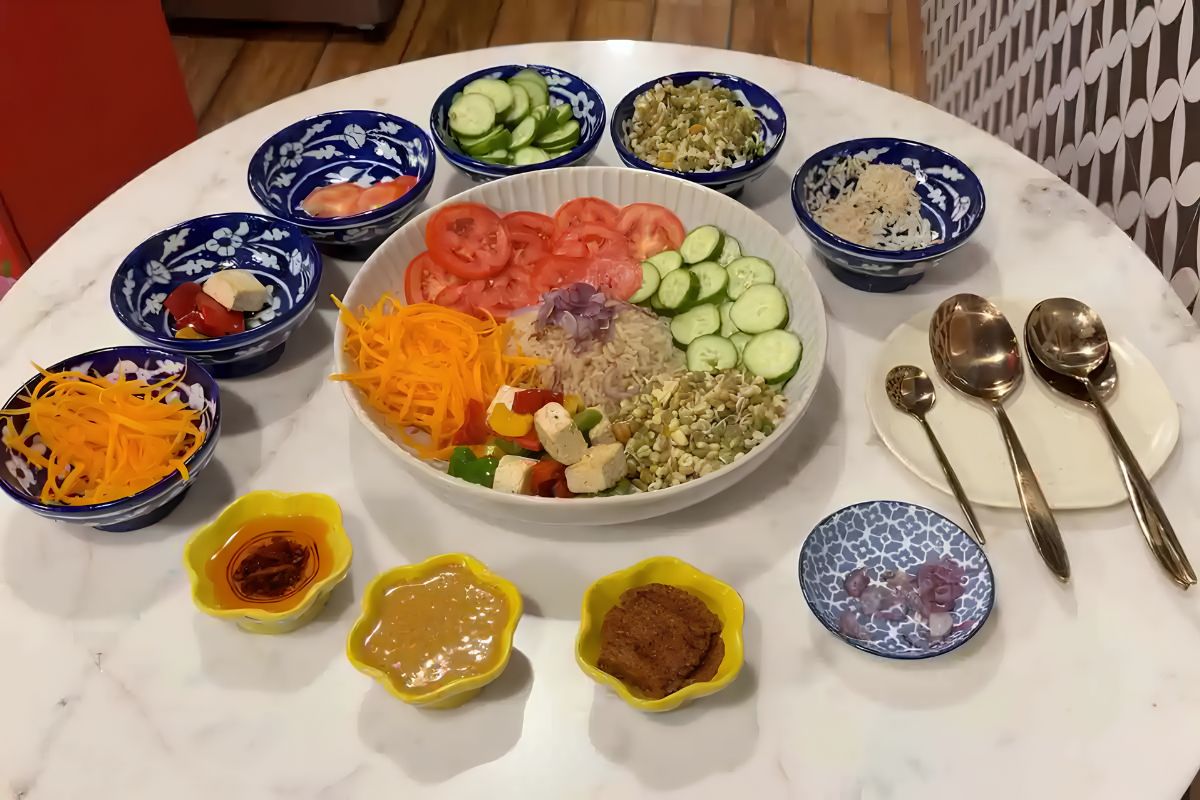
The cafe serves only vegetarian food. Many items exclude onion and garlic to accommodate religious dietary restrictions. Everything arrives fresh and is subject to seasonal availability. The menu includes sandwiches, salads, juices, smoothies, and smoothie bowls. International options feature Vietnamese, Indonesian, and Thai preparations.
This range of cuisines might seem ambitious for untrained staff. Yet the women working at Anahata master these dishes through patient instruction. Meenakshi breaks down complex recipes into manageable steps. She compares the process to learning to cook at home by watching family members.
Voices from the Kitchen
Madhu, a chef at the cafe, says that Meenakshi taught her using simple, clear methods. It was similar to learning at home. The job gave her new experiences and a new identity. Before Anahata, she had never baked a cake. Now she bakes cakes, cookies, and muffins. She learned to make Indonesian dishes and Khao Soi, a Thai curry noodle soup that became popular with customers. The success built her confidence. She now believes she can master any new skill with proper guidance.
Sheetal, another employee, emphasizes the emotional dimension of the work. The staff cooks with genuine care and serves customers with warmth. Patrons respond with sincere appreciation. She notes that finding employment at the age of forty-five usually proves difficult. At Anahata, she found not just work but peace of mind. She plans to start her own business in the food industry.
Training Without Credentials
Meenakshi’s hiring criteria confound traditional standards. She does not check education levels. She does not test English proficiency. She does not require previous food industry experience. An interest in cooking is all that she wants.
This approach seems risky. Yet it works. She provides the training necessary for a specific operation. She teaches what employees need to know for Anahata rather than general culinary theory. The focused instruction produces faster results than broad certification programs.
Madhu’s experience validates this method. She arrived without relevant skills. Through targeted training, she mastered unfamiliar techniques and cuisines. The specificity of the instruction prevented overwhelm. She learned one dish at a time, one technique at a time.
From Invisible to Professional
The transformation extends beyond technical skills. Women who entered as housewives now carry themselves as professional chefs. Customers treat them as skilled workers. That recognition matters. It changes how these women view themselves and how others view them.
The shift involves more than learning to sauté vegetables or bake bread. It requires developing a professional identity. It means believing you belong in a commercial kitchen. It involves speaking confidently with customers and handling pressure during busy periods.
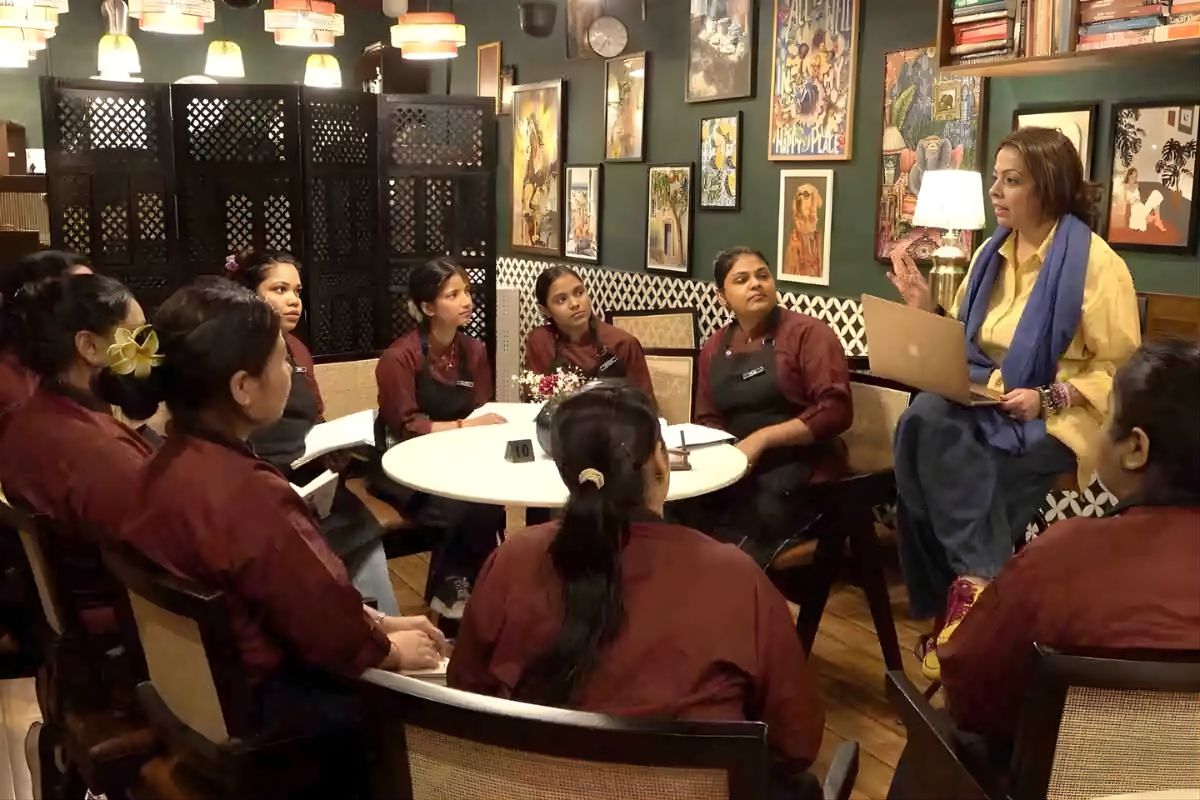
Meenakshi cultivates this confidence deliberately. She combines strict standards with emotional support. She identifies women who genuinely want to change their circumstances. Then she pushes them to recognize their own capabilities.
The Baking Success
The cafe’s baking program demonstrates what focused training achieves. Staff members now produce cookies, cakes, and muffins that draw regular customers. These items require precision. Baking tolerates less improvisation than cooking. Measurements must stay exact. Oven temperatures must remain consistent. Timing proves critical. The former homemakers learned these principles. They mastered the chemistry of baking through practice and correction. Their cookies became locally famous.
Challenges and Persistence
Starting Anahata Cafe presented numerous obstacles. Critics claimed the concept would not work. They questioned whether women without professional experience could handle commercial food service. They doubted whether customers would accept the model. Some people suggested that Meenakshi should opt for marriage rather than entrepreneurship.
But she persisted through these objections. She credits her internal drive for her success. When determination runs deep enough, opposition becomes irrelevant. She built the business despite the doubts. The cafe now operates at multiple locations. The model proved viable. Women continue joining the staff. Customers keep returning. The critics were proven wrong.
A Message to Women
Meenakshi gravitates toward people who display inner strength. She recognizes women who genuinely want to improve their situation. She then provides both discipline and affection during training. This combination helps employees discover their own potential. Her message remains direct. If you want to accomplish something, do not surrender. Obstacles will appear. Critics will question your plans. Circumstances may seem unfavorable. Keep moving forward anyway.
More Than a Cafe
Anahata Cafe represents several things simultaneously. It operates as a profitable business. It serves as a training ground. It functions as a community space. It provides employment. It demonstrates an alternative approach to hiring and development.
The cafe proves that excluded populations possess untapped capabilities. It illustrates how business operations can generate social benefits without becoming a charity. Meenakshi created something larger than a cafe. She built a platform where abandoned dreams find new life. She established a place where women rediscover their inner confidence. She demonstrated that one person’s commitment can illuminate many lives.
The open kitchen serves as both a practical feature and a metaphor. Nothing stays hidden. The work remains visible. The transformation happens in full view. Anyone who visits can witness what becomes possible when opportunity meets determination.
Also Read:Hearing Impaired Entrepreneur Helps Children Learn English Through Sign Language Platform
You can connect with DNN24 on Facebook, Twitter, and Instagram and subscribe to our YouTube channel.