
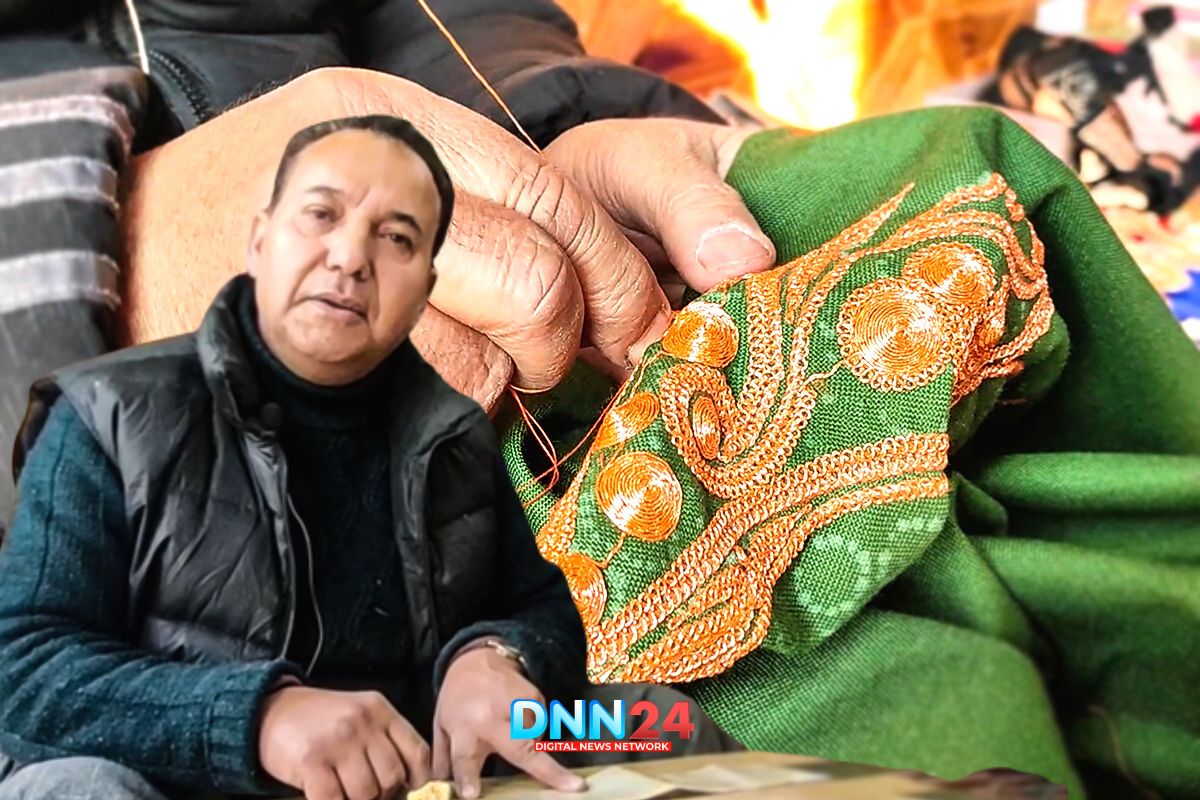

The complex and time-consuming process of Tilla embroidery: From tracing design to creating intricate ornate pattern.
Tilla embroidery, also known as zari or zardozi, is a type of traditional embroidery that originated in the Indian subcontinent. It is characterized by using metallic threads of gold, silver, or other metals embroidered onto fabrics to create intricate and ornate designs. This art has a long history in the region, with references to it dating back to the Mughal era in the 16th century.
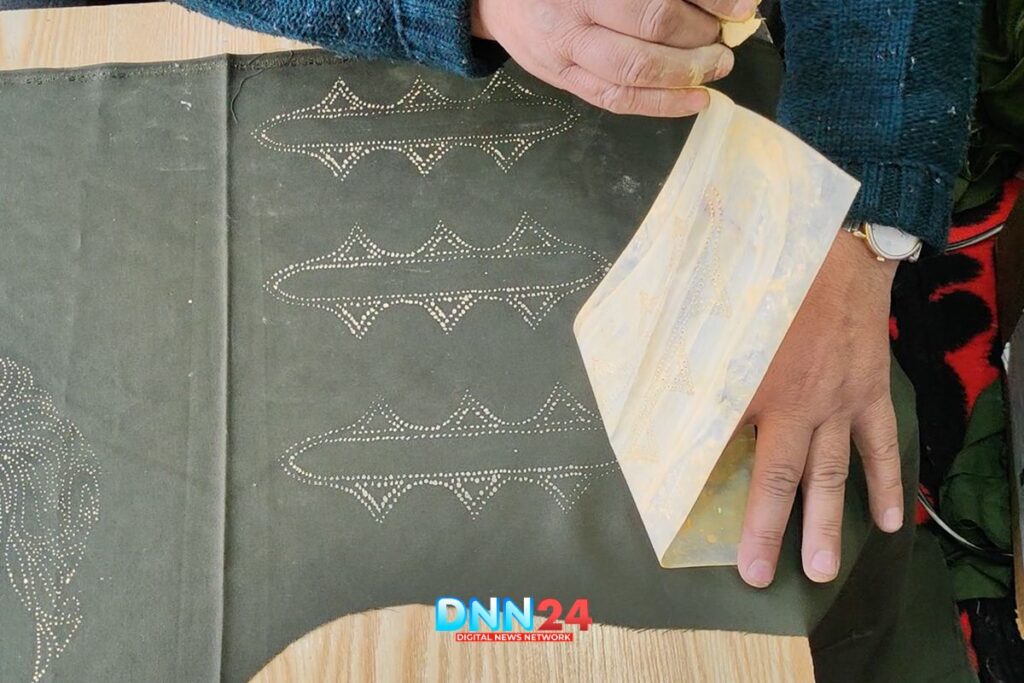
Kashmiri Tilla Embroidery
Creating tilla embroidery is complex and time-consuming, involving specialized tools and techniques. First, a design is traced onto the fabric using a pencil or chalk. Then, the embroiderer uses a needle to carefully attach the metallic threads to the material, creating the desired pattern. It is typically done by hand; it can take weeks or even months to complete a single piece.
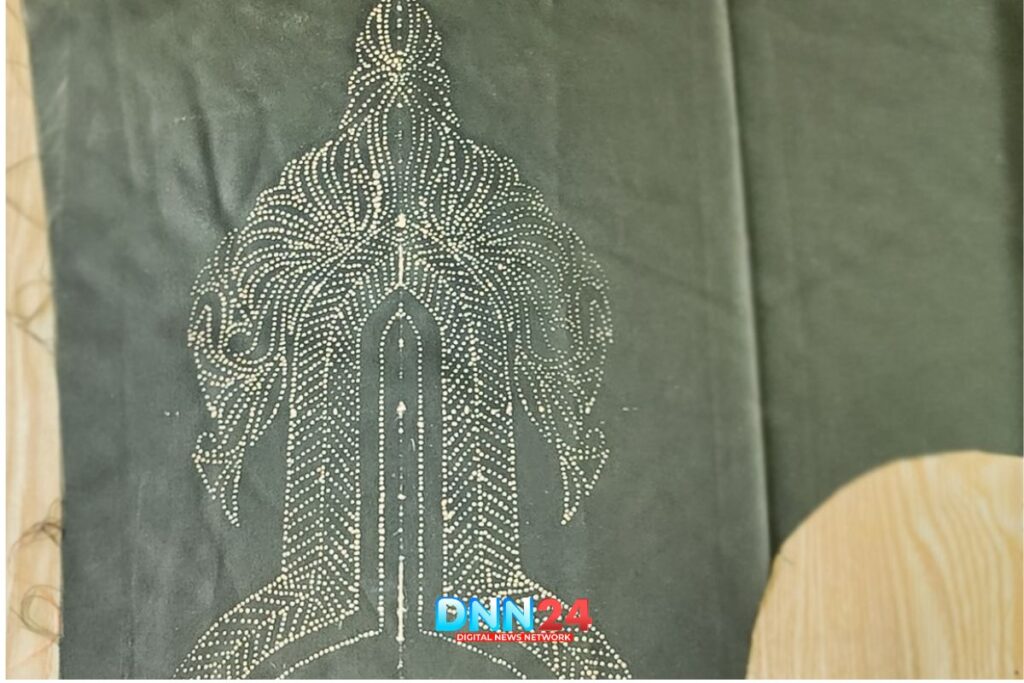
Challenges Faced by Tilla Embroidery: Increasing Costs and competition from Machine-based Techniques
Despite its long history and cultural significance, tilla embroidery has faced challenges recently. The increasing cost of materials, particularly gold and silver, has made them more expensive. Additionally, the labour-intensive nature of the craft means that it is often more cost-effective to produce embroidered items using machine-based techniques, which can be faster and more efficient. As a result, the number of artisans practising. Tilla embroidery has declined, making it more difficult for traditional embroiderers to compete in the modern market.
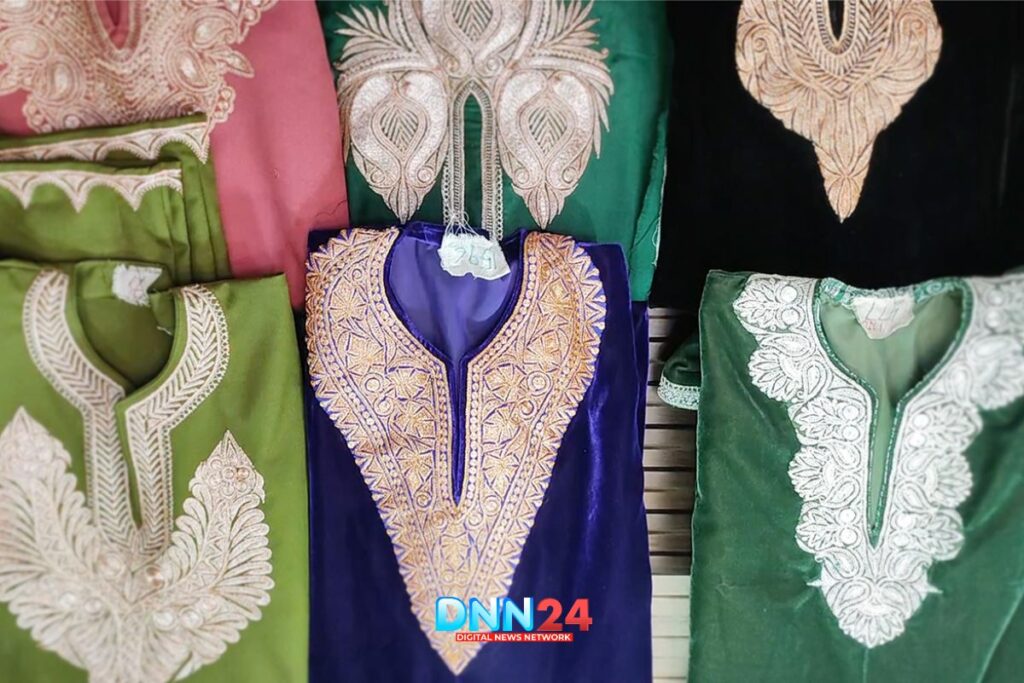
Despite these challenges, embroidery remains integral to Indian culture and is valued for its beauty and craftsmanship. It is often used to celebrate special occasions and is an essential part of traditional Indian clothing and accessories. As a result, it continues to be a necessary part of the country’s cultural and artistic heritage, and it is likely to remain so for years to come.
Also read: This Art of Pashmina Shawl Making Is Pure Bliss, Exclusive Talk With Bashir Ahmed Khan
You can connect with DNN24 on Facebook, Twitter, Instagram and subscribe to our YouTube channel.