

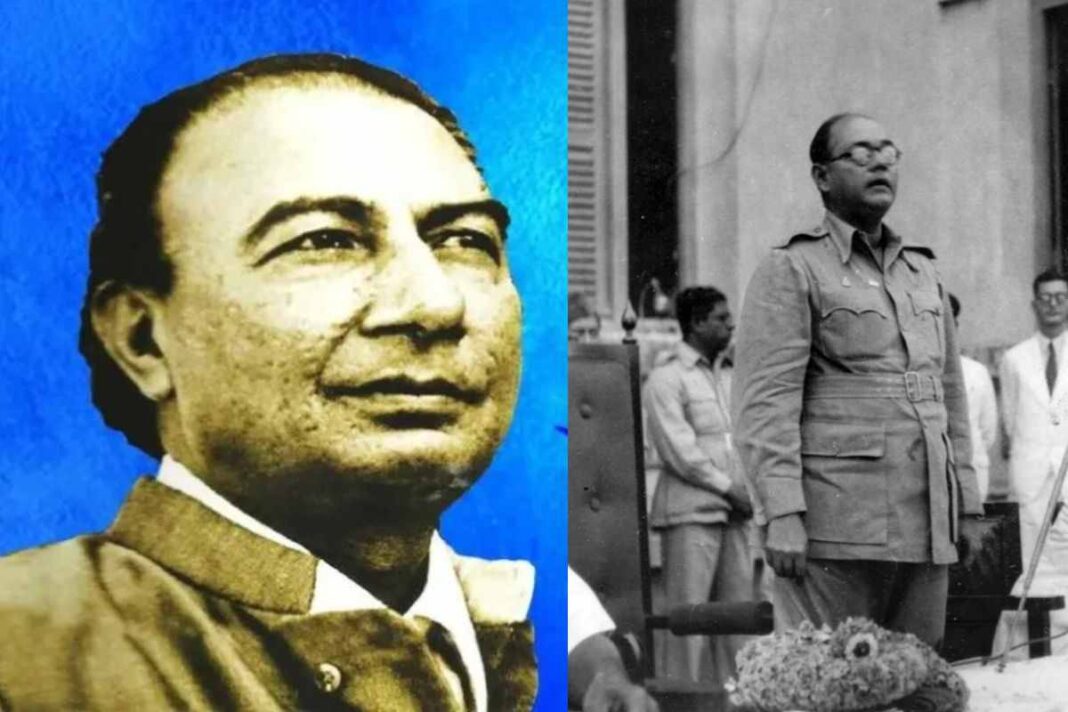

There was an unexpected connection between Sahir Ludhianvi, the famous poet and songwriter, and Subhas Chandra Bose, a prominent leader of India’s freedom struggle. In the late 1930s, Sahir, whose real name was Abdul Hayee, was part of the All India Students Federation (AISF). The AISF was a nationalist student group leaning towards the left, and it was led by Subhas Chandra Bose. When Bose became the President of the Congress party, the AISF formed a loyalist group supporting him. Later, when Bose started his own Forward Bloc party after leaving Congress, many members came from the AISF.
The INA Trials and the Youth’s Uprising
After Bose left India during World War II and raised the Azad Hind Fauj with Japan’s help, the AISF and Forward Bloc carried on the struggle within the country. When the war ended, the soldiers of the Azad Hind Fauj were arrested and put on trial as Prisoners of War in military tribunals. This sparked outrage among the Indian youth, who took to the streets in support of these soldiers. Known as the INA trials, these events stirred the nation, even as the older leadership of the Congress, Muslim League, and Hindu Mahasabha refused to support the protests.
Sahir’s Poetic Defiance and Disillusionment
Amidst the turmoil, Sahir Ludhianvi, then a 25-year-old, expressed his disillusionment with the political leadership through his poetry. In his poem titled “Ye Kiska Lahu Hai?” (Whose blood is this?), Sahir questioned the leaders’ reluctance to acknowledge the sacrifices made by the Azad Hind Fauj and the youth who had risen in support of the INA trials. He challenged the hypocrisy of the Congress leadership, who had given the call to revolt against the British in 1942 but were now negotiating with them for independence.
Through his poetry, Sahir Ludhianvi became the voice of the youth’s disillusionment, questioning the leaders’ compromises and asserting the determination of the young to fight against every tyrant. His words captured the spirit of defiance that fueled the youth’s uprising during the INA trials, forever linking his poetic legacy to the struggles and sacrifices of the Indian Freedom Movement.
For detailed story, please visit: Awaz the voice
Also Read: India’s Global Leadership: G-20 and Development
You can connect with DNN24 on Facebook, Twitter, and Instagram and subscribe to our YouTube channel.