

After months of unrest, Bangladesh has voted in a new government. Although ousted Prime Minister Sheikh Hasina’s Awami League was banned from the elections, the results are being seen as a victory for democracy and the defeat of Islamist forces. Sanchita Bhattacharya, Research Fellow at the Institute for Conflict Management analyses the election results and what it means for Bangladesh.
Following the ouster of elected Prime Minister Sheikh Hasina in August, 2024, Bangladesh witnessed chaos and turmoil for 18 months. Amidst rising disorder, the results of the 13th National Election, declared on February 13, 2026, by the Bangladesh Election Commission (EC), handed a clear victory to the Bangladesh Nationalist Party (BNP) and its allies. Out of 297 results declared, the BNP-led alliance won 212, with BNP alone winning 209 seats, and the Gano Odhikar Parishad, the Bangladesh Jatiya Party (BJP) and the Ganosamhati Andolan securing one each.
The Islamist radical Jamaat-e-Islami (JeI)-led alliance secured 77 seats, with JeI winning 68, the National Citizen Party (NCP) getting six, Bangladesh Khelafat Majlis two, and Khelafat Majlis securing one seat. JeI, in its best electoral showing in history, emerged as the principal opposition party. Another Islamist party, Islami Andolan Bangladesh secured one seat, while seven candidates were elected as independents. It is significant that, despite the fact that the Awami League was banned and disallowed participation in the elections, the NCP- which sparked the agitation that toppled the Sheikh Hasina Government – has been reduced, at best, to a marginal force in the elections, and the JeI performed well below the expectations of its own leadership.
The election results of three seats in the 300-strong Jatiya Sangsad have been withheld, as polling in Sherpur-3 was postponed following the death of a candidate, and the results of Chittagong-2 and Chittagong-4 were kept pending under a High Court directive.
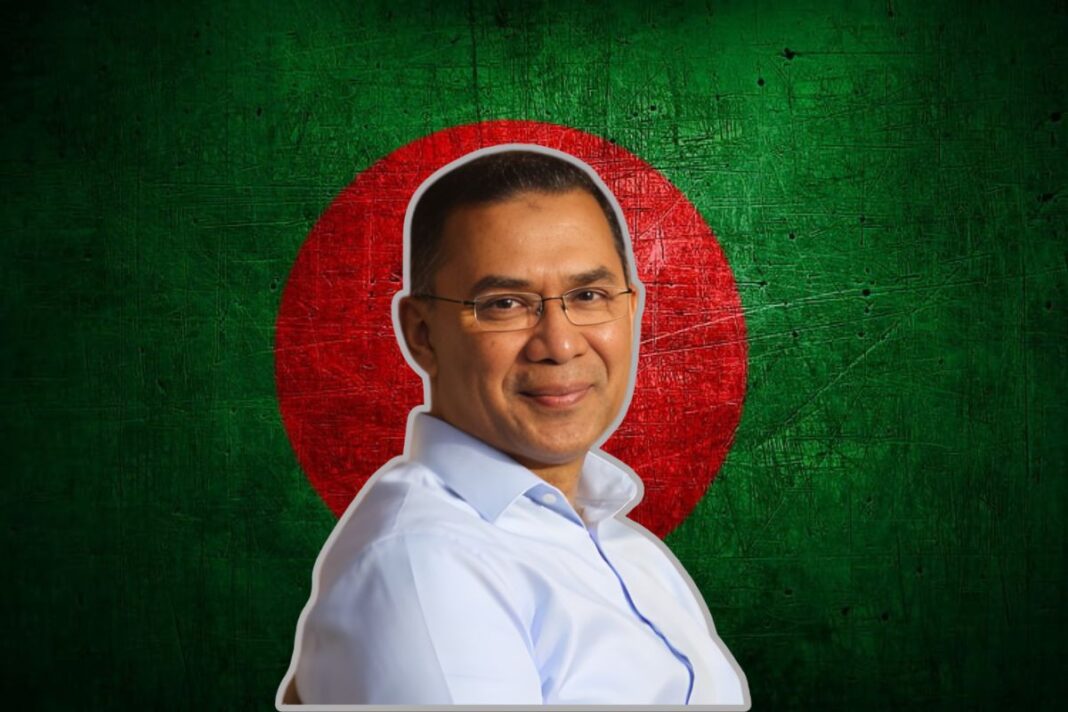
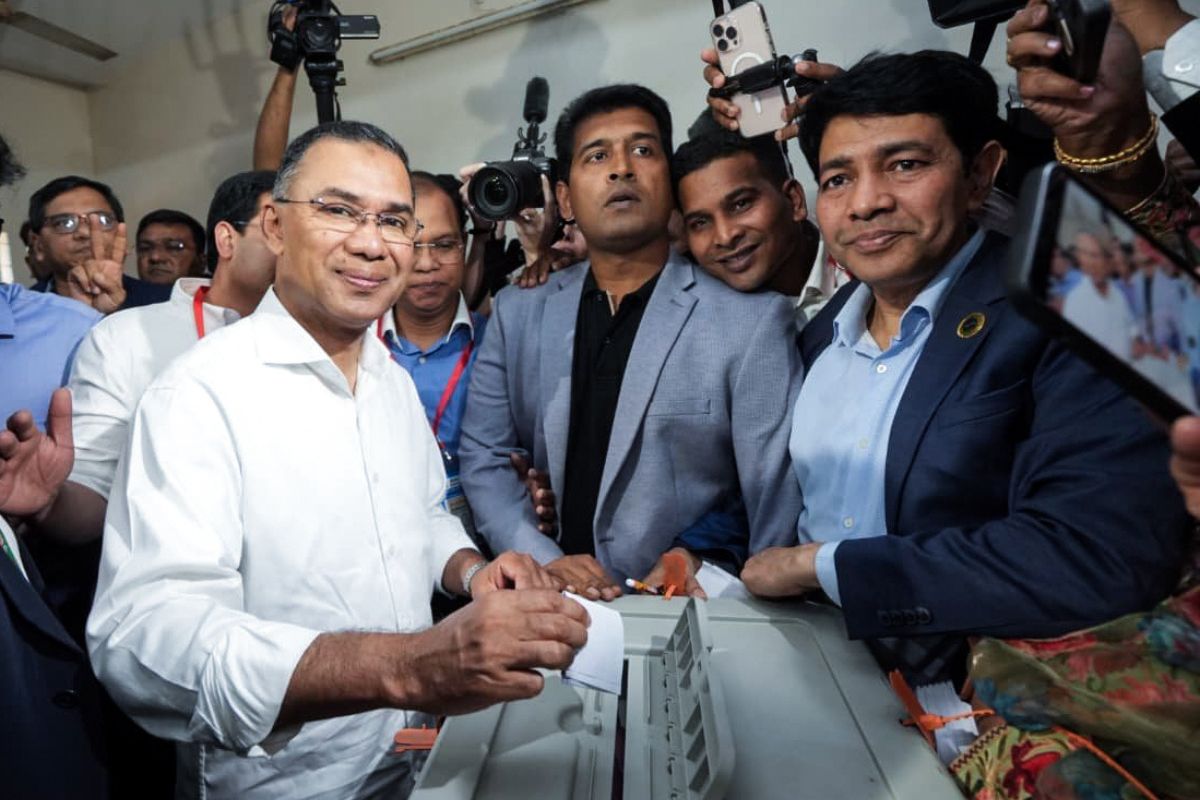
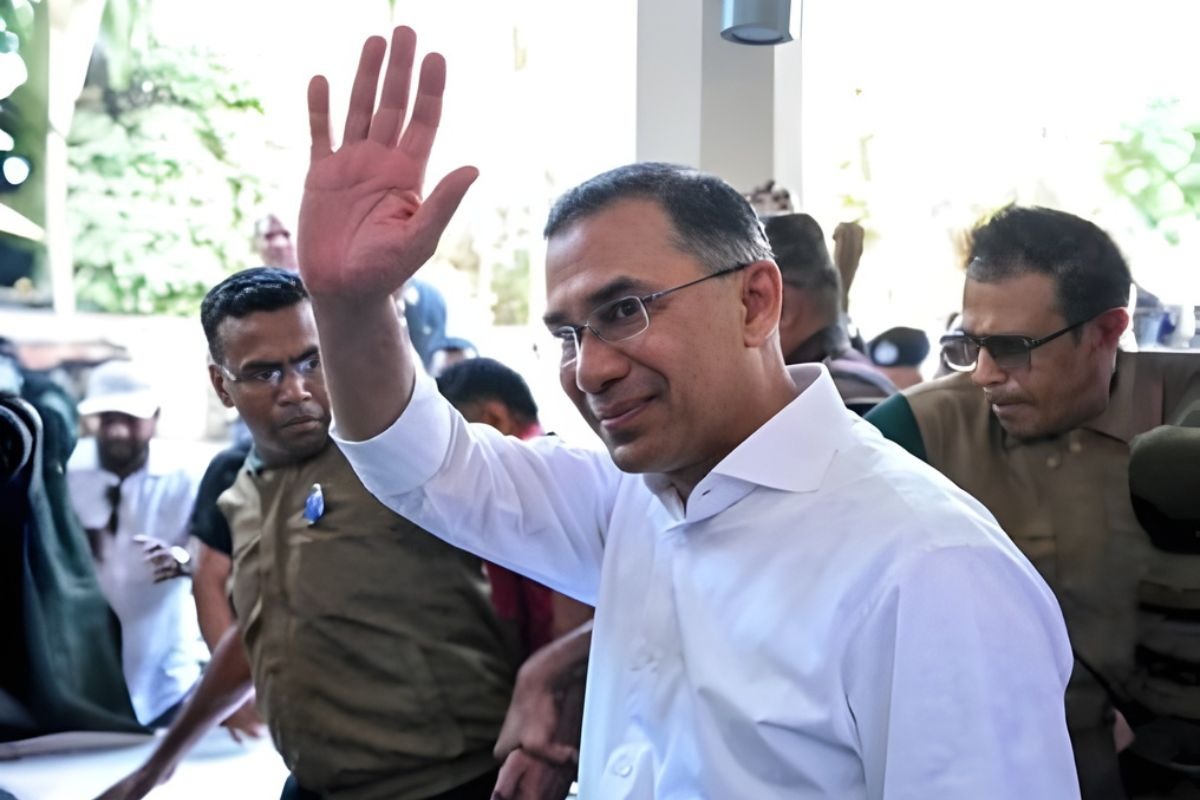
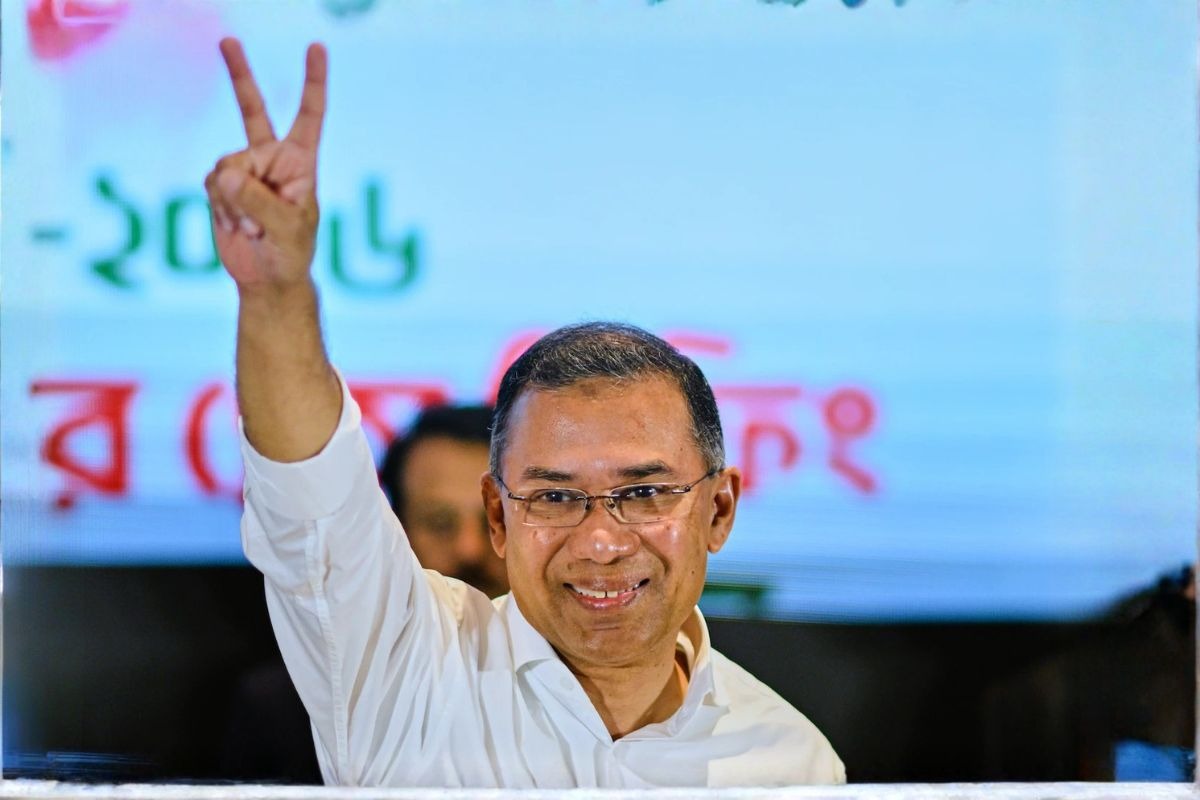
The results seemingly show a clear mandate to BNP under the leadership of Tarique Rahman, the eldest son of former (now deceased) Prime Minister Khaleda Zia and former late President General Ziaur Rahman. Tarique Rahman returned to Dhaka on December 25, 2025 after a 17-year exile. The death of Khaleda on December 30, 2025, followed by Rahman’s taking over as party Chairman on January 9, 2026 (he had been the acting Chairman since February 2018), was a strong indicator of BNP’s internal political cohesion. Khaleda’s death acted as a catalyst, re-igniting popular sentiment towards BNP and its allies.
The vandalism that followed the students’ unrest and the frequent attacks on the symbols of the Liberation War [for instance, in Meherpur District alone, 300 sculptures commemorating Liberation and its heroes were damaged] have had a deep impact on BNP supporters, who have always lauded Ziaur Rahman, the BNP founder, as one among Bangladesh’s leading freedom fighters.
In a clear message that the anarchy under Mohammad Yunus’ Interim Government would have no place under the new regime, Rahman, in his first statement after the declaration of results, observed:
“Our position is clear. Peace and order must be maintained at any cost. No wrongdoing or unlawful activity will be tolerated. Regardless of party, religion, race, or differing opinions, under no circumstances will attacks by the strong against the weak be accepted. Justice will be our guiding principle. If the rule of law is not established, all our efforts will be in vain. In upholding the rule of law, whether in government or opposition, regardless of differing views, the law must be equal for every citizen of Bangladesh.”
Interestingly, JeI is an old ally of BNP, and had earlier backed BNP-led coalitions in 1991 and 2001. JeI, however, formed its own non-BNP alliance in the run-up to the present elections, confident that it had transformed itself into a significant political force over the past decade and a half, from the anti-Liberation pariah that it had become because of its collaboration with the Pakistani forces in the war crimes of 1971. As reported in June 2023, the party’s permanent members increased from 23,863 to 73,046, a threefold rise in the preceding 15 years.
JeI also recorded a threefold rise in the number of its activists, which leapt to 639,000 from 221,000 over the same period. Significantly, with the ouster of Sheikh Hasina and the banning of Awami League on May 10, 2025, BNP emerged as the ‘new target’ for Jamaat and its cohorts, with strident accusations of corruption against the BNP. On January 29, 2026, Jamaat Chief, Shafiqur Rahman accused BNP of corruption and extortion during its last term, asserting:
“If I am a politician and take money from people, yet insist I should not be called an extortionist, that’s unfair. Stop extortion, and no one will call you an extortionist. But if you continue, you must face the consequences of that label.”
BNP, on the other hand, has been attacking JeI for ‘distorting history’. On February 3, 2026, BNP Joint Secretary General Ruhul Kabir Rizvi stated, “When the Pakistani forces carried out atrocities against our mothers and sisters, you (Jamaat) did not call those acts oppression. You did not even acknowledge those brutalities as crimes.
Instead, you supported them and provided patronage… In a few days, you may even say that Ghulam Azam (founder of the anti-Liberation collaborationist Razakar Bahini and Al Badar) himself was the proclaimer of independence. You can say that too, because you never step back from telling lies.” Earlier, on January 28, 2026, Mahdi Amin, senior BNP member accused Jamaat of exploiting religious sentiments to win votes, citing promises of heaven, oaths on the Holy Quran, and financial inducements.
JeI and BNP cadres fought violent street battles over the months preceding the elections. A total of 276 activists were injured in the clashes, and another 40 were injured in clashes between the Islami Chhatra Shibir (ICS), the student organisation affiliated with JeI, and the Jatiotabadi Chatra Dal (JCD), the student wing of BNP, in 2025. A further 128 leaders and activists have been injured in clashes between the BNP and JeI in 2026 (data till February 12, 2026).
Bangladesh witnessed rampant lawlessness under the Interim Government of Mohammad Yunus. According to the Ain o Salish Kendra (ASK), 102 people were killed in political violence in 2025, in addition to the 100 killed in 2024. ASK noted further that 165 people were killed in mob lynchings between January and October in 2025, as compared to 128 in 2024. Such lynchings were not new, but escalated dramatically after the fall of the Sheikh Hasina Government. There were 51 lynching fatalities in 2023, 36 in 2022, and 28 in 2021, indicating a nearly five-fold increase in four years.
Islamist radicals were also given a free hand by the Yunus government after August 2024, giving a measure of impunity to JeI and its allies. Significantly, at least 700 inmates, including 70 Islamist extremists and death row convicts fled from jail. Crucially, as reported on December 4, 2024, Inspector General of Prisons Brigadier General Syed Mohammad Motaher Hossain disclosed that 174 known figures- including 11 top listed criminals, gangsters and extremist group leaders- obtained bail from courts after August 5. Prominent among them were Ansarullah Bangla Team (ABT) ‘chief’ Jashimuddin Rahmani; Abdus Salam Pintu [BNP member and Harkat-ul-Jihad Islami Bangladesh (HuJI-B) aide]; Abdullahil Aman Azmi and Ahmad Bin Quasem (both JeI, with ISI linkages).
Nevertheless, even after getting full state support, re-inventing the Razakar narrative, playing a major role in the ouster of Sheikh Hasina, banning Awami League, tying up with the so-called “students’ face”, NCP, and mudslinging against BNP, the Jamaat could only scrape together 77 seats in the National Election.
In its first reaction to the election results, on its verified Facebook page, on February 13, Jamaat expressed dissatisfaction over the electoral process, criticising the Election Commission for not publishing voter turnout figures and alleging that a section of the administration was biased in favour of a ‘major political party’. JeI’s ally, the Bangladesh Khelafat Majlis ‘Chief’, Mamunul Haque went to the Election Commission building on February 13 to file a complaint alleging irregularities in vote counting in the Dhaka-13 constituency. He alleged that ballot design flaws led to a significant number of his votes being declared invalid.
Eventually, the JeI accepted the people’s mandate, with its leader stating that respecting the popular verdict was essential in a “genuine democratic journey.” Some of the other Islamist parties also gave somewhat cordial statements. Hefazat-e-Islam expressed the hope that under Tarique Rahman’s leadership, the new government would move forward in running the country with honesty, competence and responsibility, and play an effective role in ensuring overall development, justice and good governance in the country. However, Islami Andolan Bangladesh’s (INB) Nayeb-e-Ameer, Syed Faizul Karim, was defeated in the Barishal-6 constituency by BNP candidate Abul Hossain Khan. IAB’s Chief Sayed Mihammad Rezaul Karim alleged there had been “irregularities and some disorder”.
The outcome for JeI, albeit under artificial conditions of the exclusion of the Awami League, cannot be seen as unsatisfactory by its leadership. The last election Jamaat participated in was 2008, where it won just two seats. 77 seats in the present Jatiya Sangsad can only be cause for some alarm among the democratic constituency, as JeI advocates violent jihad, the overthrow of democratic government and its replacement with Sharia law, and a visceral hatred for India. The election outcome has transformed this radical Islamist force from a marginal player into a normalised political stakeholder.
Tarique Rahman, on the other hand, has sought to articulate a relatively balanced position towards India and other countries of importance. On February 12, he conceded that “mistakes” had been made by his party in the past, but promised a new era of clean politics, including a “top down, no tolerance” policy. In foreign relations, he articulated a “Bangladesh First” posture, declaring that “the interests of our people come first,” and that his government would pursue an “independent and self-respecting foreign policy.” He added that India was “indispensable due to its geography” and that his government would “respect India’s interests,” positions that diverged dramatically from the rigid posture of confrontation Yunus’ Interim Government had adopted.
The electoral outcome in Bangladesh promises a relative measure of stabilisation after more than 18 months of spiralling disorder, progressive radicalization and the spectre of a noxious military and intelligence collaboration with Pakistan. In the absence of the Awami League, the people of Bangladesh have voted overwhelmingly for the next party associated with a broadly liberal-democratic nationalist ideology. It remains to be seen whether good governance, economic management and political stability will help consolidate democratic legitimacy, or whether Bangladesh will yield again to deepening structural polarization.
Disclaimer: The views expressed in this article belong solely to the author and do not reflect the views or opinions of DNN24 or any affiliated organization.
Also Read: From tariffs to trade: A reset of India-US ties
You can connect with DNN24 on Facebook, Twitter, and Instagram and subscribe to our YouTube channel.