



In the heart of South Delhi, where glass towers catch the afternoon sun and traffic moves in endless streams, a weathered monument waits in silence. The Tomb of Darya Khan Lohani sits quietly in Kotla Mubarakpur, near South Extension, speaking to anyone willing to listen about power, principle, and the passage of time. Darya Khan Lohani was no ordinary nobleman. He earned his reputation as Chief Justice under Sultan Bahlol Lodi, who ruled from 1451 to 1489, and later served as Waqeel during Sultan Sikandar Lodi’s reign from 1489 to 1517. People called him “Lohani” because his judgments were as strong as iron, never bending to pressure or persuasion.
His tomb, constructed in the early 16th century, stands not simply as a grave but as a declaration of values that once shaped an empire. The structure itself speaks volumes. Built on a raised square platform that reaches 2.4 meters high, visitors climb twelve steps on the eastern side to get to the main level. Four domed pavilions occupy the corners, each dome supported by twelve square pillars. The rubble masonry shows no ornamentation, no attempt to impress through decoration.
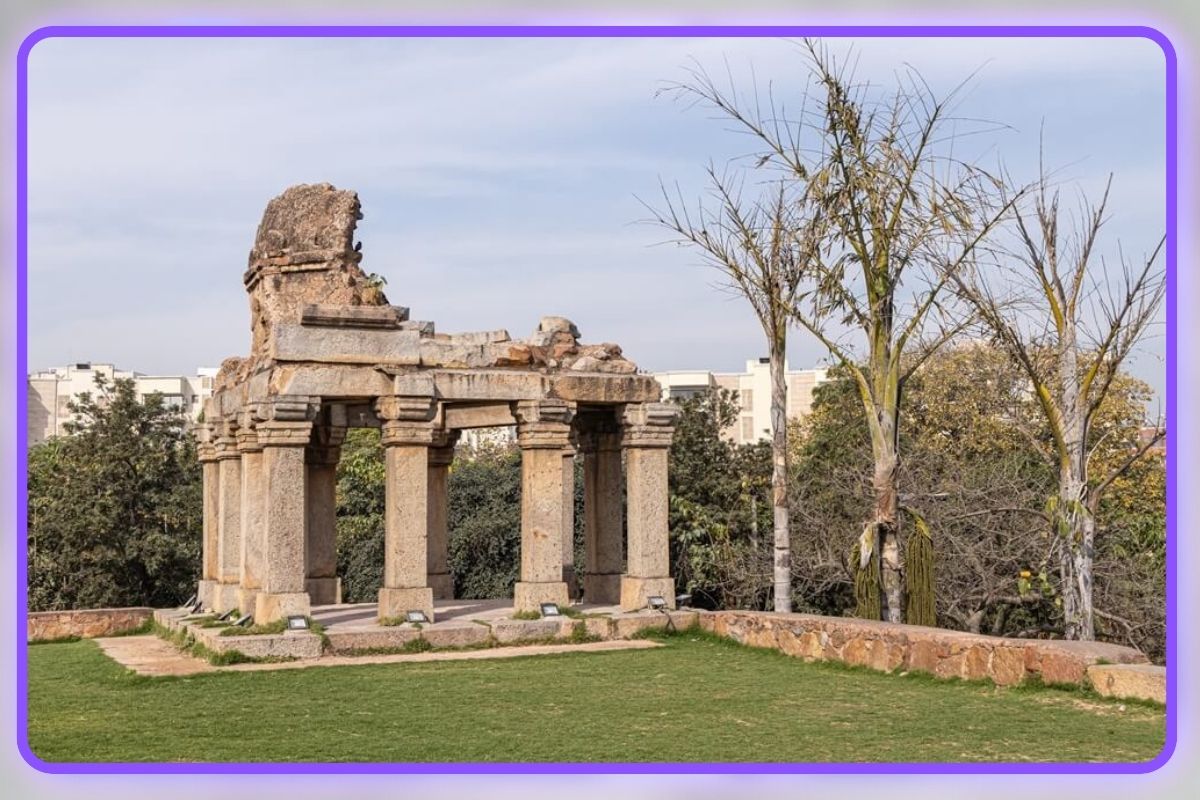
Quranic verses fade on plaster walls, their letters barely visible now. This was the Lodi style, built before Mughal architects brought marble and intricate carvings to Delhi. Afghan builders had blended Persian restraint with Indian materials, creating something honest and direct. The tomb belonged to an era that valued clarity over display, substance over surface.
The Judge Who Ruled with Iron and Faith
Darya Khan Lohani left no tales of battlefield glory or conquered territories. Instead, his legacy rests on something rarer in any age: unwavering fairness. Historical accounts describe a man whose verdicts stood final, regardless of who stood before him. Nobles and commoners received the same measured justice. In courts where wealth often bought leniency and connections altered outcomes, Darya Khan remained unmoved. His title “Lohani” carried meaning beyond a simple name. It marked him as someone with an iron hand, someone who understood that actual authority comes not from power but from consistent principle.
The Lodi dynasty faced mounting pressure during its lifetime. Political instability crept through Delhi as the Mughal threat grew stronger year by year. Darya Khan served through this turbulent period, maintaining order when chaos threatened to consume everything. Historians place the tomb’s construction between 1506 and 1526, just before Babur’s victory at Panipat reshaped the subcontinent forever. The timing matters.
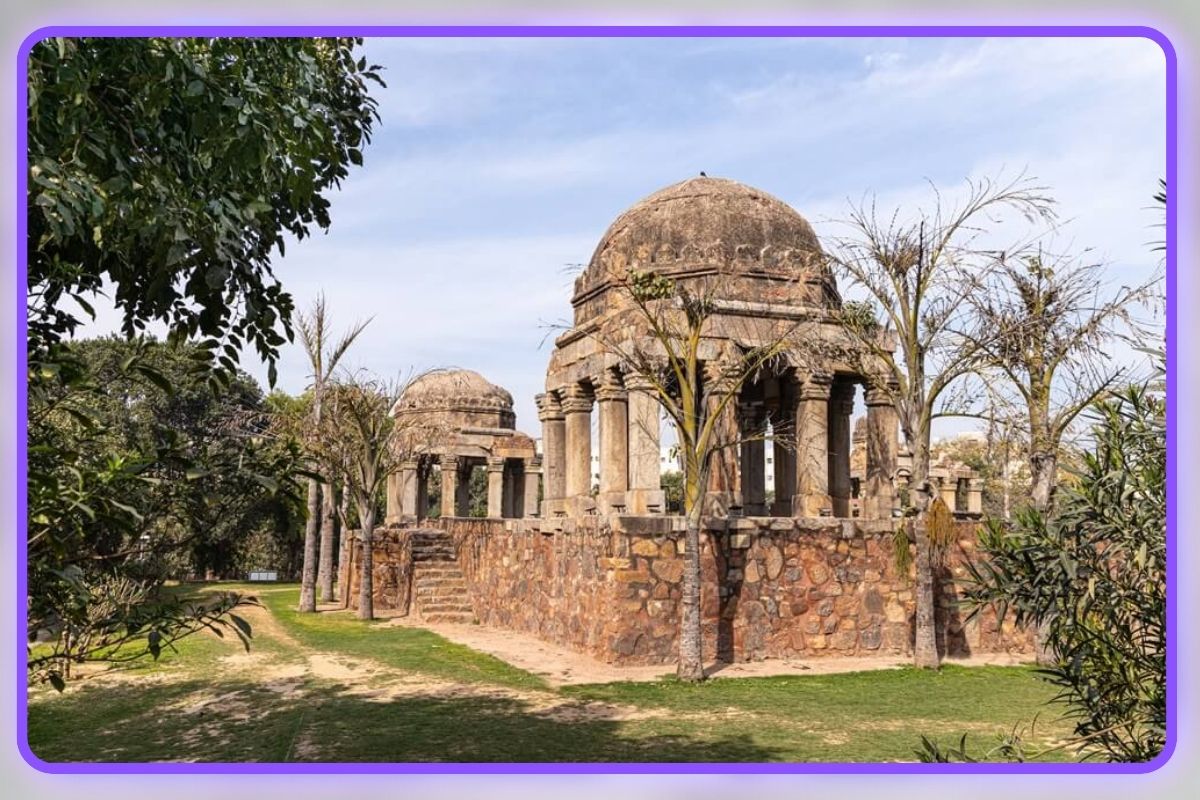
As empires crumbled and new powers emerged, Darya Khan chose restraint. His tomb carries no grand inscriptions praising his deeds, no elaborate monuments demanding attention. Perhaps this reflects the man himself: someone who saw duty as reward enough, someone who understood that true strength needs no announcement. The simplicity of his final resting place speaks louder than any carved eulogy could manage.
A Forgotten Jewel Amid the City Noise
Modern Delhi has grown around Darya Khan’s tomb like water flowing past a stone. The monument now sits within the Kidwai Nagar redevelopment zone, surrounded by apartment buildings, morning joggers, and the constant hum of city life. The National Buildings Construction Corporation has added pathways and some landscaping, attempting to preserve what remains while development continues on all sides. The domes have weathered poorly for over five centuries. Cracks run through stonework, and sections have collapsed entirely. Yet visitors who find the site often describe something unexpected. The overgrown grass reaching through broken pavement, sunlight falling through arched openings, and birds nesting where scholars once studied religious texts create a particular atmosphere.
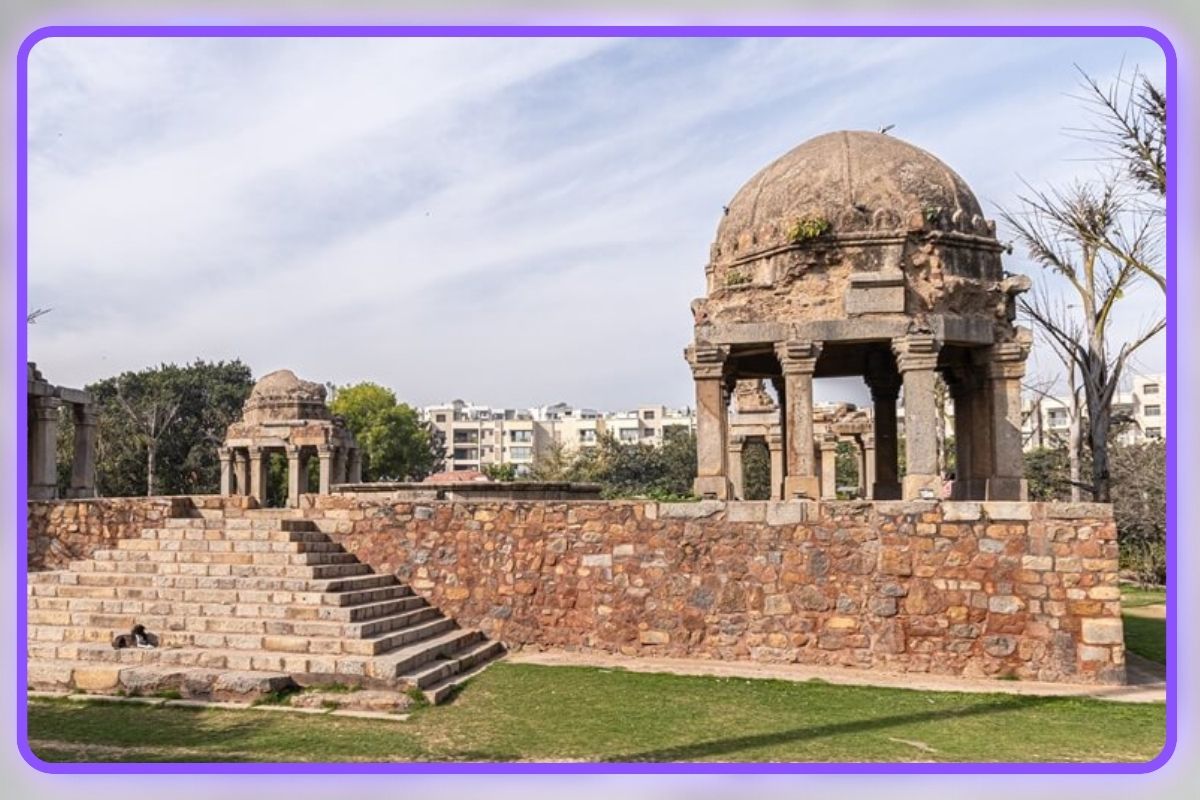
The decay itself has become part of the story. Most people who visit do so by accident. Residents from nearby flats cut through while walking their dogs. Couples seeking privacy from crowded streets find momentary refuge in the shade. Few know the name Darya Khan Lohani or understand the history beneath their feet. The absence of tourist crowds gives the place an honest quality, free from the performance that often accompanies famous monuments. This ordinariness makes it more accessible somehow, more human. The memorial does not demand reverence or force historical education. It simply exists, patient and enduring, available to anyone who takes a moment to notice.
Relevance in Today’s Time
Delhi rushes forward, constantly building, always moving toward some imagined future. In this context, the Tomb of Darya Khan Lohani offers something increasingly rare: stillness. The monument raises questions without providing easy answers. What does it mean to value integrity when expedience seems more practical?
How does one maintain principle when circumstances encourage compromise? These questions mattered in the 16th century, and they matter now. The stone pillars that survived centuries of monsoons, neglect, and urban expansion demonstrate a particular kind of strength. Not the strength of domination or force, but the strength of simply persisting, of refusing to disappear despite every reason to do so. Recent years have brought modest attention to the site. Heritage bloggers write occasional posts.
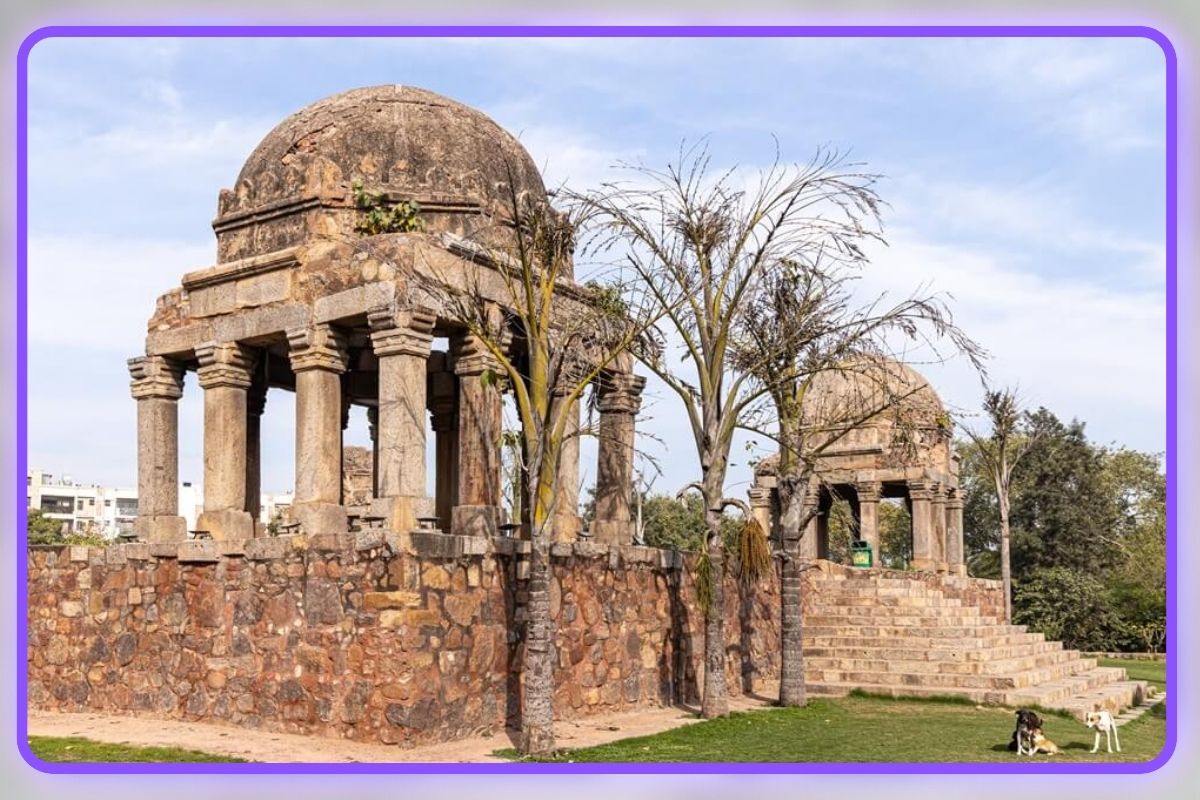
Some residents of Kotla Mubarakpur have started calling it “Delhi’s loneliest monument,” a description that captures both its isolation and its quiet dignity. Restoration discussions happen periodically, though funding and priorities shift with the political winds. The tomb survives partly through this very neglect. No aggressive restoration has stripped away the patina of age, no modern additions have compromised the original structure. In evening hours, when copper light falls across the uneven platform and shadows stretch long across broken stones, something shifts. The noise of traffic fades slightly. The weight of history feels less like a burden and more like a presence.
One can imagine Darya Khan in such moments, not as some distant historical figure but as someone who faced choices, who made difficult decisions, who tried to do right in complicated times. His tomb stands as evidence that some things endure beyond their moment. Justice, simplicity, and steadfast commitment to principle survive in unexpected places, waiting in quiet neighborhoods where past and present share the same ground.
Every person who visits, even unknowingly, becomes part of that survival. Memory persists not only in textbooks and museums but in these ordinary encounters with extraordinary remnants. The Tomb of Darya Khan Lohani whispers rather than shouts, suggests rather than demands, and in doing so, speaks more clearly than any monument to conquest ever could.
Also Read: Tomb of Bahlul Lodi: Delhi’s Hidden Sultan and His Humble Legacy
You can connect with DNN24 on Facebook, Twitter, and Instagram and subscribe to our YouTube channel.