

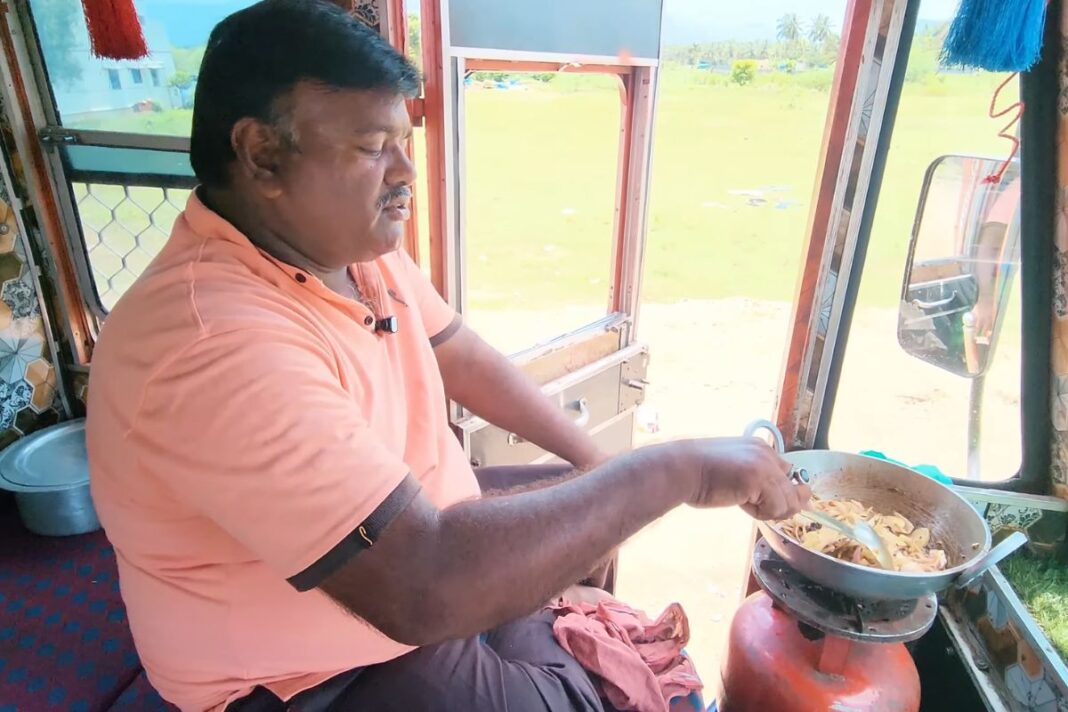

A truck driver from Jharkhand now earns fifteen times his former salary by filming himself cooking mutton curry in a cramped vehicle cabin while thousands of lorries thunder past on Indian highways.
Rajesh Rawani makes an estimated four to five lakh rupees monthly from YouTube and Instagram, where 2.7 million subscribers and 2 million followers watch him prepare fish curries on portable gas stoves at roadside stops. His channel, R Rajesh Vlog, documents what happens when blue-collar work meets smartphone cameras amid growing appetite for authentic content about working-class India.
The Mechanic Who Learned to Cook
Rawani began his relationship with trucks and food around 1990. At sixteen, he worked as the youngest mechanic at a garage near the coal mines in Jharkhand. Truck drivers would arrive for repairs, and Rawani would cook simple aloo sabzi for them while they waited. The dish became popular enough that drivers started requesting it, though Rawani could not have predicted that similar meals would later fund a new house for his family.
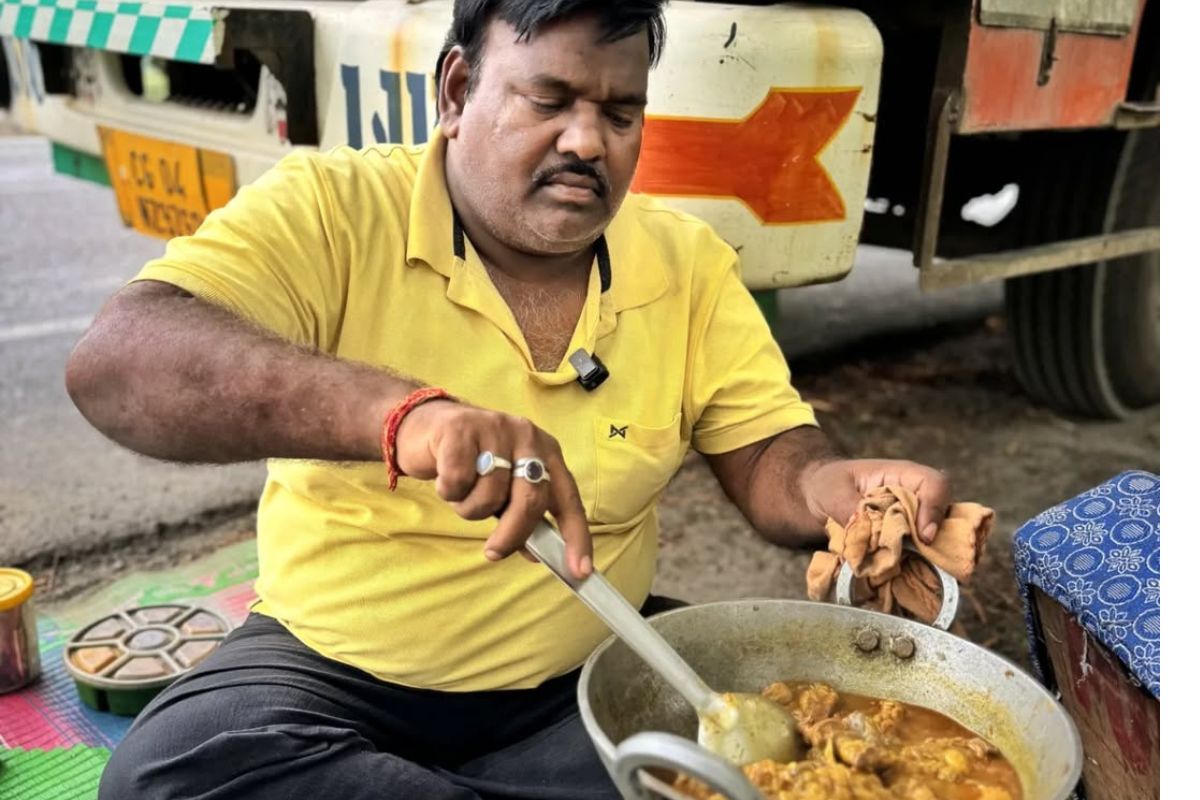
He spent the next twenty-five years behind the wheel, covering long distances across India to support his household on roughly thirty thousand rupees per month. The work involved gruelling hours and constant risk. A serious accident left him with a hand injury, but financial necessity kept him on the highways. During those years, cooking remained a private skill, something done to feed himself during multi-day journeys when dhaba food grew tiresome, or budgets ran tight.
From Hobby to Income
The channel started as an experiment in July 2021. Rawani recorded short videos while still driving full-time, filming his daily routines and meals prepared inside the truck cabin. He treated it as a hobby rather than a business venture, posting clips without clear expectations about viewership or revenue.
His son handled the technical aspects. Rawani admits he did not know how to film or upload content properly, so the younger Rawani handled the camera and posted videos on YouTube. In interviews, Rawani describes asking his son to join him on trucking routes specifically to document the journeys and cooking sessions, marking the real beginning of the channel as a joint project.
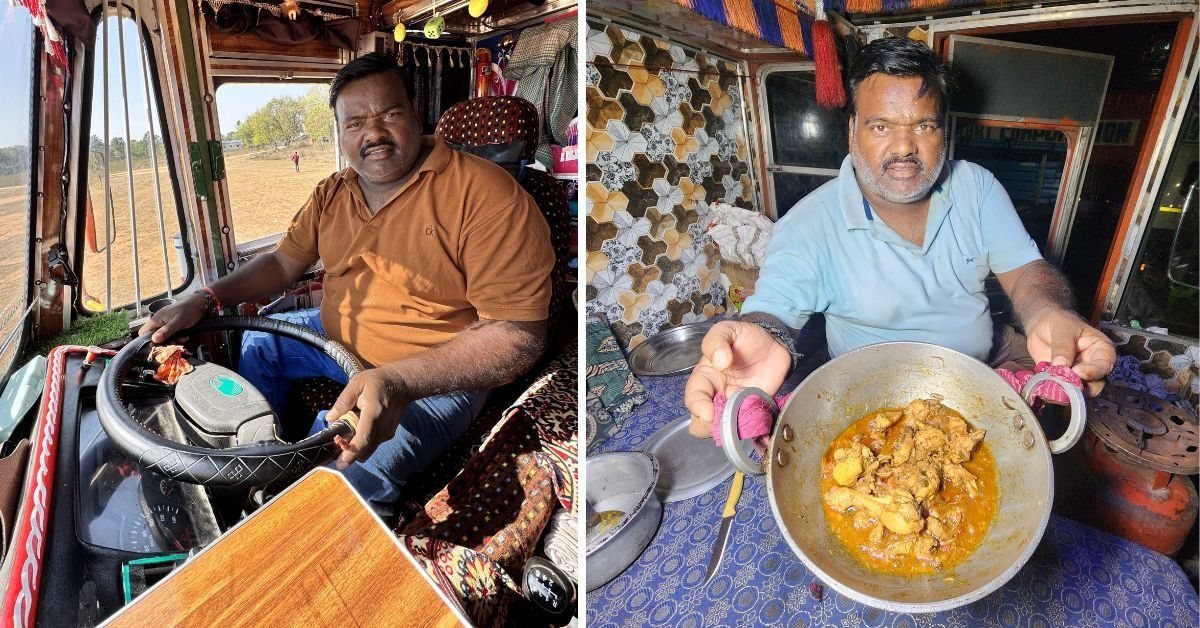
Early videos focused on the road itself or showed cooking without revealing Rawani’s face. Viewers began requesting that he appear on camera. When he finally posted a video showing his face clearly, that single clip garnered 4.5 lakh views in a single day. The viral response convinced the family to pursue content creation seriously rather than as a side activity.
The channel identity solidified around his truck-based cooking. He kept the vehicle and roadside halts as his main setting, building R Rajesh Vlog around the combination of trucking life and rustic recipes. With consistent uploads and family support, he gradually shifted from a trucker who occasionally filmed videos to a creator whose YouTube channel became his primary source of income.
The Kitchen Fits in a Cabin
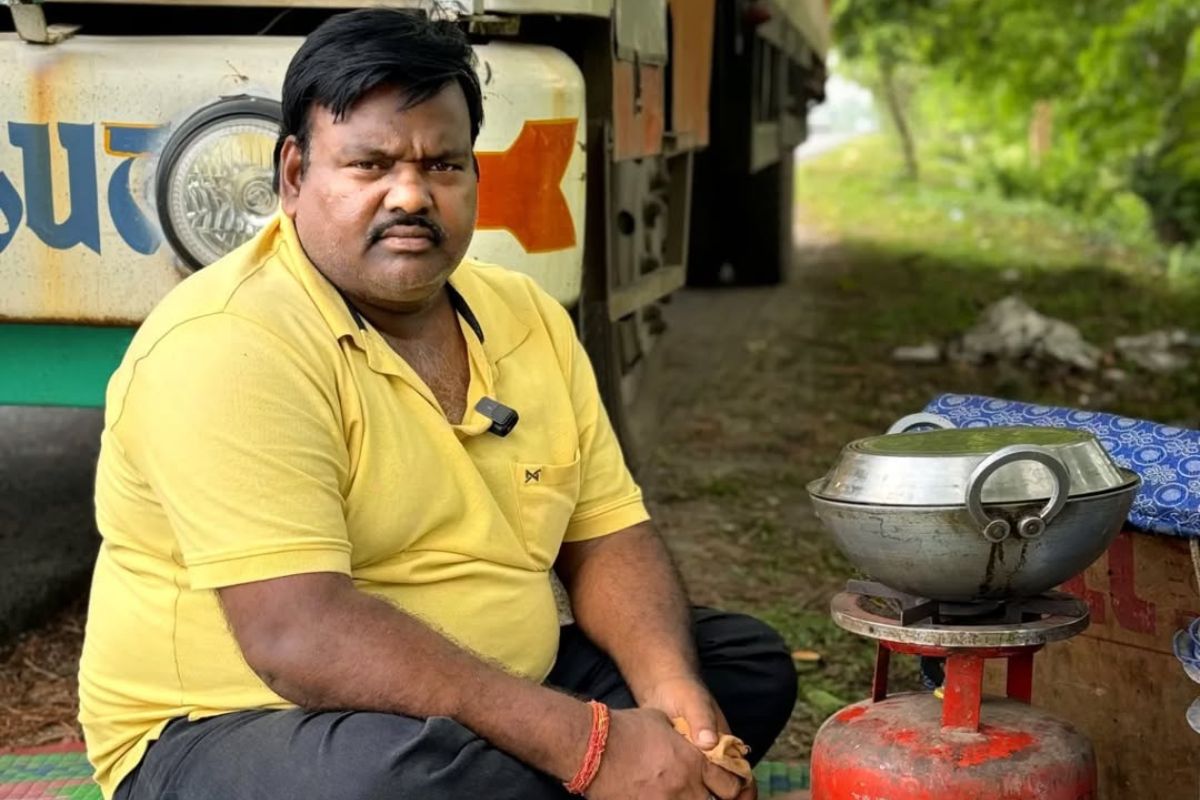
The appeal of Rawani’s content centres on his improvised kitchen. A long-haul truck cab barely accommodates sleeping space, yet Rawani transformed it into a compact cooking studio where he chops onions, fries spices, and simmers curries. He uses a five-kilogram gas stove, light enough to move between the truck interior and outdoor roadside spots, depending on where he stops.
He carries staples and masalas, including oil, flour, rice, lentils, and ground spices. Fresh vegetables, meat, and fish come from local markets along his routes. His recipes range from Bengali-style fish curry, where mustard paste must coat caramelised onions before the fish enters the pot, to hearty mutton curry and kalegi, goat liver slow-cooked in spices. Many videos include narration about the day’s travel, distance covered, route challenges, and expected arrival times while he stirs the pot. Viewers experience both the journey and the meal simultaneously.
What He Cooks
Rawani’s roadside recipes follow everyday Indian home-cooking practices but adapt to highway conditions. With limited utensils, storage, and space, he depends on robust spice mixes, slow-cooking methods, and one-pot techniques that work for a trucker while satisfying viewers.
Fish curries are common, prepared with fresh catch from local markets using Bengali techniques that include mustard paste and green chillies. Mutton curries and goat liver feature prominently, with offal marinated and then simmered in masala while Rawani recounts the journey. Complete meals assembled from scratch at rest stops include rotis or rice cooked alongside vegetables and curries on a single stove.
The context matters as much as the food itself. Traffic noise sounds beyond the truck. Dust and trees frame the roadside setting. These register as genuine working-class Meals on Wheels rather than staged restaurant productions, which partly explains their appeal.
Changing Perceptions
Indian truck drivers typically work long hours under difficult conditions, with limited public understanding of their routines beyond common stereotypes. Rawani’s vlogs quietly challenge that image by demonstrating the discipline, skill, and resourcefulness required to survive on the road. Viewers observe how he manages time, fuel, and rest stops, and how cooking serves as both sustenance and self-care during multi-day journeys.
Videos often begin with highway updates on weather conditions, delays, or toll booths, then transition into cooking sessions that serve as rewards after demanding days. This mixture of travelogue and kitchen diary provides a rare window into the lives of truckers in India, particularly those from smaller towns like Jamtara in Jharkhand, where Rawani is based.
The Numbers Tell a Story
As of early 2026, Rawani commands more than 2.7 million YouTube subscribers and around 2 million Instagram followers, unusual numbers for a full-time truck driver. His content works because it combines three elements: the authenticity of blue-collar life, the intimacy of home-style cooking, and the visual appeal of open-air or makeshift kitchens on Indian highways.
This popularity produced significant financial change. Where monthly trucking income reached roughly thirty thousand rupees, his digital revenue from YouTube now brings an estimated four to five lakh rupees monthly. This increase enabled him to purchase a new home for his family, a milestone he cites as clear evidence of how much his life transformed through online content. The house purchase, mentioned repeatedly in features about him, symbolises upward mobility achieved through smartphone screens and consistent uploads rather than traditional career advancement.
Why It Resonates
Rawani’s success positions him as an inspiration for others from non-metro backgrounds who view digital content creation as a path beyond economic limitations. Social media coverage highlights how he maintained consistency despite an accident, long working hours, and initial anonymity. His trajectory suggests that storytelling grounded in lived experience, rather than production value, can still capture massive online audiences.
He regularly acknowledges his family’s role, especially his son’s contributions to filming and editing. The Meals on Wheels concept functions as a family project. The financial stability his channels provide, including the home purchase, serves as tangible proof of the economic impact of internet fame for working-class creators.
A Different Food Star
In a food internet dominated by professional chefs, urban restaurants, and studio kitchens, Rawani represents an alternate model: a working truck driver whose vehicle doubles as workplace and kitchen. His roadside recipes convey more than taste. They carry the weight of long miles, thin profit margins, and the impulse to create comfort in uncertain spaces.
With millions watching him cook as he moved across India, Rawani transformed Meals on Wheels from a phrase for mobile food service into a personal statement about resilience and creativity. His story demonstrates how an ordinary highway halt, a modest gas stove, and a camera can collectively move someone from road anonymity to digital prominence. The truck cabin that once represented economic struggle now functions as a stage, and the highways that demanded everything now provide the backdrop for financial security his previous work never offered.
Also Read:Kachri Melon: A lifeline for Desert Habitats
You can connect with DNN24 on Facebook, Twitter, and Instagram and subscribe to our YouTube channel.