
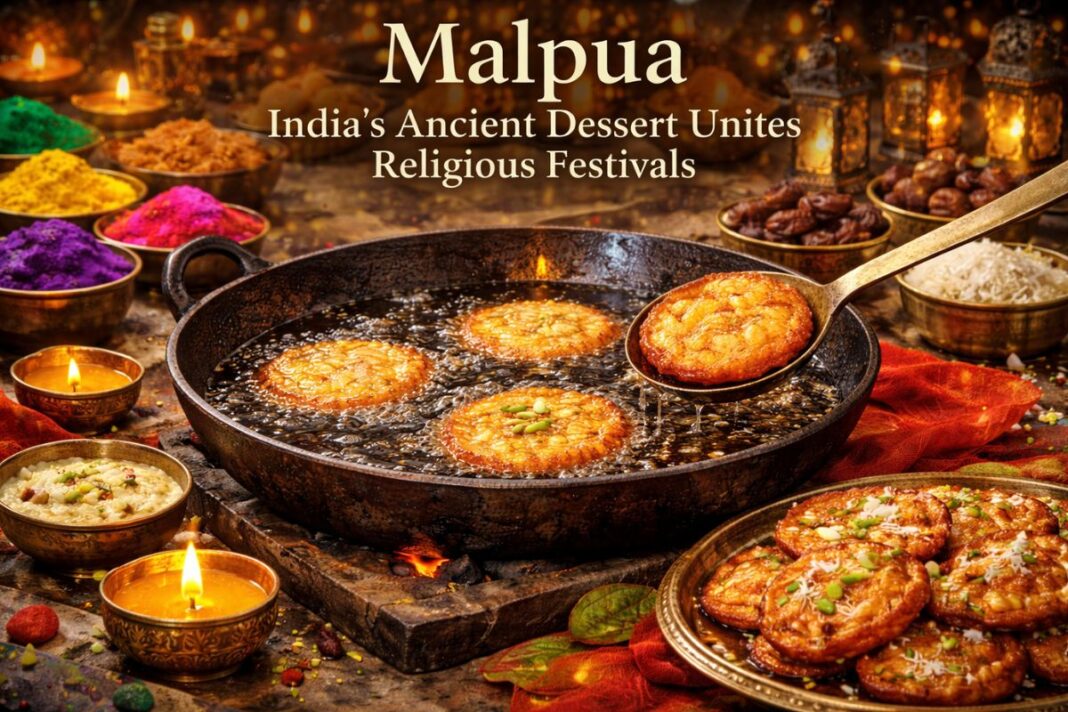

A single frying pan in an Indian kitchen tells a story that spans three thousand years. The same vessel that produces golden malpua pancakes for Holi in March will bubble with identical sweets for Diwali in November, and again for Ramadan iftars whenever the lunar calendar dictates. This dessert, among the oldest documented in Indian culinary history, connects Vedic rituals with contemporary festival tables through an unbroken tradition of frying flour batter in ghee and soaking the result in sugar syrup.
Origins in Vedic Literature
The Rigveda, composed around 1500 BCE, mentions a fried cake called apupa. Scholars identify this as the precursor to modern malpua. Early recipes described barley flour pancakes fried in clarified butter or boiled in water, then dipped in honey. These ingredients reflected the agricultural realities of the Vedic period, when barley dominated grain cultivation and wild honey served as the primary sweetener.
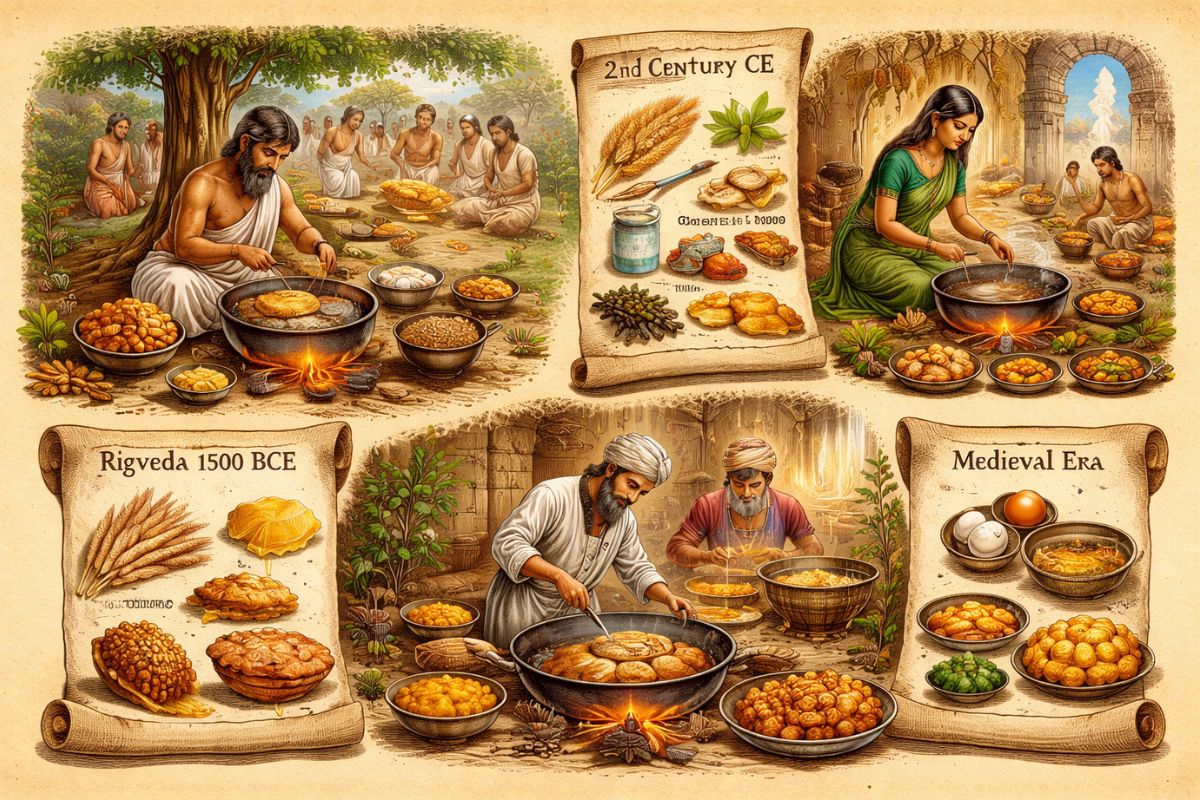
By the 2nd century CE, the recipe had evolved considerably. Texts from this period detail wheat-flour preparations mixed with milk, ghee, sugar, and spices, including cardamom, pepper, and ginger. Some versions incorporated rice stuffing, creating a variant called pupalika. The transformation continued through medieval centuries as Islamic courts introduced eggs and mawa, or milk solids, into the preparation. Persian culinary techniques merged with indigenous methods, though the essential process of frying batter and soaking it in syrup remained constant. The name “malpua” preserves linguistic echoes of these ancient fried sweets while accommodating regional pronunciation shifts across the subcontinent.
The Art of Preparation
Traditional malpua batter combines maida (refined wheat flour) with semolina, milk, yoghurt, sugar, and aromatic seeds like fennel or cardamom. The mixture ferments for several hours, triggering chemical reactions that produce crisp edges and soft centres when the batter hits hot fat. Cooks ladle portions into a kadhai, the deep, rounded frying pan essential to Indian kitchens, where ghee or vegetable oil maintains steady heat.
The fried pancakes emerge golden and irregular in shape, their edges lacy with bubbles. They are immediately submerged in a thick sugar syrup flavoured with saffron and cardamom, absorbing the sweetness while retaining some structural integrity. Garnishes of pistachios or desiccated coconut add textural contrast. The final presentation often includes rabri, a condensed milk preparation that balances the fried crunch with creamy richness.
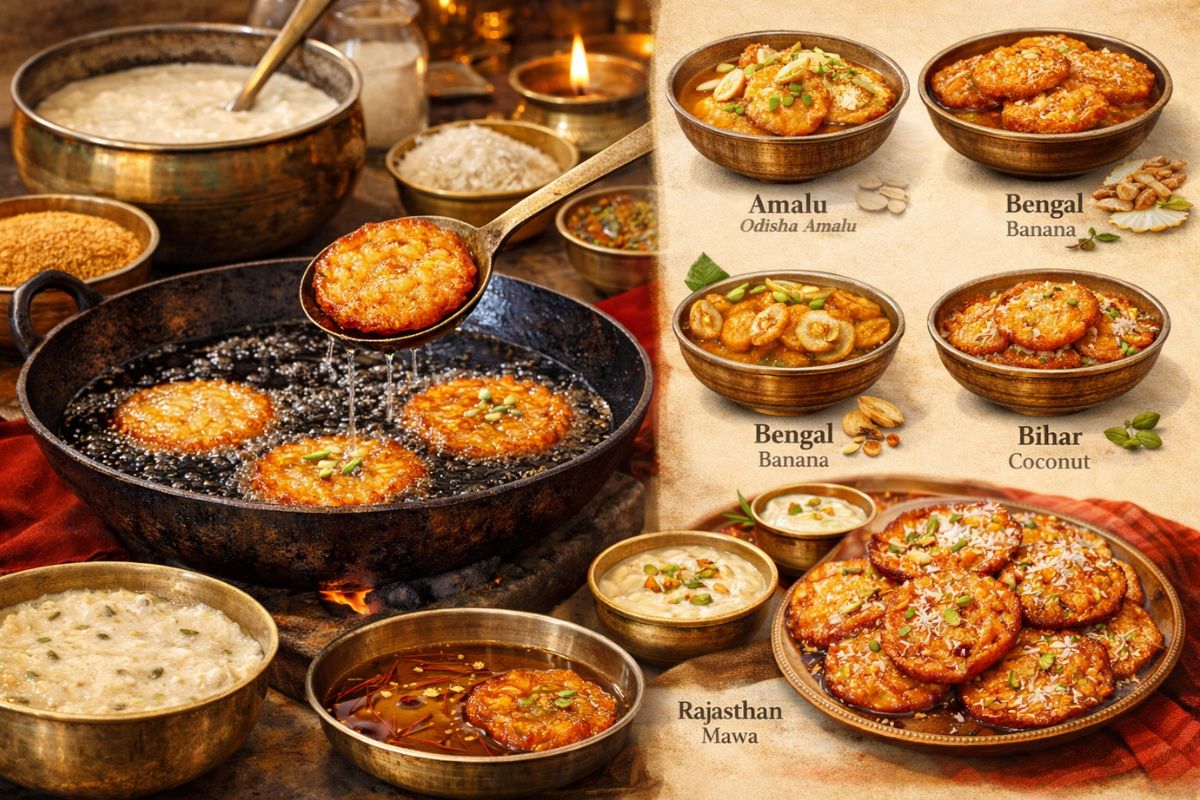
Regional variations demonstrate remarkable diversity within this framework. Odisha produces amalu, a dish made with thickened milk and rice flour, and serves it as temple food at the Jagannath Temple in Puri. Bengal mashes ripe bananas into the batter. Bihar incorporates grated coconut and adds sugar directly to the mixture rather than relying solely on syrup soaking. Rajasthan omits fruit entirely, preferring a plain maida base enriched with mawa. Each adaptation responds to local ingredient availability and taste preferences while maintaining the core technique of frying and sweetening.
Festival Calendar and Religious Boundaries
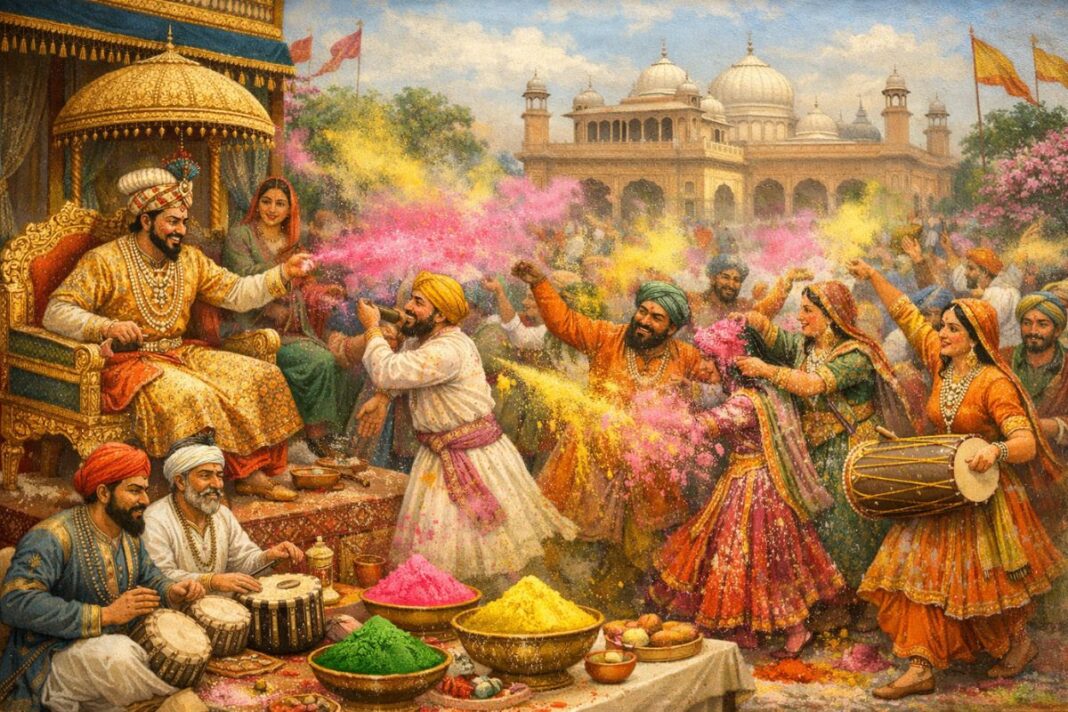
Malpua appears across religious and seasonal celebrations with remarkable consistency. North Indian Holi feasts feature it prominently, often paired unexpectedly with mutton curry in Bhojpuri cuisine. Diwali sweet distributions include malpua among the traditional mithai offerings. Ramadan iftar spreads incorporate versions made with raw khoya dipped in fragrant sira. Odisha’s Jagannath Temple lists amalu among the 56 food items presented to the deity during Janmashtami and Rath Yatra. Nepali communities prepare marpa for Holi celebrations.
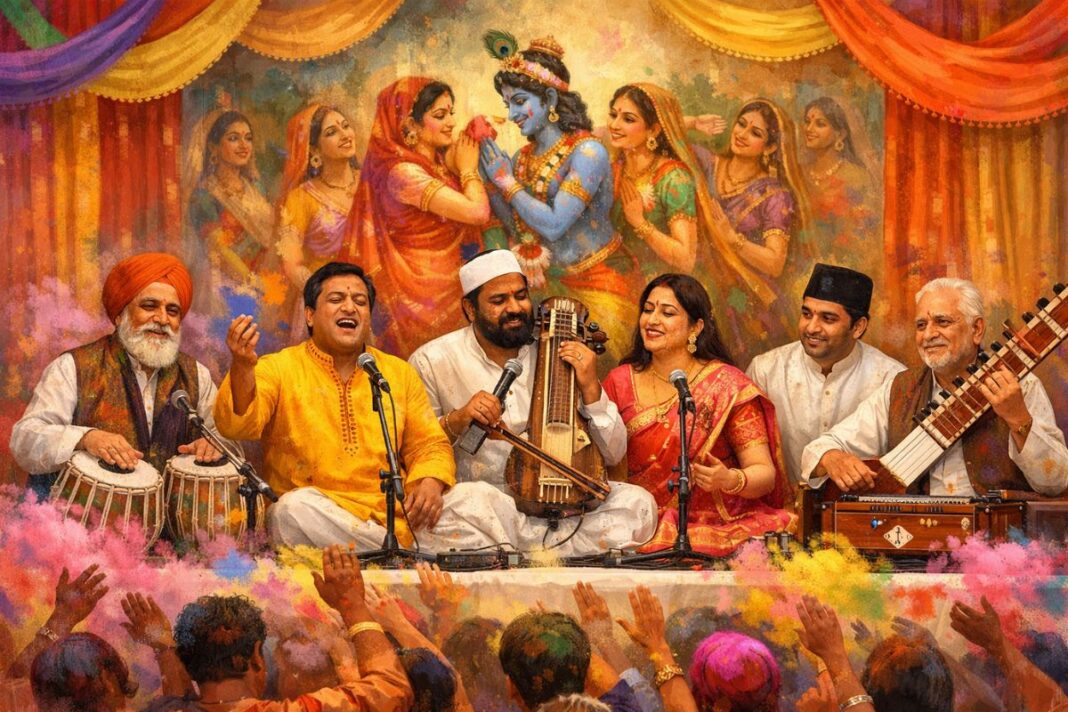
Other fried sweets follow similar patterns. Jalebi, spiralled and crisp, graces Diwali celebrations, Eid gatherings, and wedding feasts interchangeably. Boondi appears in Diwali laddus and Raksha Bandhan offerings. Imarti provides crunch to Uttar Pradesh Diwali tables. These crossovers illustrate how sweets function as prasad, or blessed food distributed after religious rituals. The concept of prasad transcends specific theological boundaries, making sweets like malpua appropriate for Hindu pujas, Muslim iftar tables, and secular family gatherings alike.
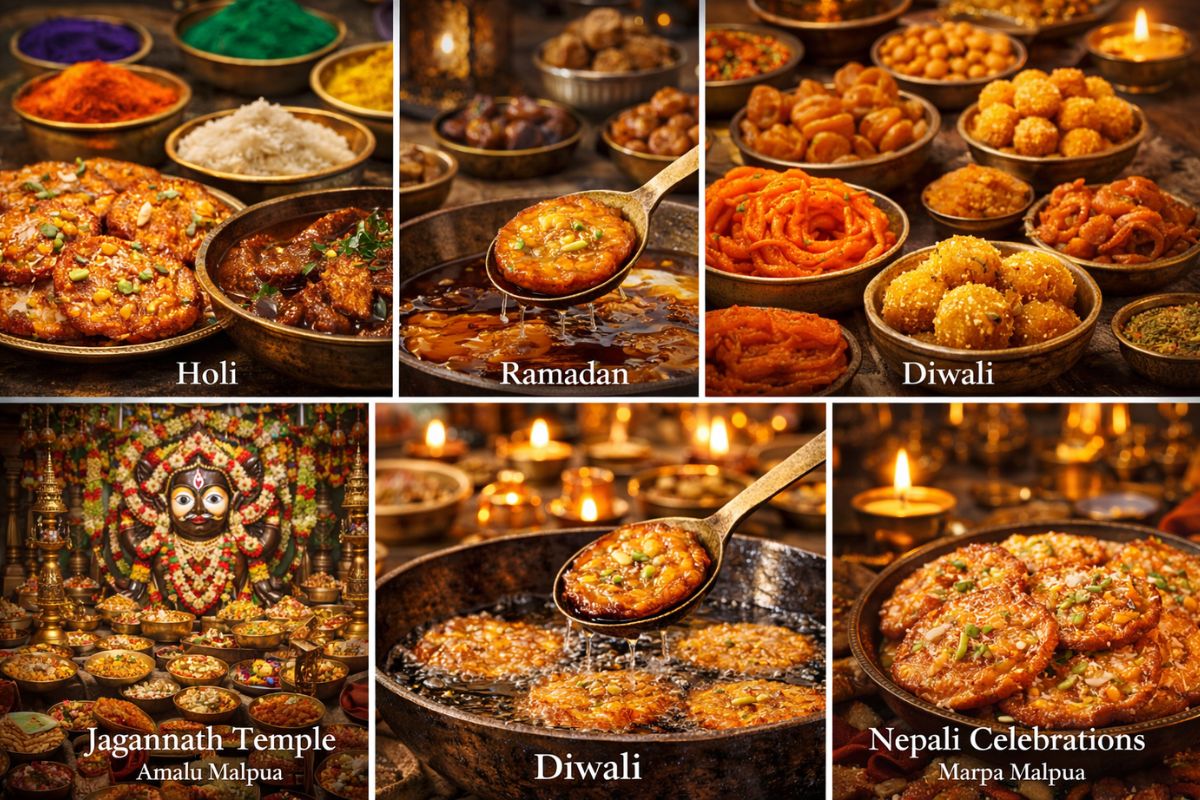
The practical explanation involves ingredient availability and preparation methods. Sugar syrup and fried dough require no meat, making them universally acceptable. The techniques involve no religiously restricted processes. Regional overlap in North India, where Hindu and Muslim populations share culinary traditions, further normalises these sweets across festival calendars. A Muslim family breaking fast might prepare malpua using the same recipe a Hindu neighbour employed for morning puja, with neither seeing contradiction in the practice.
Regional Interpretations
Uttar Pradesh emphasises fermentation time and overnight resting of the batter to develop complex flavours and proper texture. The resulting malpua balances crisp exteriors with tender centres, briefly soaked in syrup to avoid sogginess. Cooks add fennel seeds for a distinctive aroma and serve portions alongside rabri poured at the table.
Rajasthan takes a denser approach, incorporating grated mawa directly into the batter. This addition provides richness suited to desert climates and reduces fermentation time to 15 or 30 minutes. The pancakes emerge thicker and absorb more syrup during longer soaking periods. Rabdi is poured over the finished malpua rather than served separately, creating an integrated dessert in which fried and creamy elements merge.
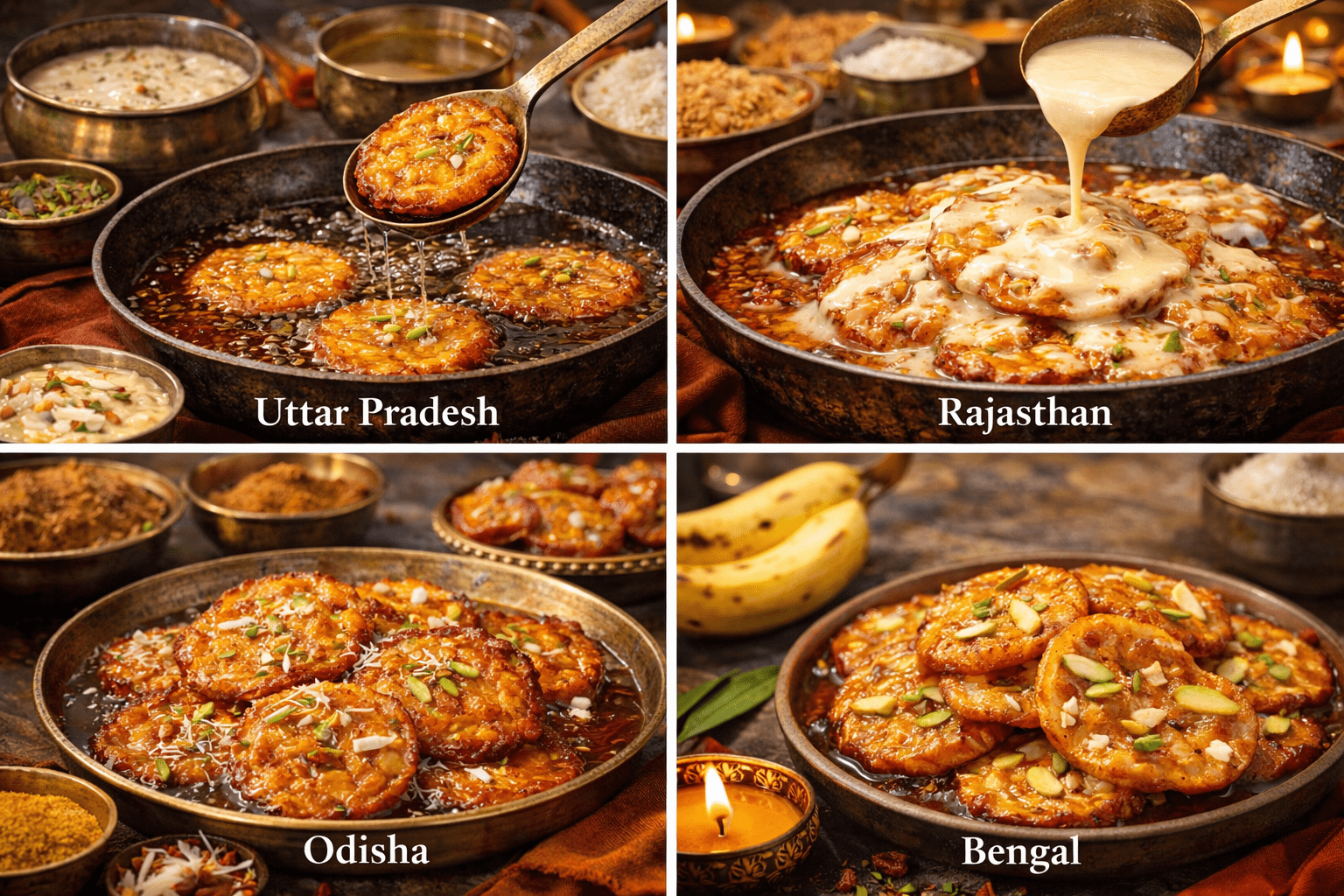
Odisha’s amalu uses wheat flour and jaggery rather than refined sugar, resulting in an earthier sweetness suitable for temple offerings. Six-hour fermentation periods accommodate traditional preparation schedules tied to worship timings. Bengal introduces ripe bananas into semolina-based batters, adding natural sweetness and tropical flavour. Rest periods shrink to 30 minutes, making preparation more spontaneous. Bihar adds grated coconut and sugar to the batter itself, creating texture variation and reducing dependence on external syrup.
These regional differences map onto agricultural zones and historical trade routes. Wheat-growing northern plains favour maida, while coastal areas with coconut cultivation incorporate that ingredient. Jaggery production zones in Odisha and Maharashtra shape local preferences for sweetening. Mawa availability in dairy-rich Rajasthan influences that state’s recipe development. Each version responds to local conditions while maintaining enough similarity to remain recognisable as malpua across regions.
Cultural Role and Modern Adaptations
Indian food culture treats sweets as markers of auspiciousness. The Sanskrit term shubh encompasses both goodness and auspicious timing, which explains why sweets are associated with celebrations, religious observances, and hospitality to guests. Malpua embodies this principle, moving easily from temple altars to home kitchens to festival distributions. Its presence signals celebration regardless of the specific occasion being marked.
In the post-Mughal period, influences enriched milk-based preparations, introducing Persian techniques for reducing dairy and incorporating dried fruits. Yet Vedic simplicity persists in versions that use minimal ingredients and straightforward methods. This layering of historical influences creates a dessert that simultaneously honours ancient traditions and accommodates medieval innovations.
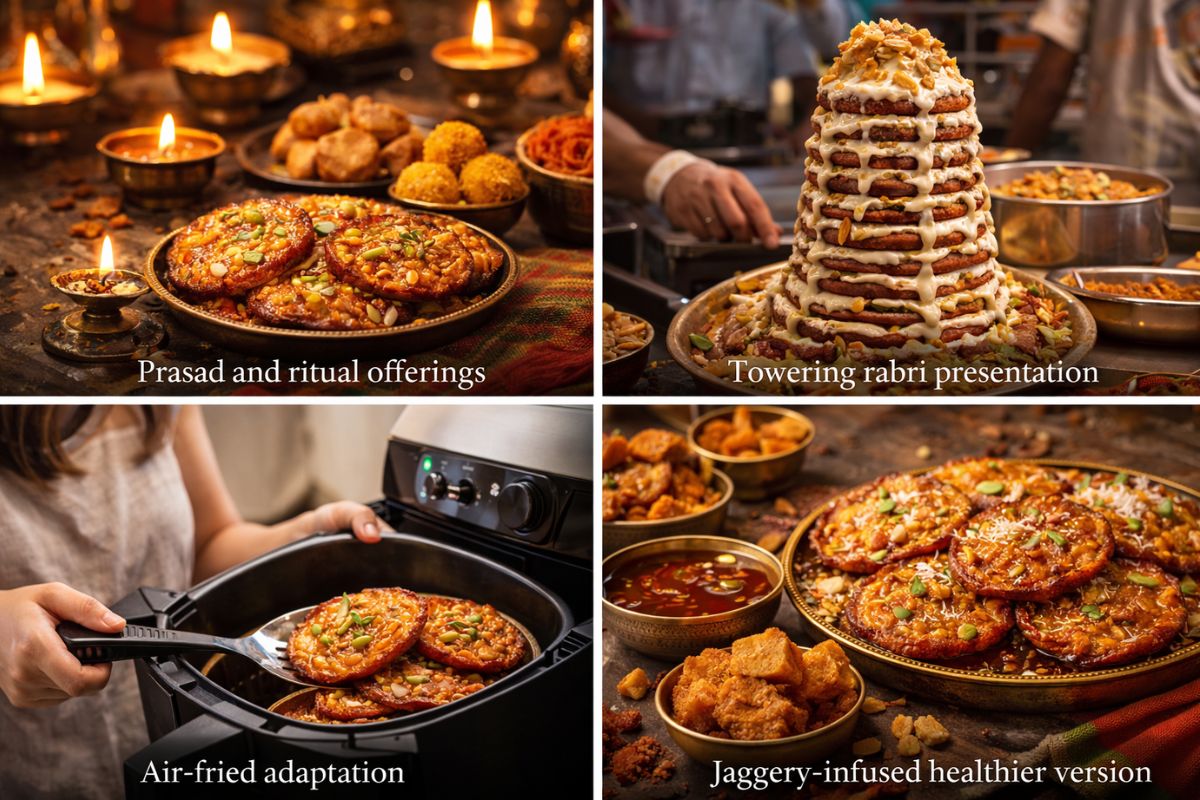
Contemporary adaptations introduce baking powder for additional lift or substitute plant-based milk for dairy. Street vendors in Delhi and Patna experiment with towering rabri presentations designed for visual impact. Diaspora communities adapt recipes to available ingredients, sometimes using oil instead of ghee or reducing sugar content for health considerations. Air fryers offer alternatives to traditional deep frying, though purists argue the kadhai’s contribution remains irreplaceable.
Preservation efforts recognise malpua’s cultural significance. Odisha has pursued geographical indication status for amalu, protecting traditional preparation methods and temple associations. Home cooks experiment with jaggery syrups and whole-grain flours, seeking to balance health consciousness with authentic flavour. As festivals become globalised events celebrated by diaspora communities worldwide, malpua’s essential adaptability ensures its continued relevance. The dessert that began as barley cakes fried in Vedic fire rituals now accommodates modern preferences while maintaining recognisable connections to its ancient origins. The kadhai that produces it continues serving multiple festivals, just as it has for generations, bridging religious calendars through the simple act of frying sweetened batter and sharing the results with family and community.
Also Read:Keep Your Living Space Cool with indoor plants
You can connect with DNN24 on Facebook, Twitter, and Instagram and subscribe to our YouTube channel.